Golf cart seats take a beating. UV exposure, moisture, repeated compression, and years of use all break down seat foam over time. What starts as minor softness gradually becomes a hard, uncomfortable slab that transfers every bump directly to your spine. The good news is that diagnosing a failing seat and deciding on the right fix is straightforward — you don't need special tools or mechanical expertise to work through this.
Is It the Foam, the Cover, or the Frame?
Before you do anything, press firmly on different areas of the seat with your palm. Healthy foam has a consistent, springy resistance and rebounds quickly when you release pressure. If certain spots feel noticeably harder than others, if the foam doesn't spring back, or if you can feel the rigid seat pan beneath with very little resistance, the foam itself is degraded. If the seat feels lumpy or bunched rather than uniformly flat, there's a chance the cover has shifted or torn internally and the foam underneath is actually fine. Peel back or inspect the underside of the cover if you can — separated seams or torn fabric can bunch up and create pressure points that mimic bad foam. Finally, check whether the seat frame or mounting hardware is loose. A seat that rocks or shifts on its mounts will feel uncomfortable even if the foam is perfectly good.
Common Causes of Seat Foam Breakdown
The most common culprit is simply age and UV degradation. Foam exposed to sunlight — even through a cart top — oxidizes and loses its cell structure over time, becoming brittle and dense. Water is the second major cause: foam that gets wet repeatedly and doesn't dry fully develops permanent compression and can also grow mold or mildew (which creates a separate odor problem). Heavy riders or carts used commercially with frequent passenger turnover compress foam faster than occasional recreational use. Cheaper OEM replacement foam is also softer and breaks down faster than higher-density aftermarket material, so if the seat was replaced once already with budget foam, it may be failing prematurely.
Checking the Seat Cover Condition
Don't overlook the cover when diagnosing seat discomfort. A cracked, stiff, or shrunk vinyl cover can actually compress the foam beneath it and restrict its ability to flex properly under weight — you'll feel a hard, unyielding surface even if the foam itself hasn't fully failed. Run your hand across the cover surface and look for cracking along seams, around the edges, or at stress points. Check the underside stapling or tucking: if the cover has pulled loose and re-tightened unevenly, it creates tension that artificially hardens the seat feel. In many cases, replacing a hardened cover simultaneously with the foam gives you the best result — the cover material matters almost as much as what's underneath it.
Deciding Between Repair and Full Replacement
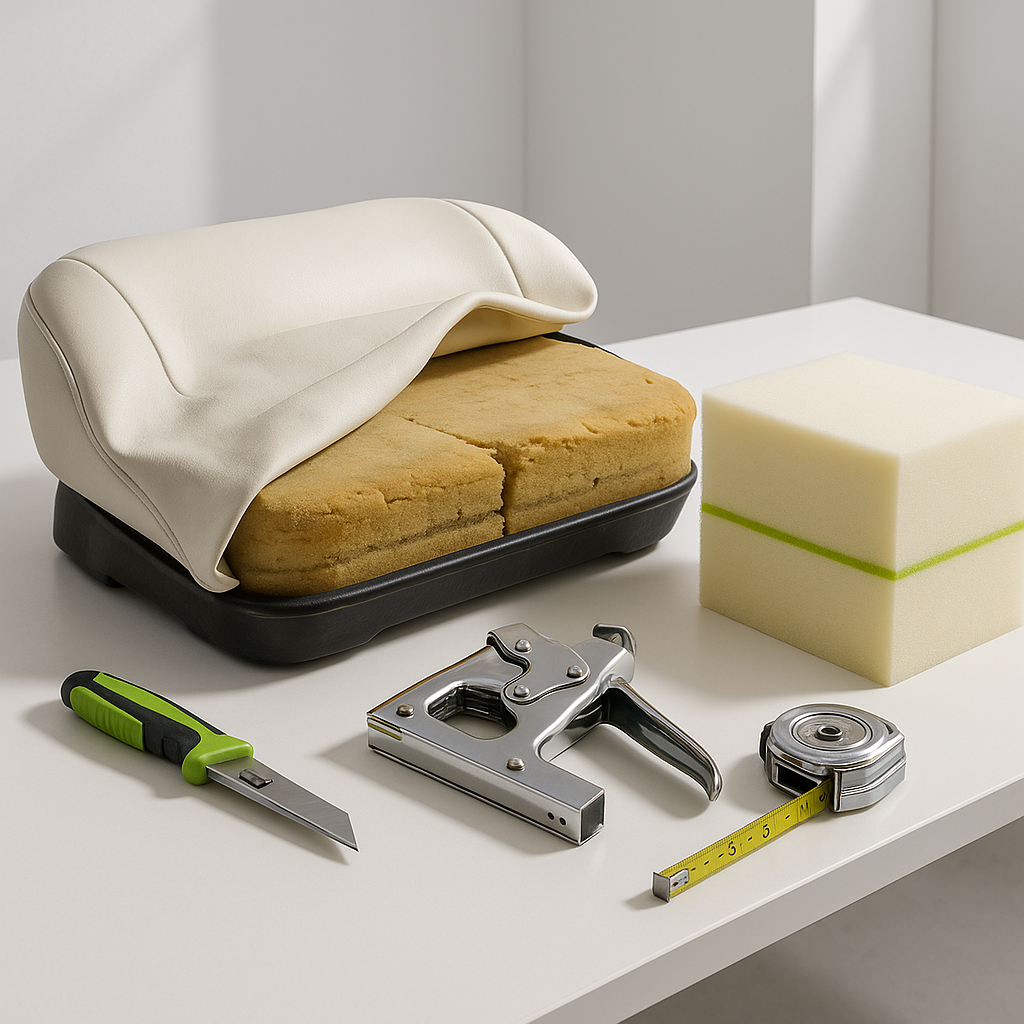
If only a small section of foam has failed — a front edge, one side bolster, or the center — you can cut out the degraded section and bond in a foam patch using upholstery adhesive. This works reasonably well when the rest of the foam is still in good shape. However, if the foam has failed broadly across the seat pan, patching is rarely satisfying because the densities will never match perfectly and you'll feel the transitions between old and new material. In that case, full foam replacement is the right call. Replacement foam is sold in sheets or pre-cut to common seat shapes — it's inexpensive and the project is manageable for anyone with basic hand tools, a utility knife, and some patience. Many cart owners replace both foam and cover at the same time for a clean result.
Foam Density: What to Look For
When sourcing replacement foam, pay attention to density and firmness ratings rather than just thickness. Higher-density foam lasts longer and holds its shape better under repeated use — it will feel slightly firmer at first but won't flatten as quickly. Foam that's too soft feels great initially and fails fast. For a golf cart seat that sees regular use, a medium-firm, closed-cell or high-resilience foam is generally the right choice. Closed-cell foam also resists moisture absorption better than open-cell varieties, which is a real advantage in an outdoor vehicle. If your cart sits outside or is used in wet conditions frequently, this distinction matters.
Seat Mounting and Hardware Check
While you have the seat off to replace foam or covers, take a few minutes to inspect the mounting hardware. Check that all bolts are present, tight, and not corroded. Look at the seat frame itself for cracks, bent sections, or broken welds — a structurally compromised frame will undermine any comfort upgrade you make. On flip seats, check the hinge mechanism and any locking pins to make sure the seat locks firmly in the seated position. Worn hinge pins allow subtle seat movement while driving, which contributes significantly to fatigue and perceived discomfort even when the foam is fine.
Preventive Habits That Extend Seat Life
Once your seat is restored, a few simple habits will slow the next round of deterioration significantly. Use a UV-protectant vinyl conditioner on the cover a few times a year — it keeps the material supple and prevents the cracking and shrinkage that shortens cover life. If your cart sits outside for extended periods, a fitted cart cover prevents direct UV exposure to the seat. Avoid letting the seat stay wet after rain — if water gets under the cover through a seam, dry it out promptly. These steps won't make foam last forever, but they can meaningfully extend the interval before you're doing this again.