A golf cart seat that rocks, slides, or feels loose under you is one of those problems people tend to ignore until it gets bad enough to be dangerous. Whether you're noticing a subtle wobble on turns or a seat that visibly shifts when you sit down hard, something in the mounting system has failed or worn out. The good news is that most seat instability problems come from a short list of causes, and nearly all of them are diagnosable without special tools.
Start With the Seat Mounting Hardware
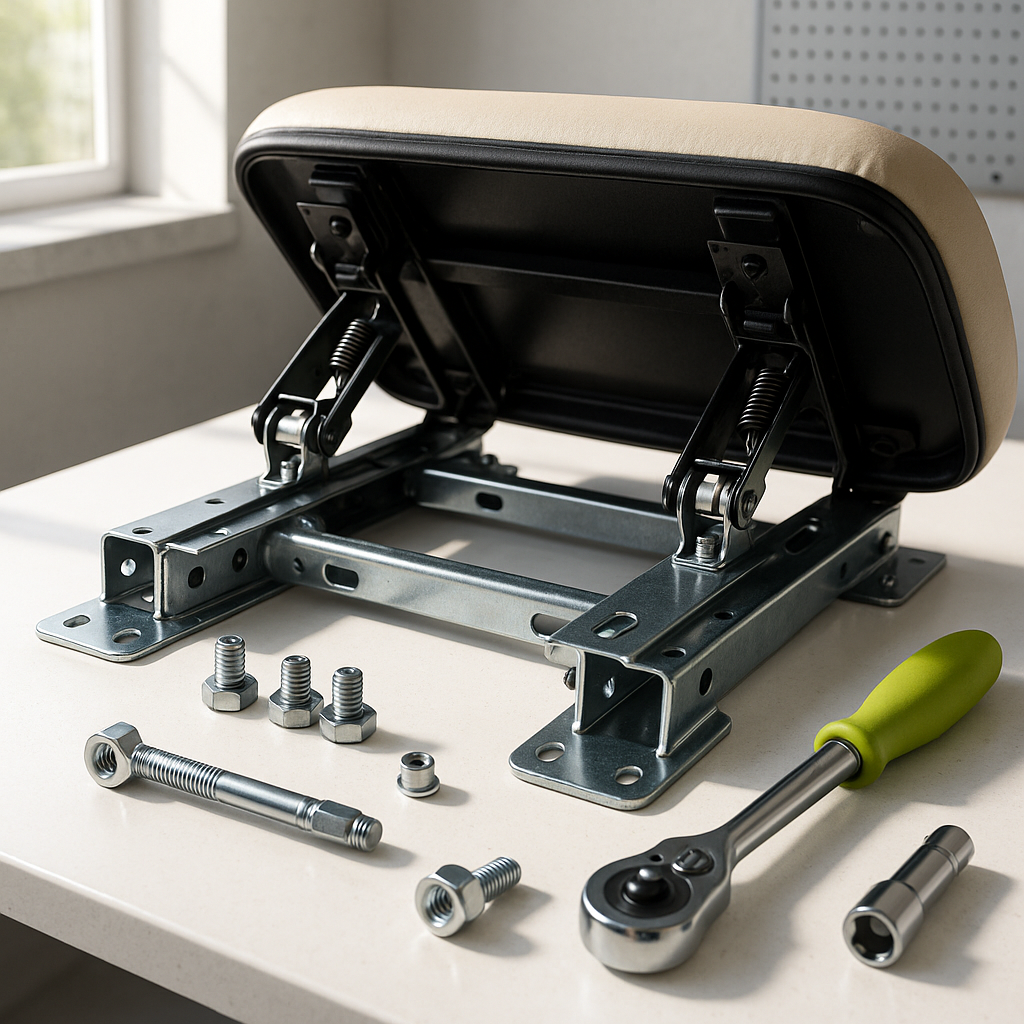
The most common cause of a loose seat is straightforward: the bolts or fasteners holding the seat frame to the cart's floor or frame rails have come loose. On most golf carts, seats are mounted with a small number of bolts that pass through the seat frame into threaded inserts or nuts underneath the floor pan. Over time — especially on carts that see a lot of rough terrain — these fasteners back out from vibration. Get down and physically check each mounting point. Try to wiggle the seat frame by hand with nobody in it. If you can feel movement at the base where it meets the floor, loose hardware is likely your starting point. Tighten them down and recheck. If the bolts won't hold because the threads are stripped, the fix is a thread repair insert rather than just a bigger bolt.
Check the Seat Hinges and Folding Mechanism
Many golf cart rear seats and some front bench seats use a hinge mechanism that allows the seat to fold forward for cargo access. These hinges take a lot of stress and can wear out or crack over time. A worn hinge won't lock the seat firmly in the upright position, so it'll feel loose or rock backward under load. Inspect each hinge for cracks, bent metal, or pins that have worked themselves loose. Also check any locking tabs or latch mechanisms that are supposed to hold the seat in position — plastic latches in particular get brittle with age and UV exposure and can fail without being obvious until you look closely.
Inspect the Seat Frame Itself
If the hardware is tight and the hinges look fine, the problem may be a cracked or bent seat frame. Golf cart seat frames are typically steel, and while they're reasonably durable, they can crack at weld points after years of use, especially if the cart has carried loads heavier than it was designed for. Run your hands along the underside of the seat frame and look carefully at all the weld joints. A crack in a weld will often show as a thin dark line or flaking rust along what would otherwise be a smooth joint. A cracked frame needs to be replaced — welding it as a repair is possible but not always reliable long-term, and a seat frame failure while driving is a real safety hazard.
Look at the Floor Pan Underneath the Seat
Sometimes the seat hardware itself is fine, but the floor pan it's mounted to has rotted, cracked, or delaminated. This is especially common on older carts with fiberglass or plastic composite floor pans that have been exposed to water intrusion over many years. If the mounting surface is soft, cracked, or flexes when you push on it, the bolts won't hold solidly no matter how tight you run them. You'll need to address the floor pan itself — either by reinforcing it with a backing plate to spread the load, or replacing the mat and underlying structure if the damage is extensive.
Check Seat Track Assemblies on Adjustable Seats
Some golf cart seats — particularly front seats on larger or more recent models — have sliding track assemblies that allow fore-aft adjustment. These tracks have locking mechanisms that can wear out or jam, leaving the seat free to slide under acceleration and braking. Pull the seat to its furthest forward and rearward positions and feel for smooth, even movement with a positive lock at each position. If the seat slides freely without locking, or if one side locks and the other doesn't, the track mechanism needs to be replaced. Mismatched locking also causes the seat to twist diagonally, which puts stress on everything else in the mounting system.
Don't Overlook Seat Back Wobble
Sometimes what feels like a loose seat is actually a loose or broken seat back — the frame that the backrest cushion attaches to. Seat backs are often attached to the base frame with bolts at two or four points, and these see repetitive stress from passengers leaning back. Grab the top of the seat back and push and pull firmly — a small amount of flex is normal for cushioning, but if you feel actual movement in the frame itself, check those attachment points. On rear-facing rear seats, the seat back is often integrated into the cart's rear body panel, so apparent looseness there might actually be a loose or cracked rear body section rather than the seat hardware itself.
When to Replace vs. Repair
Minor hardware issues — loose bolts, worn latches, a single cracked hinge — are worth repairing. But if you find multiple failure points, a cracked main frame, or a floor pan that's structurally compromised, patching individual components is a temporary fix at best. Seat assemblies for most major cart brands are available as complete replacements, and putting a solid, properly mounted seat on a cart is always worth doing right. A seat that fails at speed, even at golf cart speeds, can throw a passenger, and that's a liability no amount of deferred maintenance is worth.