If your golf cart seat shifts, rocks, or feels unstable when you're driving or just sitting in it, don't ignore it. A loose seat is more than an annoyance — on rough terrain or at speed, an unexpected shift can throw a passenger off balance or cause you to lose control of the cart. The good news is that seat instability almost always comes down to a handful of well-known causes, and most of them are straightforward to diagnose without any specialized tools.
Start With the Mounting Hardware
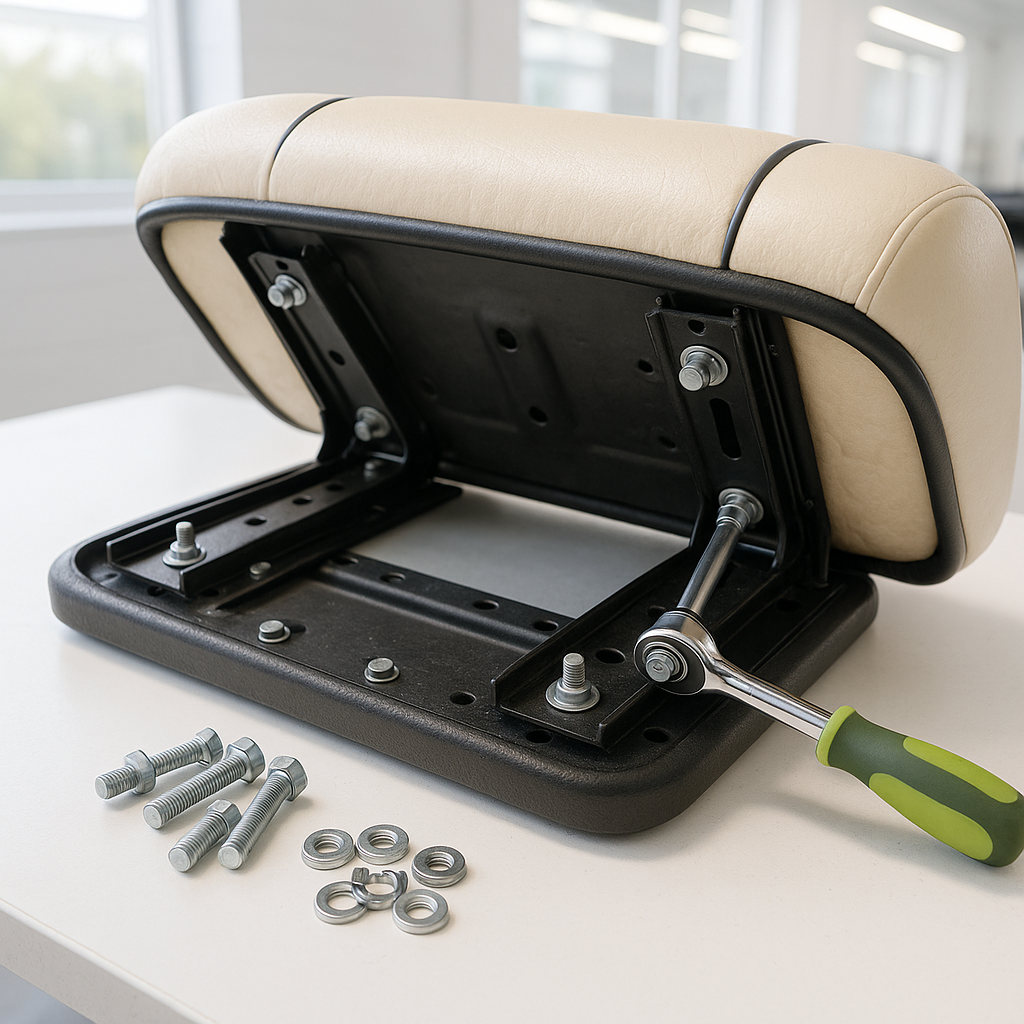
The first place to check is the hardware that attaches the seat frame to the cart's body or frame. Golf cart seats are typically held down by bolts that thread into either the floor pan or a dedicated seat mounting rail. Over time — especially on carts that see a lot of off-pavement use — those bolts can vibrate loose. Get underneath or behind the seat and check every fastener. If bolts are hand-tight or spinning freely, that's almost certainly your primary problem. Snug them down appropriately and test the seat again before assuming you need anything else.
Check the Seat Frame and Mounting Rail for Damage
If the hardware is tight but the seat still moves, look at the structural pieces themselves. The seat mounting rail (the bracket that spans the floor and gives the seat its attachment points) can crack, bend, or corrode — particularly on older carts or any cart that's been used heavily on rough ground. A bent or cracked rail won't hold the seat securely no matter how tight the bolts are. Similarly, inspect the seat frame itself for cracks around the bolt holes, which is where stress concentrates. Thin or corroded metal around a bolt hole will let the seat shift even when the bolt appears tight.
Look at the Floor Pan Condition
On many golf carts, the seat bolts directly or indirectly into a plastic or composite floor pan. Plastic floor pans can crack, and when the material around a bolt hole breaks down, the seat will rock even with good hardware. Gently try to flex the floor pan near each mounting point — if you can see or feel movement in the floor material itself, the pan may need repair or replacement rather than just re-tightening. This is especially common on carts that have sat outside for years or taken on water.
Inspect Seat Slides and Adjustment Mechanisms
Many golf cart seats — particularly bench seats on passenger models — use a slide or latch mechanism that allows the seat to adjust forward and backward. These slides wear out over time. If the seat feels solid when pushed down but slides or rocks fore and aft, the adjustment track or locking mechanism is the likely culprit. Check that the latch positively engages in its detent position and that the track itself isn't bent or excessively worn. Worn seat slides are common on high-use fleet carts and are generally replaceable as a unit.
Don't Overlook Seat Backs
Wobble isn't always in the seat bottom. If the movement you're feeling is the backrest rocking or folding under pressure, check how the backrest attaches to the seat frame. Hinge bolts and pivot points on fold-down or reclining backrests take a lot of stress and are frequently the loose point. Tighten any hinge hardware and check for cracked brackets where the backrest pivots. On flip seats — the rear-facing seats that fold to face either direction — the hinge hardware is especially prone to wear and deserves careful inspection.
After Tightening: Test Before You Ride
Once you've tightened, repaired, or replaced whatever was loose, test the seat systematically before putting it back into use. Sit in it, shift your weight side to side, push back against the backrest firmly, and bounce gently. If movement is gone in all directions, you're in good shape. If it still rocks in one specific direction, that tells you there's still a loose point in that axis — go back and focus your inspection there. A seat that's solid in every direction under deliberate load is one that won't surprise you on the course.