A loose, sagging, or unstable golf cart seat isn't just uncomfortable — it's a legitimate safety issue. If you or a passenger shifts unexpectedly mid-turn, you lose control of the situation fast. The good news is that most seat problems come down to a short list of causes, and almost all of them are diagnosable with a basic inspection before you buy a single replacement part. Here's how to work through it systematically.
Start With the Mounting Hardware
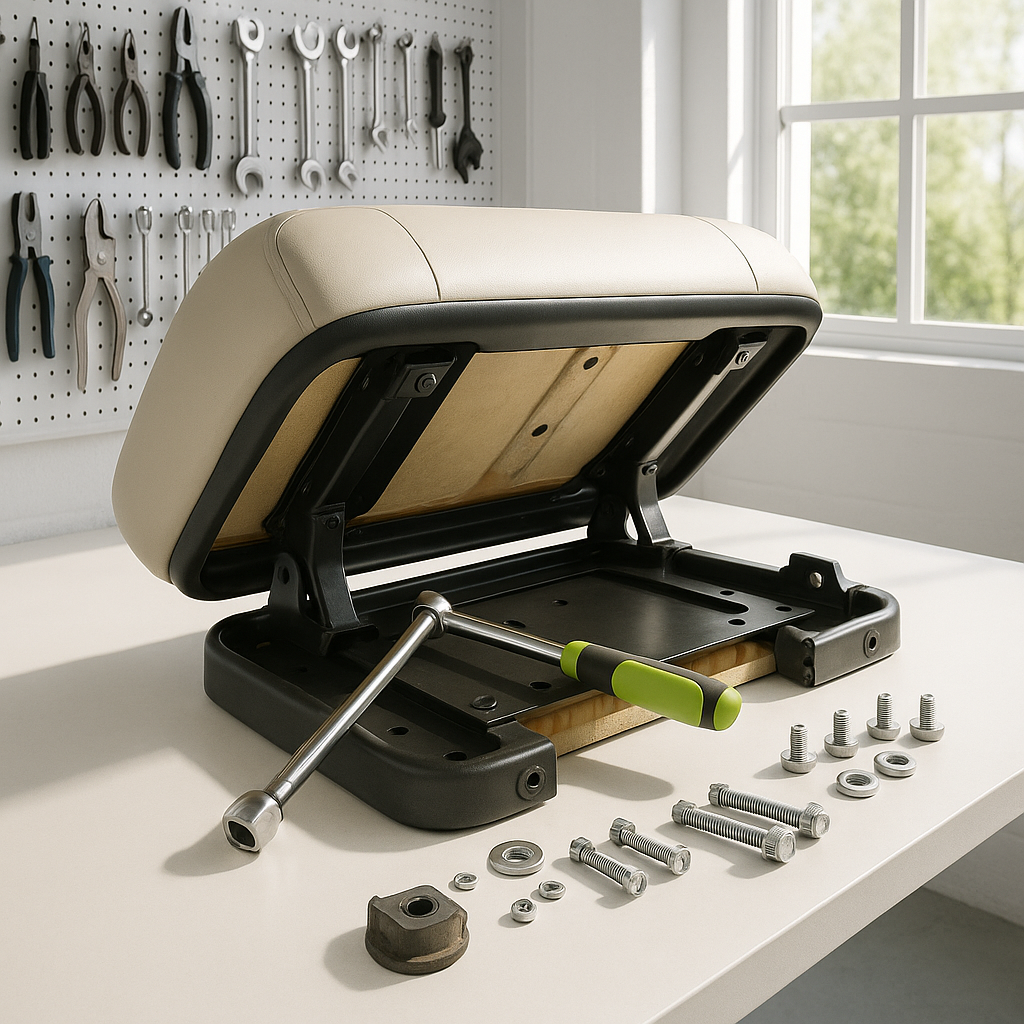
The single most common cause of a wobbly or rocking seat is loose or missing mounting hardware. Golf cart seats are typically bolted directly to a seat base or frame rail, and those fasteners loosen over time from vibration — especially on carts used on rough terrain. Grab the seat firmly with both hands and try to rock it side to side, then front to back. If you feel any movement, get underneath and check every bolt. Look for bolts that have backed out, stripped threads in the seat base, or missing washers. Tightening or replacing fasteners often solves the problem entirely with zero cost.
Check the Seat Base or Frame for Cracks
If the hardware is tight but the seat still moves, the problem may be in the seat base itself. Many golf carts use a plastic or composite seat base that can crack — particularly at the corners near the mounting points. Flex the base by hand and look for hairline fractures. Cracks near a bolt hole will allow the seat to shift even when the bolt appears snug, because the material around the hole is failing. A cracked base usually needs replacement; patching it is rarely reliable long-term under load.
Inspect the Seat Hinge (If Applicable)
On carts with a folding rear seat or a flip-forward seat, the hinge assembly itself is a common failure point. A worn or bent hinge pin, a stretched hinge bracket, or a locking mechanism that no longer engages properly will all allow unwanted movement. Open and close the seat several times and watch for slop in the hinge pivot. If the seat doesn't lock firmly in the open or upright position, don't use it until the hinge or latch is repaired — a seat that folds unexpectedly while someone is sitting on it is a serious injury risk.
Diagnose a Seat That Sinks or Bottoms Out
If the seat feels stable structurally but sinks when you sit down — or if you feel like you're sitting too low — the issue is almost always the foam cushion. Golf cart seat foam compresses and breaks down with age and UV exposure. Press down firmly on the seat and release it. Healthy foam springs back quickly; dead foam stays compressed or returns slowly. You can also remove the seat cover and visually inspect the foam — look for areas that are flattened, crumbled, or have separated from the base. Replacing worn foam dramatically changes ride comfort and is one of the most cost-effective seat repairs you can make.
Look at the Seat Cover and Stitching
A seat cover that has torn away from the seat base or split at the seams can bunch up underneath the occupant and create a false sense of instability — or expose them to sharp staples or rough foam edges. Pull back the edges of the cover and check how it's secured. Most factory covers are stapled or glued to the base. If the cover is peeling away, it may be pulling the foam with it, accelerating cushion damage. A loose cover is also a slip hazard if it bunches under someone shifting their weight.
Check Floor Mat Condition for Related Safety Issues
While you're addressing the seat, take a moment to check the floor mat directly in front of it. A curled, torn, or slippery floor mat creates a foot-slip hazard that compounds any seating instability. Floor mats on golf carts take a beating from foot traffic, moisture, and UV exposure. Look for lifted edges that could catch a foot, material that has hardened or cracked, or any areas where the mat has separated from the floor. A mat that slides or bunches can also interfere with pedal operation, which is a separate but serious concern.
When to Replace vs. Repair
Most seat hardware issues — loose bolts, worn hinges, failed latch mechanisms — can be repaired directly if replacement parts are available for your cart model. Foam replacement is almost always worthwhile on an otherwise-sound seat base. A cracked plastic seat base, however, is usually better replaced entirely than patched, because structural repairs rarely hold under repeated load and vibration. When sourcing replacement parts, confirm compatibility with your specific cart make, model, and year — seat mounting patterns and base dimensions vary meaningfully between manufacturers and model generations.