Golf cart seats take a beating. Sun, rain, body weight, and years of use all add up, and most owners don't think about their seats until something is genuinely wrong — a cushion that soaks up water after every rain, a cover that's cracking and peeling, or a base that shifts and squeaks on every bump. The good news is that most seat problems fall into a handful of categories, and once you identify which one you're dealing with, the fix is usually straightforward.
The Seat Cover Is Cracking, Peeling, or Tearing
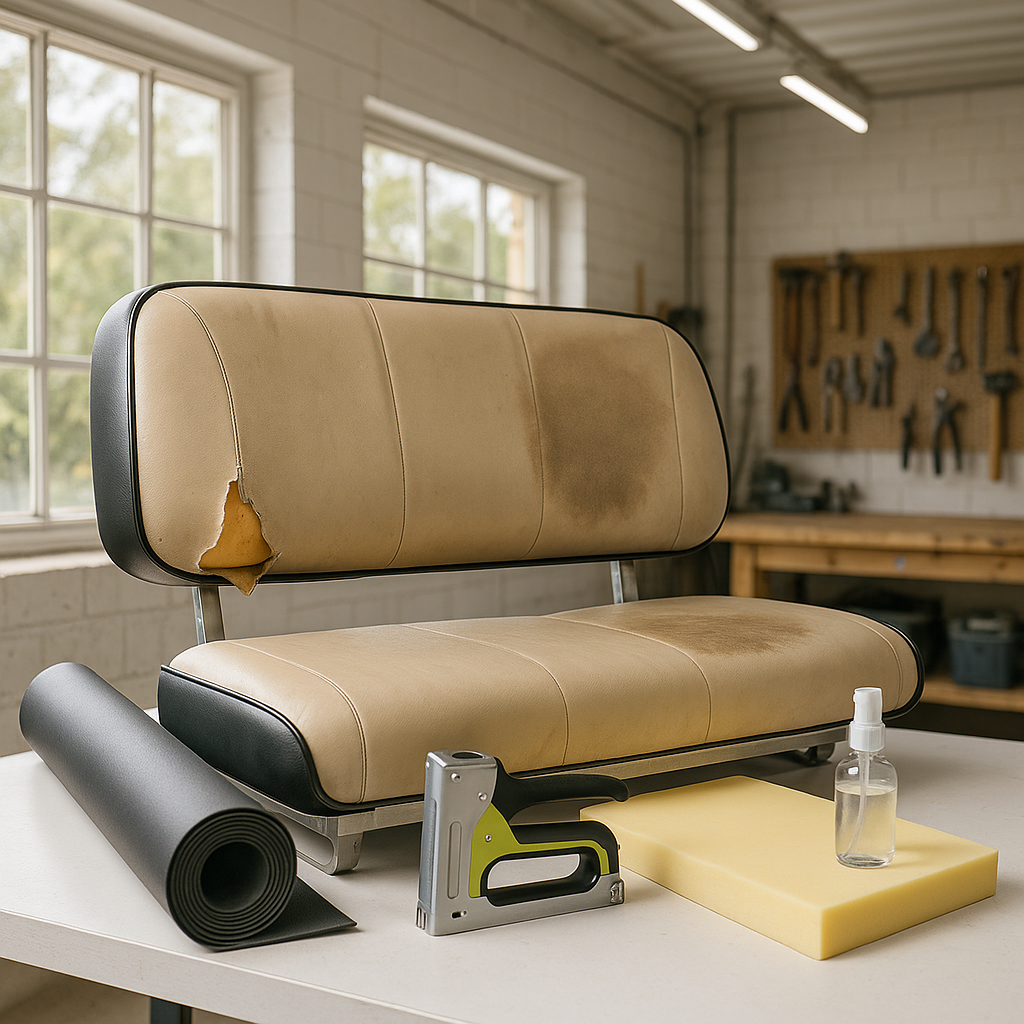
This is the most common complaint, and it almost always comes down to UV damage combined with age. Golf cart vinyl was never designed to outlast the cart itself — most factory covers start showing wear after several years of outdoor exposure. Run your hand across the surface. If it feels brittle, if the material is flaking, or if you can see cracking along the seams or high-stress areas like the front edge of the seat bottom, the cover itself is past its useful life. Small tears can sometimes be patched with a vinyl repair kit, but large or widespread cracking means the material has lost its flexibility throughout, and patching one spot just shifts stress to the next weakest area. A full seat cover replacement is the practical call at that point.
The Seat Cushion Feels Wet or Stays Damp
A seat that feels wet after rain — or stays damp even days later — usually means moisture has gotten past the cover and into the foam beneath. Check the cover carefully for pinhole cracks, failed seam stitching, or any small tear you might have missed. Even a small breach lets water wick into the foam, and once foam is saturated, it holds moisture for a long time and becomes a breeding ground for mildew. Press firmly across the entire seat surface and feel for soft, waterlogged spots. If the foam is wet, the cover needs to come off so the foam can dry completely before you re-cover or replace it — skipping this step and just putting a new cover over wet foam is a common mistake that leads to that musty smell coming back within weeks.
The Seat Shifts, Rattles, or Doesn't Sit Level
If the seat moves under you or makes noise over bumps, the problem is almost always the mounting hardware rather than the seat itself. Golf cart seat bases attach to the frame with bolts that loosen over time from vibration. Get underneath the seat and check every mounting bolt — they should all be snug with no play. It's also worth inspecting the seat base itself for cracks, especially on plastic or fiberglass bases, since a hairline crack can allow flex that feels like loose hardware. On rear-facing or fold-down rear seats, check the hinge hardware as well. A seat that sits visibly tilted to one side often has a broken or compressed corner of foam rather than a mounting issue, so push down on each corner individually to see if one side collapses more than the other.
The Seat Bottom Feels Too Hard or Has Lost Its Support
Foam degrades differently than vinyl — instead of cracking, it compresses and loses its ability to spring back. Sit on the seat and pay attention to whether you can feel the hard base underneath you through the cushion. That's a sign the foam has bottomed out. This happens faster on carts that see heavy use, carts stored outdoors where temperature swings stress the material, and on seats where moisture has repeatedly saturated and dried the foam over multiple seasons. There's no way to restore compressed foam — once it's gone, it's gone. Replacement foam is widely available cut to size, and the density you choose matters: denser foam lasts longer but feels firmer, while softer foam is initially more comfortable but tends to compress faster.
The Floor Mat Is Lifting, Sliding, or Holding Water
While not the seat itself, floor mat problems are worth diagnosing alongside seat issues since they affect the same passenger area. A mat that curls at the edges or slides under your feet is usually one that's no longer fitted properly — either it's a universal mat that was never a precise fit, or an OEM mat that's shrunk slightly or lost its grip backing over time. Check whether the mat has a non-slip backing and whether it's actually resting flat against the floor pan. Mats that hold water or develop a wet smell underneath often have a drainage or fit issue — water gets under the mat and can't escape or evaporate. In that case, pulling the mat and cleaning the floor pan beneath it (and letting both dry fully) before reinstalling is the right first step before assuming you need a replacement.
When to Replace vs. Repair
A good rule of thumb: repair when the underlying structure is sound and the damage is localized. Replace when the foam is saturated or fully compressed, when the cover has widespread cracking rather than isolated damage, or when the seat base itself is cracked or warped. Trying to extend the life of a seat that's structurally compromised usually just delays the same expense while making every ride less comfortable in the meantime. New covers, foam, and complete seat assemblies are all available for most major cart platforms, and a properly restored seat makes a noticeable difference in both ride quality and the overall feel of the cart.