A failed solenoid is easy enough to replace. But if your replacement burns out in a few weeks, or if you notice your solenoid getting unusually hot during normal use, swapping parts isn't going to solve anything. Solenoid overheating and premature failure almost always point to an underlying electrical problem that the solenoid itself is just reacting to. This guide walks you through the real reasons a golf cart solenoid runs hot or fails early, and how to track down the root cause before you burn through another part.
What a Solenoid Actually Does — and Why Heat Kills It
The solenoid is a high-current relay that connects your battery pack to the motor controller or motor when you press the accelerator. It's designed to handle large surges of current momentarily, not to carry sustained heavy loads indefinitely. When it's forced to do more than it was built for — because of excessive resistance elsewhere in the circuit, a weak battery pack, or a wiring fault — it compensates by generating heat. Over time, that heat degrades the internal coil windings and the contact points, eventually causing the solenoid to weld shut, fail open, or simply stop engaging reliably.
Start with the Battery Pack
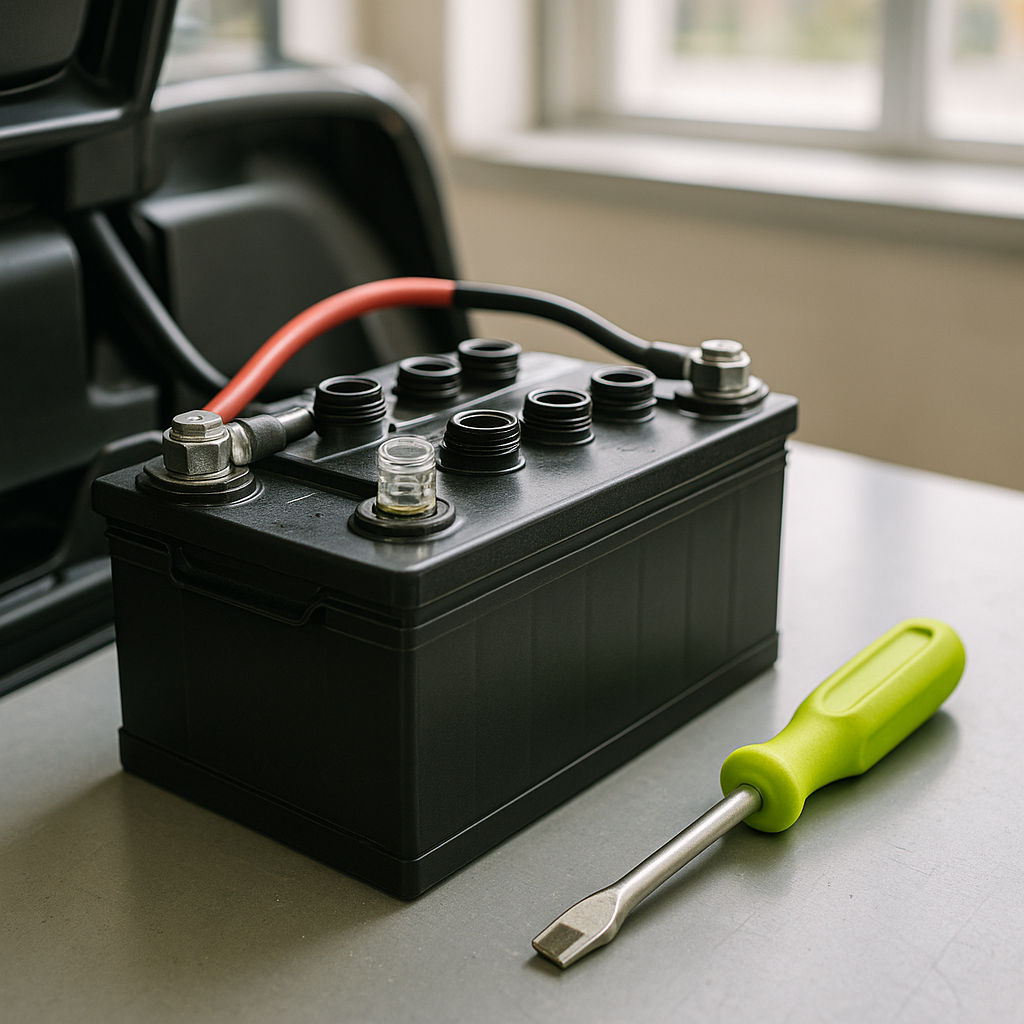
A weak or imbalanced battery pack is one of the most common reasons a solenoid works too hard. When batteries can't deliver sufficient voltage under load, the solenoid coil draws more current trying to hold the contactor closed, and the main contact points arc more aggressively every time they open and close. Check each battery individually under load — resting voltage alone won't catch a weak cell. If one or more batteries are significantly lower than the rest, the whole pack is dragging the system down and punishing every electrical component downstream, including the solenoid.
Check Every Connection in the High-Current Path
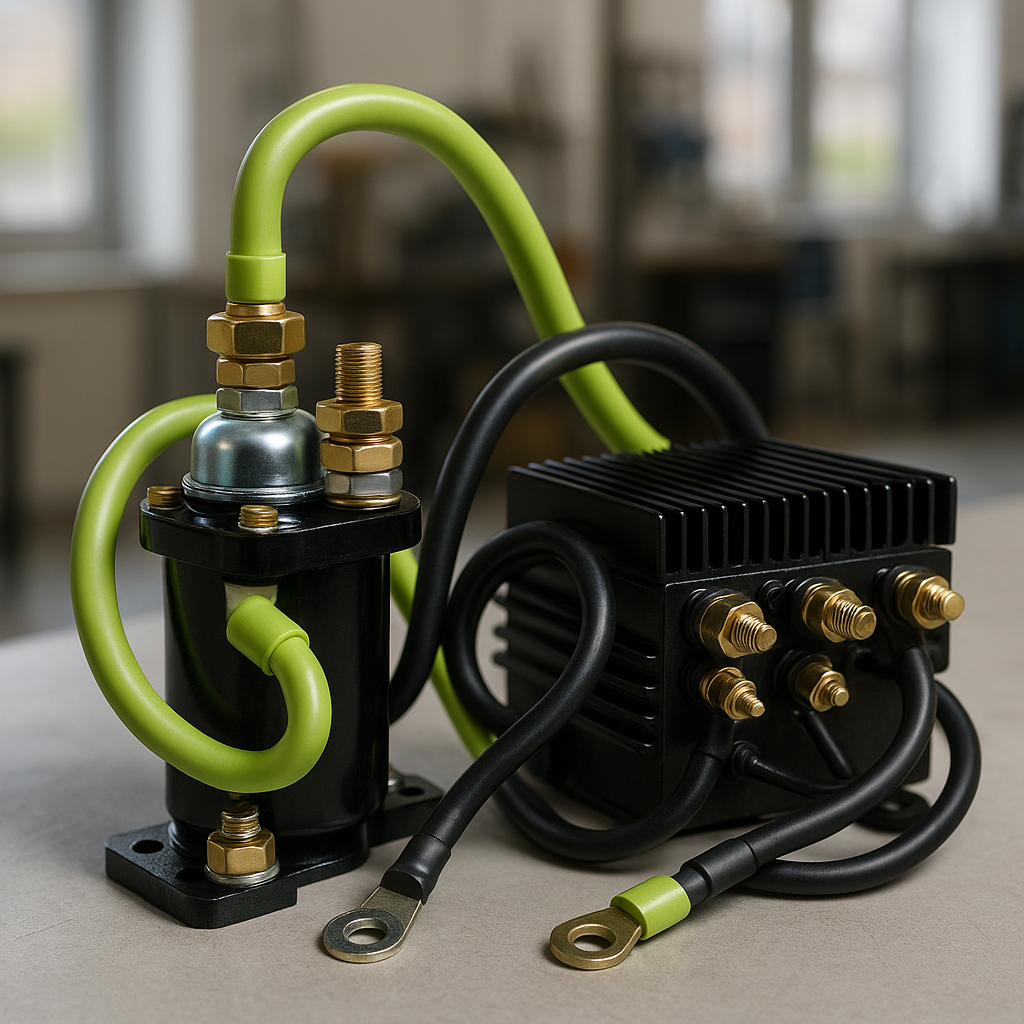
Loose, corroded, or undersized connections create resistance, and resistance creates heat. Inspect every cable terminal connected to the solenoid itself — both the large power lugs and the small coil wire terminals. They should be tight, clean, and free of green or white corrosion. Then trace the full high-current path: from the battery pack through the main cables, through any fuse or circuit breaker, to the solenoid, and onward to the controller or motor. Any bad connection in this chain forces the solenoid to work harder than it should. Pay particular attention to the negative side — a bad ground is easy to overlook and causes exactly this kind of ghost problem.
Look at the Solenoid Contacts Themselves
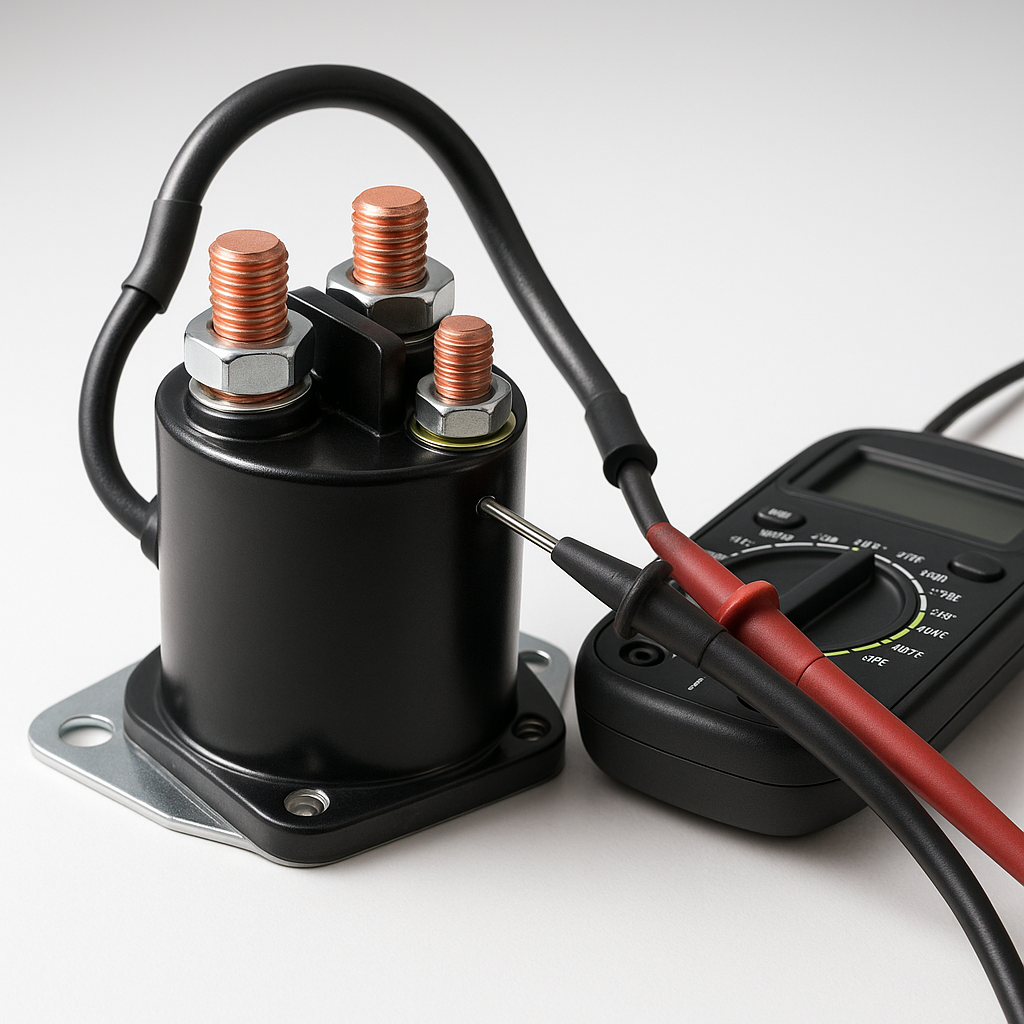
If the solenoid you pulled out has pitted, burned, or welded contact faces, that's a symptom, not just normal wear. Light pitting after years of use is expected. But heavily burned contacts after a short service life usually mean the solenoid was breaking current it wasn't supposed to break — which happens when the cart is being shut off under load, or when the main contactor is being used as the primary on/off switch instead of a relay. Make sure your key switch and run/tow switch are functioning correctly so the solenoid is only switching when the system is in the right state.
Test the Coil Circuit
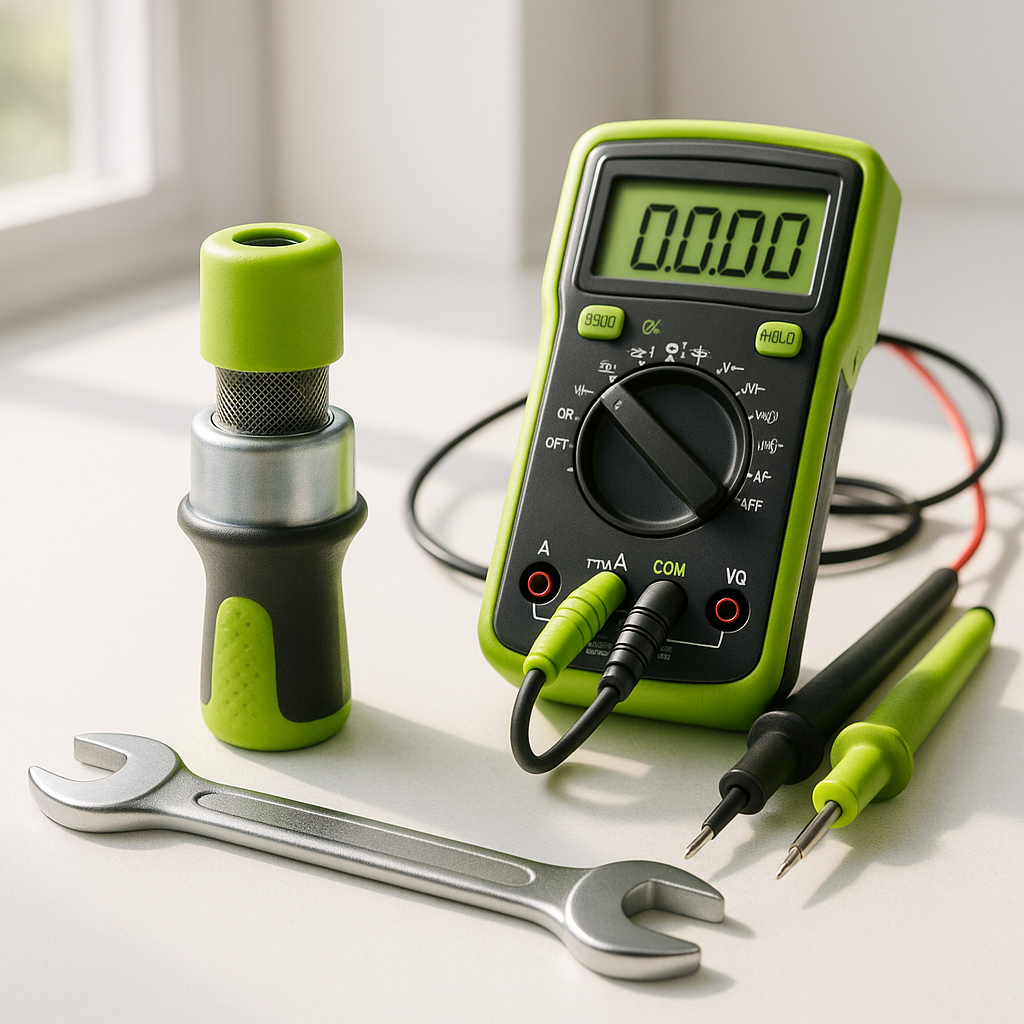
The small-gauge wires that energize the solenoid coil carry much less current than the main power lugs, but they're just as important. If the coil circuit has high resistance — from a failing controller output, corroded connections, or a worn throttle component sending an irregular signal — the coil may be partially energized rather than fully pulled in. A partially engaged solenoid is a solenoid that's arcing continuously across its contacts and generating heat every second the cart is in use. Use a multimeter to verify that the coil is receiving the correct voltage when the cart is called to move, and that it drops fully to zero when it should be off.
Consider the Motor and Controller
A motor that's drawing more current than normal — due to worn brushes, a shorted winding, or a binding drivetrain — puts constant stress on the solenoid. Similarly, a controller that's malfunctioning and sending irregular signals can cause the solenoid to chatter or partially engage. If you've already replaced a solenoid once and it failed again quickly, and the battery pack and wiring check out, the motor and controller are the next logical places to look. A motor load test or a controller diagnostic read (on carts that support it) can help rule these out.
When It's Time to Replace — and What to Check First
Once you've diagnosed the underlying cause and corrected it, replacing the solenoid is straightforward. Make sure the replacement is rated for your cart's voltage and application — using an undersized or mismatched solenoid is a fast path back to the same problem. After installation, do a full operational check: verify the solenoid engages cleanly, doesn't chatter, and isn't warm to the touch after a normal run. A properly functioning solenoid in a healthy electrical system should stay close to ambient temperature. If it's getting hot within minutes, keep diagnosing — the real problem is still there.