If your golf cart's brakes feel mushy underfoot, take longer distances to stop than they used to, or require you to press the pedal nearly to the floor before anything happens, don't ignore it. Weak or spongy brakes are a genuine safety hazard — especially on carts used on hills or around pedestrians. The good news is that this problem almost always comes down to a handful of well-understood causes, and most of them are straightforward to diagnose yourself before spending money on parts.
Start With the Brake Cable and Mechanical Linkage
Most golf carts use a cable-actuated mechanical drum brake system rather than hydraulics, so the word "spongy" is a little different here than on a car. In this context, soft or ineffective braking usually means there's slack, stretch, or binding somewhere in the cable and linkage that connects your pedal to the brake shoes. Start by inspecting the brake cable along its entire length — look for fraying, kinking, rust, or obvious slack. A cable that has stretched over time won't pull the brake shoes firmly against the drum. Most systems have an adjustment point at the cable end or at the equalizer bar; if the cable has visible slack when the pedal is pressed partway, that's your first place to address.
Check the Brake Shoes and Drum Condition
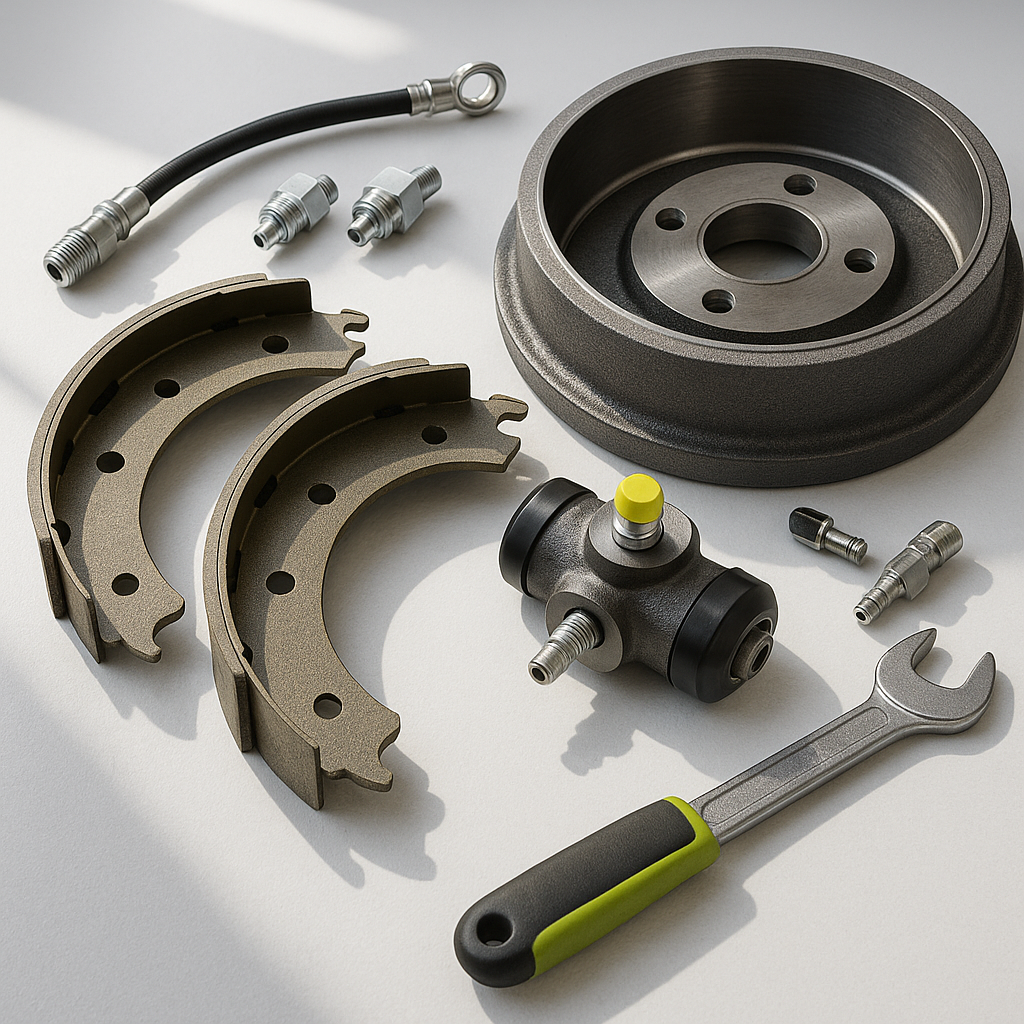
Worn brake shoes are one of the most common reasons stopping power degrades gradually. Golf cart brake shoes have a friction lining that wears down with use, and once it gets thin enough, you simply don't get enough friction against the drum to stop effectively. Remove the drum and visually inspect the lining thickness — if the material is worn down close to the metal backing, replace the shoes. At the same time, look at the drum surface itself. Grooves, scoring, or a glazed surface all reduce friction. Light surface rust on a drum that's been sitting is normal and usually clears up after a few stops, but deep scoring means the drum needs to be turned or replaced.
Look for Grease or Contamination on the Brake Components
Even a small amount of grease, oil, or brake fluid on the friction surfaces will dramatically reduce braking effectiveness — and it's a surprisingly common cause of weak brakes. Grease can migrate from a nearby axle bearing or wheel hub onto the brake shoe lining or drum surface. If you see a shiny, slick residue on either surface, that lining is contaminated and needs to be replaced; cleaning alone won't restore it reliably. Also check the axle seals — a leaking seal is the source problem, and it needs to be addressed at the same time or you'll contaminate the new shoes quickly.
Inspect the Self-Adjuster Mechanism (If Equipped)
Many drum brake systems include a self-adjuster that's supposed to take up slack as the shoes wear, keeping the shoe-to-drum clearance consistent. If this adjuster is seized, corroded, or not functioning, the shoes back off too far from the drum as they wear, and you end up with a long, soft pedal stroke. Inspect the adjuster wheel and mechanism for corrosion or debris, and confirm it moves freely. Manual adjustment — turning the star wheel adjuster to bring the shoes closer to the drum — is often all that's needed to restore a firmer pedal feel immediately.
Check Brake Spring Tension and Hardware
Return springs hold the brake shoes away from the drum when you're not braking. If a return spring is weak or broken, a shoe can drag against the drum constantly, wearing unevenly and generating heat that eventually glazes the lining. More relevant to spongy feel: if the hold-down springs or other hardware are weak or missing, the shoes can shift position inside the drum, making braking feel inconsistent or soft. When you have the drum off, inspect all the springs and clips. They're inexpensive and worth replacing as a set if any look fatigued or corroded.
Don't Overlook the Pedal Pivot and Equalizer Bar
The brake pedal itself pivots on a shaft or pin that can wear or corrode over time, introducing slop at the very start of the pedal stroke. Similarly, carts with brakes on multiple wheels use an equalizer bar to distribute cable tension evenly — if this bar is bent, corroded, or its pivot is worn, braking force won't apply evenly and the whole system feels vague. Check that the pedal moves cleanly without side-to-side wobble, and inspect any equalizer linkage for wear or misalignment.
After Any Adjustment or Repair, Bed the Brakes In Properly
Once you've made adjustments or replaced components, take the cart through a series of moderate stops — not emergency stops — at low speed to allow the shoes to seat against the drum surface. Brake feel often improves noticeably after the first several stops as the surfaces conform to each other. If stopping power is still inadequate after bedding in, or if you notice the cart pulling to one side during braking, go back through the inspection steps — it usually means one side is adjusted differently or has contamination the other doesn't. Brakes that feel good at first but fade quickly under repeated use on hills suggest a glazing or heat problem worth investigating further.