Bad steering on a golf cart isn't just annoying — it's a safety issue, especially on hilly terrain or anywhere near traffic. The good news is that most steering complaints fall into predictable categories, and you can diagnose the root cause yourself with nothing more than some focused inspection time. Before you replace anything, work through these checks in order.
Start With the Steering Wheel Itself
Grab the steering wheel and try to wiggle it straight up and down, then side to side on its column axis. Some play is normal in a golf cart, but if the wheel itself rocks on the column, the hub nut may have loosened over time. A loose hub is one of the most overlooked causes of vague, wandering steering. Check that the wheel is seated fully on the column spline and that the retaining nut is properly torqued. While you're there, look for cracking or deformation around the center hub — a damaged wheel won't transmit steering input cleanly no matter how tight everything else is.
Check the Steering Column and U-Joints
Follow the column down from the wheel and look for universal joints or couplings connecting it to the steering box or rack. These joints can wear, corrode, or develop looseness that shows up as a clunking feel or a dead spot in the wheel's travel. Have a helper hold the wheel and move it slightly back and forth in both directions while you watch the u-joints for any slack before the movement transfers. Visible slop here is a clear sign the joint needs replacing. Also check that all column mounting brackets are tight — a column that flexes in its mounts will feel sloppy even if every other component is perfect.
Inspect the Tie Rods and Front End
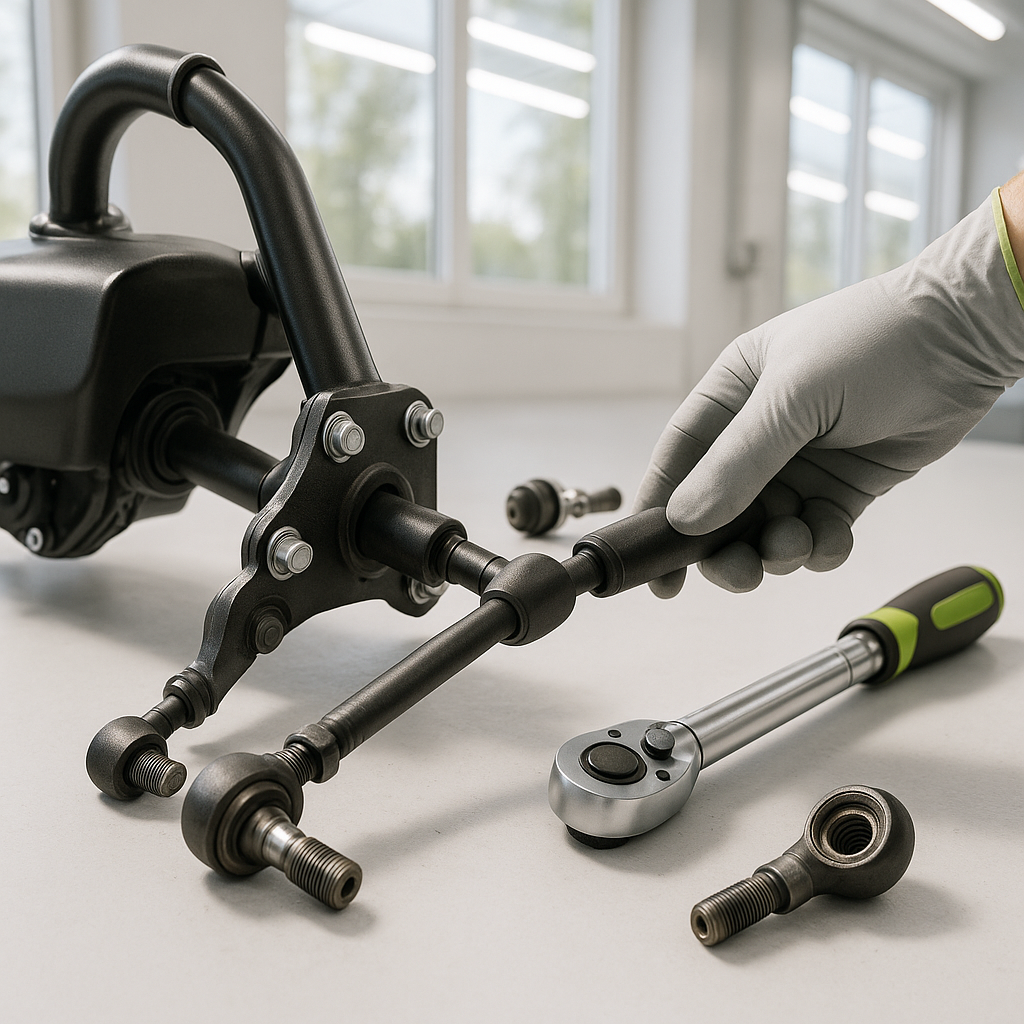
Tie rods connect the steering system to the front hubs and are a very common wear point. With the front wheels on the ground, grab each front tire at the 9 and 3 o'clock positions and try to push and pull it laterally. Any noticeable knocking, clicking, or movement that isn't smooth resistance points to a worn tie rod end or inner tie rod. Repeat this test at the 12 and 6 o'clock positions — that checks wheel bearing play rather than tie rod play, so it helps you isolate which component is the culprit. Bent or damaged tie rods can also cause a consistent pull to one side that doesn't go away with a steering wheel correction.
Look at Wheel Alignment and Toe Setting
If your cart consistently drifts or pulls to one side on a flat surface, alignment is the likely suspect. Golf carts use a simple toe-in or toe-out setup on the front wheels, and this spec can shift after hitting a curb, a deep rut, or even just from normal tie rod wear. You don't need a shop alignment rack to get a rough check — measure the distance between the front edges of both front tires, then measure the rear edges of the same tires. Those numbers should be close to equal or show a very slight toe-in depending on your cart's spec. A significant difference explains the pull. Alignment problems usually come with uneven front tire wear as a secondary symptom.
Check the Steering Box or Rack for Wear
Older golf carts with a recirculating-ball steering box can develop internal wear that creates a loose, wandering feel — especially noticeable at low speeds. Some boxes have an adjustment screw that can take out a small amount of slack, but there's a limit to how much adjustment is safe before the box needs replacing. Rack-and-pinion style steering, found on many newer carts, can develop looseness at the rack mounting points or within the rack itself. With a helper turning the wheel slowly, watch the entire rack assembly for movement that shouldn't be there. Any rocking or shifting of the rack in its mounts is a problem that adjustments alone won't fix.
Don't Overlook Tire Pressure
It sounds basic, but unequal tire pressure between the two front tires will cause a cart to pull toward the lower-pressure side, and low overall pressure makes steering feel heavy and imprecise. Check all four tires with a gauge before concluding you have a mechanical problem. Many steering complaints disappear once tire pressures are equalized and set to spec.
When to Stop DIY and Get Help
If you've worked through all of these checks and can't identify a clear cause, or if the steering feels dangerous to drive — heavy pull, sudden looseness, or grinding — stop driving the cart until it's inspected by someone with hands-on experience. Steering is one system where guessing the fix and getting it wrong has real consequences. That said, most common steering problems come down to worn tie rod ends, a loose steering wheel hub, or a tired steering box, all of which are straightforward repairs once correctly diagnosed.