If your golf cart steering has gone from easy and responsive to heavy, binding, or just plain hard to crank through turns, something mechanical has changed — and it's worth diagnosing properly before you assume it's a major fix. Stiff steering is one of those problems that tends to get worse gradually, so owners often adapt to it without realizing how bad it's gotten. A systematic check through the most common causes will usually point you straight to the culprit.
Start With the Tires and Tire Pressure
This is the first and easiest thing to check, and it's surprising how often it's the answer. Low tire pressure — especially in the front tires — dramatically increases the effort needed to steer, particularly at low speeds or when turning sharply. Check both front tires and inflate them to the manufacturer's spec if they're low. Also look at whether the tires are the same size side to side. Mismatched tires, or tires that are significantly different in wear level, can create uneven resistance through turns.
Inspect the Steering Column and Shaft for Binding
With the cart on a flat surface and the front wheels on the ground, turn the steering wheel slowly from lock to lock and pay attention to where resistance increases. Smooth overall effort that's just heavy usually points to the front end or tires. A catch, click, or notchy feel at a specific point in the rotation suggests binding somewhere in the column or steering shaft — often a worn or dry u-joint, a bent shaft, or a column that has shifted and is contacting surrounding structure. Look under the dash area and trace the column down, watching for any obvious contact points.
Check the Tie Rods and Front Spindles
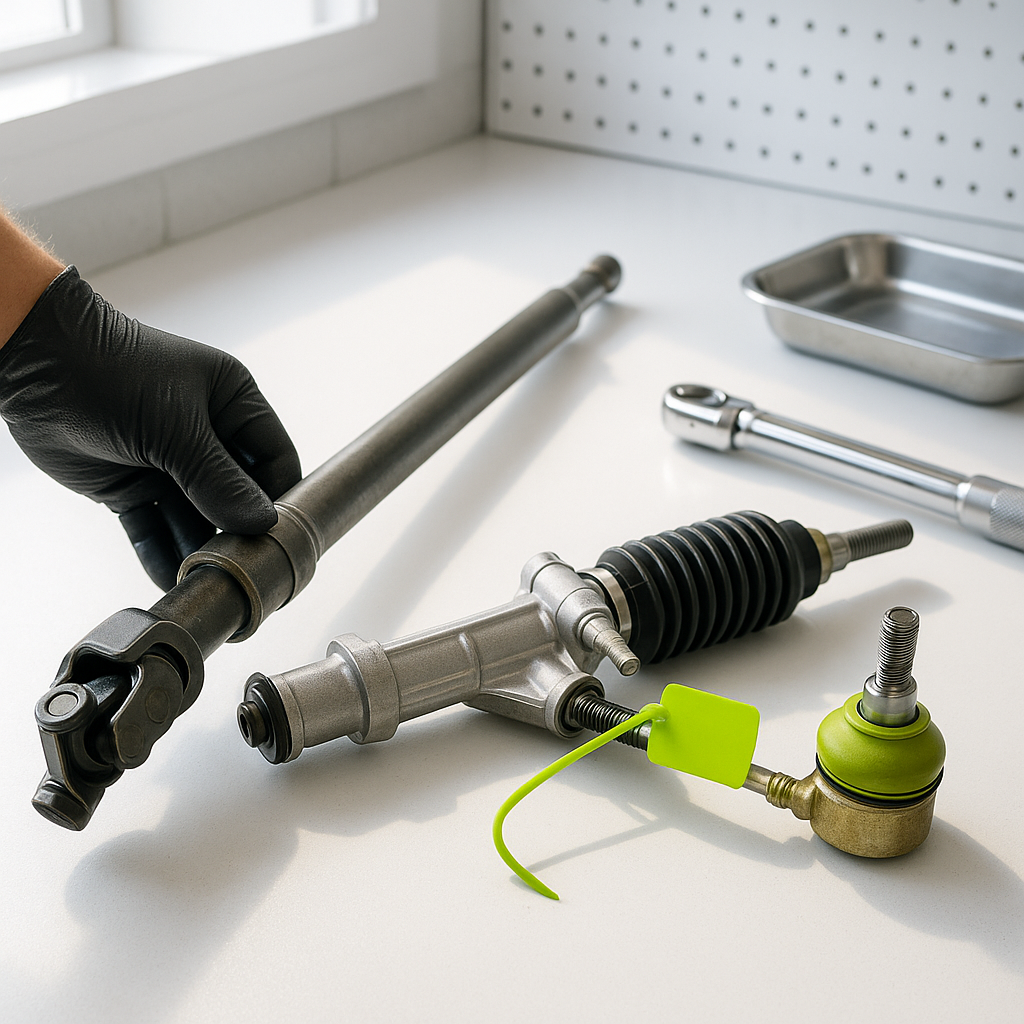
Tie rod ends and front spindle pivot points (also called king pins or spindle bolts depending on the cart) are wear items that can seize, corrode, or simply run dry of lubrication over time. With the cart safely lifted and the front wheels off the ground, try moving each front wheel side to side by hand. It should move freely through its range. If you feel significant resistance, grinding, or binding at the spindle pivot, that component likely needs cleaning, lubrication, or replacement. Seized tie rod ends will cause similar symptoms and are easy to spot — they should pivot smoothly when you work them by hand.
Look at the Steering Gear Box or Rack
Most golf carts use either a simple rack-and-pinion setup or a steering gearbox. Either can tighten up over time from worn internal parts, corrosion, or — in the case of gearboxes — low or degraded grease. If you've worked through the items above and still have heavy steering, have someone turn the steering wheel while you watch the gearbox or rack. Look for binding, excessive movement of the housing, or looseness where it mounts to the frame. A gearbox that's overly tight internally or a rack that's starting to bind is a less common cause but does happen on older or high-hour carts.
Don't Overlook Recent Changes
If the stiff steering appeared suddenly after a specific event — hitting a curb or obstruction, changing tires, installing a lift kit, or doing any front-end work — start your diagnosis right there. Lift kit installs in particular can affect steering geometry significantly. Changes in caster, camber, or toe-in after a lift can make steering noticeably heavier or cause it to return sluggishly after turns. If the problem appeared right after a lift install, a front-end alignment check is the right next step. Similarly, if a new steering wheel was installed, confirm the column hardware was properly reassembled and nothing is contacting the column at the wheel end.
When to Get a Second Set of Eyes
Most stiff steering causes are findable with a basic visual inspection and a short test drive. But if you've checked tire pressure, front-end pivot points, tie rods, and the steering column and still can't identify the source, a golf cart technician with alignment tools can measure the front-end geometry precisely and spot issues that aren't visible by eye. Stiff or heavy steering that goes unaddressed puts extra wear on every component in the steering system, so it's worth resolving properly rather than just getting used to it.