If your golf cart suddenly feels like it takes real muscle to steer — especially at low speeds or while turning sharply — something mechanical is fighting you. Stiff steering rarely fixes itself, and on a cart without power steering, the causes are almost always physical: friction, binding, or wear somewhere in the steering linkage. The good news is most of these problems are visible and diagnosable with basic inspection, no special tools required.
Start With the Tires and Tire Pressure
Before digging into the steering system itself, check tire pressure. Under-inflated tires create significantly more rolling resistance and scrub during turns, which translates directly into heavy steering effort. Check all four tires and inflate them to the manufacturer's recommended pressure — it's one of the most common causes of sudden stiffness and one of the easiest to rule out. Also look for uneven wear or a flat spot on a tire, which can create a dragging sensation that mimics steering stiffness.
Inspect the Front Wheel Bearings
Worn or dry front wheel bearings are a very common culprit. Jack up the front of the cart safely so both front wheels are off the ground. Spin each wheel by hand — it should spin freely with minimal resistance and no grinding or rumbling sound. Then grab the wheel at the 9 and 3 o'clock positions and try to rock it side to side. Any looseness indicates a worn bearing. A tight, grinding wheel points to a seized or damaged one. Either condition creates drag that makes steering heavy, and a truly bad bearing can eventually seize completely.
Check the Tie Rods and Steering Linkage
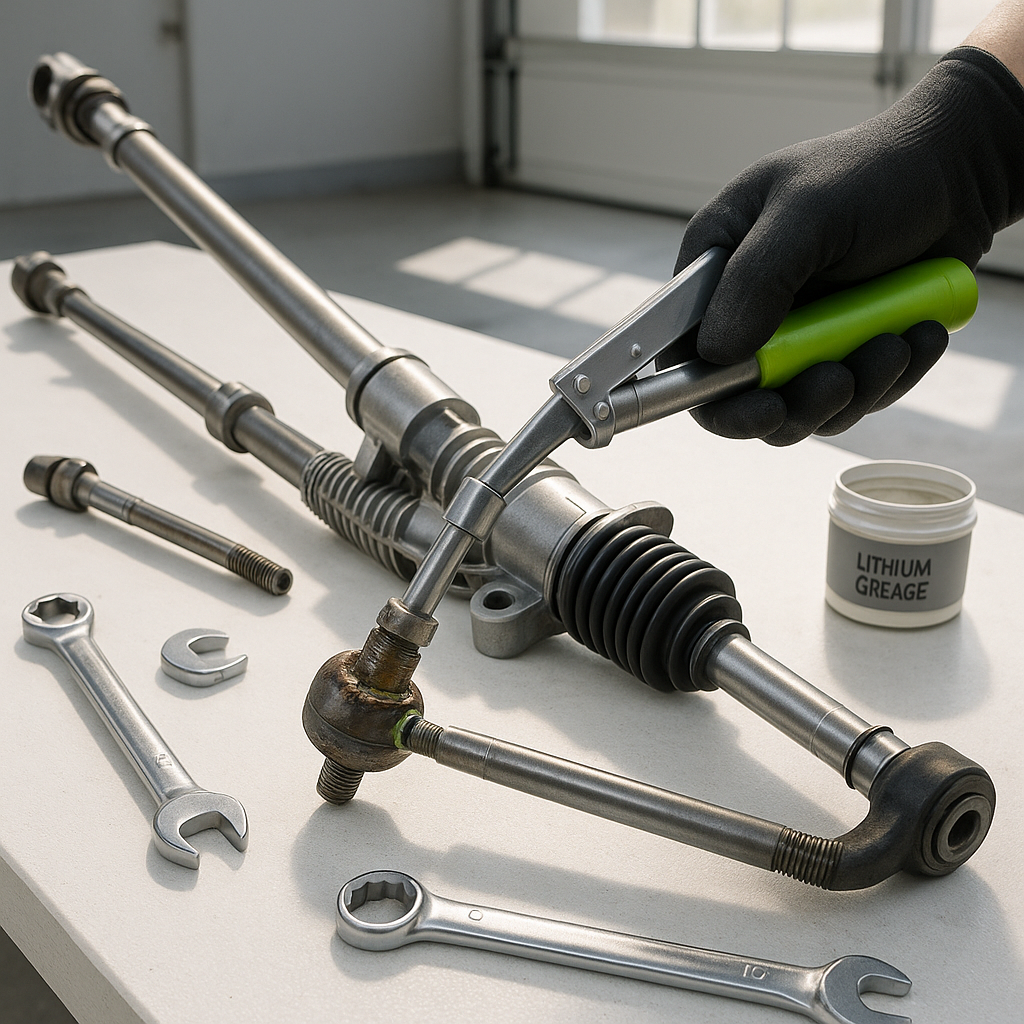
With the front wheels still off the ground, have someone gently move the steering wheel back and forth while you watch the tie rod ends and ball joints. Every connection in the steering linkage should move smoothly and without excessive play. Look for torn or missing boots on tie rod ends — without grease protection, these joints dry out and bind. Feel along each rod for bends or obvious damage. A bent tie rod from a curb strike or rough terrain can create binding through part of the steering range, making the wheel stiff in one direction more than the other.
Examine the Steering Column and Rack or Box
Follow the steering column down from the wheel to where it connects to the rack, gearbox, or steering shaft depending on your cart's design. Look for obvious collision damage, rust, or corrosion that could be binding the column. Some carts use a steering gearbox with grease inside — if it's been neglected for years, dried-out or contaminated grease can make the internal gears stiff to turn. In other cases, the column U-joint (if your cart has one) can seize from rust. Move the wheel slowly through its full range and feel for any spot where resistance spikes — that usually pinpoints where the binding is occurring.
Look at Spindles, Kingpins, and Pivot Points
The kingpins and spindles are the pivot points that allow your front wheels to turn. On older carts especially, these wear out or seize from lack of lubrication. If your cart has grease fittings (zerk fittings) on the kingpins, try greasing them and see if the steering frees up. If they've never been serviced, they may be seized entirely. With the wheels off the ground, you should be able to turn each spindle through its steering range by hand with reasonable effort. Significant resistance or a gritty, binding feel means the pivot points need service or replacement.
Don't Overlook Aftermarket Wheels and Steering Components
If stiff steering appeared after swapping in an aftermarket steering wheel, a wheel adapter, or other steering column hardware, the new component may be slightly misaligned or rubbing against adjacent parts. An improperly seated adapter can create friction that makes the wheel feel tight. Check that everything is centered, seated fully, and not contacting the column shroud or surrounding trim at any point during rotation.
When to Stop DIYing and See a Shop
If you've checked tires, bearings, tie rods, and pivot points and still can't identify the source of the stiffness — or if you find obvious damage to the steering rack, gearbox, or a bent steering shaft — that's the point to bring in a professional. Steering is a safety system, and components that are compromised rather than just dry or worn often need proper replacement rather than adjustment. Diagnosing the problem yourself is valuable because you can describe exactly what you found, which saves time and money at the shop.