A little looseness in a golf cart steering wheel can feel like a minor nuisance at first, but it tends to get worse over time and can become a genuine safety issue — especially at higher speeds or on uneven terrain. The good news is that most causes are mechanical, visible, and fixable without specialized equipment. This guide walks you through the most common culprits, starting with the easiest checks and working toward the ones that require a bit more digging.
Start at the Steering Wheel Hub
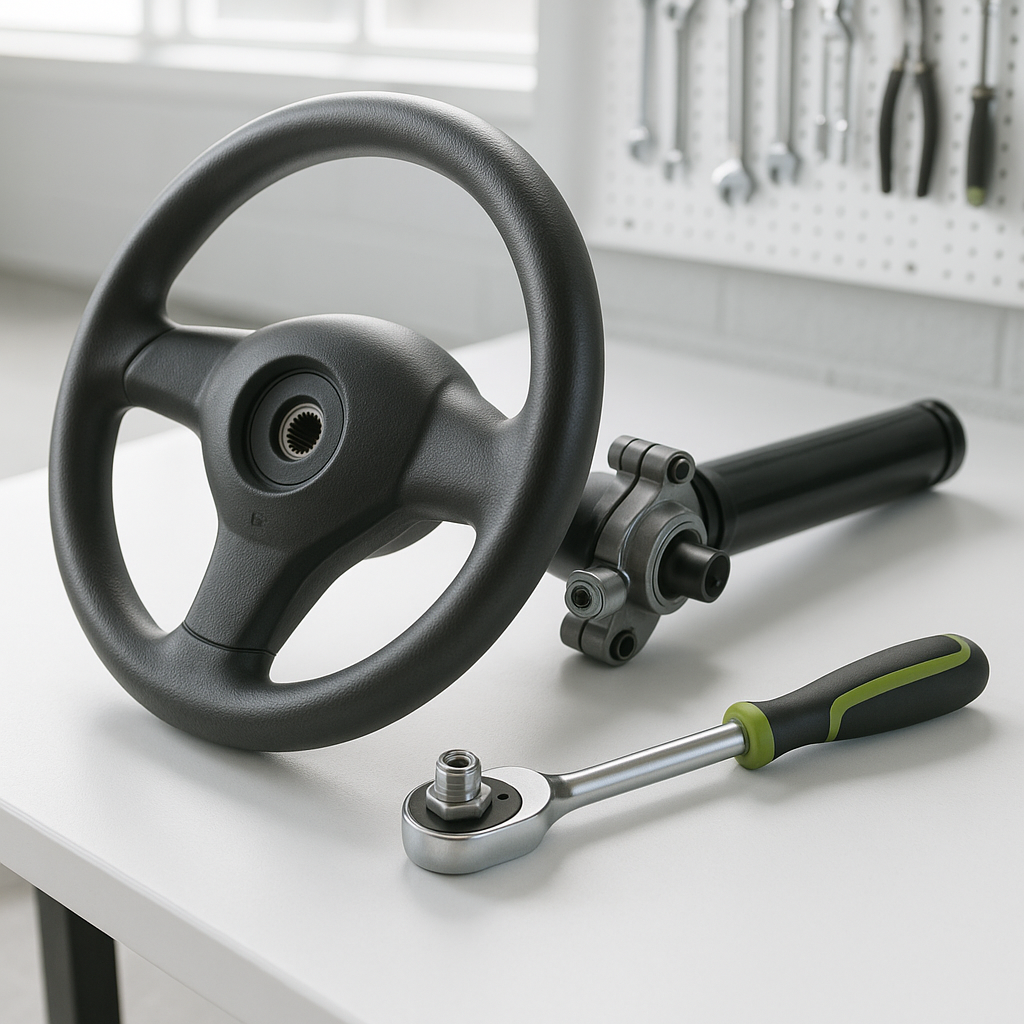
The most common source of slop is right at the center — the steering wheel's attachment to the column shaft. Grab the wheel with both hands and try to wiggle it in and out (axially), not just rotationally. If it moves toward and away from you, the retaining nut on the column shaft has likely loosened. This nut is often hidden under a center cap. Remove the cap, locate the nut, and check whether it's backed off. Tightening it frequently resolves a surprising amount of perceived looseness. If the nut won't hold tension or the splines underneath look worn or rounded, the hub itself may need replacing.
Check the Steering Column Connections
Golf cart steering columns are typically made of two or more sections connected by a coupler or U-joint. These joints wear over time, especially on carts that see a lot of rough terrain. Get under the dash area and inspect the coupler linking the column to the steering box or rack. Grab the column and twist it back and forth gently — if you see movement at the coupler that isn't being transmitted downstream, that joint is worn or has come loose. Couplers are usually secured by bolts or set screws, and they can loosen from vibration over months of use.
Inspect the Steering Box or Rack
On most golf carts, the steering box (or rack-and-pinion assembly) sits low on the frame near the front axle. Wear inside the box itself creates rotational play — you can turn the steering wheel several degrees before the front wheels begin to respond. With the cart stationary on flat ground, have someone watch the front tires while you slowly rock the steering wheel back and forth through its dead zone. If the tires don't move until you've turned the wheel noticeably in either direction, the steering box has internal wear. Adjustments are possible on some gear boxes, but a badly worn unit usually needs replacement.
Look at Tie Rods and Tie Rod Ends
Tie rods translate steering input into actual wheel movement, and the ball-joint ends wear out with use. Grab each front tire at the 9 and 3 o'clock positions and try to push and pull it laterally. Any clunking, clicking, or visible movement at the tie rod end joints points to worn ball joints. Then grab each tire at 12 and 6 o'clock and try to rock it — this checks king pins and wheel bearings rather than tie rods, but it's worth doing at the same time. Worn tie rod ends are among the most common sources of steering slop on older carts and are straightforward to replace.
Check Wheel Bearings and King Pins
As mentioned above, rocking a front tire at 12 and 6 o'clock tests the wheel bearings and king pin. A loose or rumbling bearing, or a worn king pin bushing, creates play that feels like steering looseness because it allows the whole spindle assembly to shift slightly. If you feel movement or hear a clunk during this test, inspect the bearings and king pin bushings before assuming the steering box is at fault. Replacing bearings is generally inexpensive and straightforward; king pin bushing replacement is more involved but still a common DIY repair.
Consider Lift Kit Geometry Changes
If the looseness developed after a lift kit installation, the geometry of the steering linkage may have changed in ways that introduce slop or bind. Extended spindles, drop brackets, or longer tie rods all affect the angles at which components connect and load. Check that all new hardware is properly torqued and that no joint is operating at an extreme angle that causes it to bind or chatter. In some cases, a lift kit changes steering feel permanently and requires additional alignment or a different steering component to correct.
When to Address It Right Away
Any steering play that is getting progressively worse, or that is accompanied by clunking, pulling to one side, or tires that look visibly misaligned, should be fixed before the cart is driven regularly. Steering issues compound — a loose tie rod end that fails completely means you lose directional control. Work through these checks in order, fix what you find, and re-test after each repair. In most cases, you'll isolate the problem to one or two components rather than needing to overhaul the entire front end.