A little slop in a golf cart steering wheel is easy to ignore, especially at low speeds on flat ground. But too much play — where the wheel turns several inches before the front wheels respond — is a genuine safety problem. It makes the cart harder to control, especially on hills, uneven terrain, or when turning at any real speed. The good news is that diagnosing the source of the problem follows a logical sequence you can work through without specialized tools.
Start With a Straight-Line Inspection
Park the cart on a flat surface with the front wheels pointed straight ahead. Grip the steering wheel with both hands and gently rock it left and right without actually turning it. Notice where the movement seems to originate. Is the wheel itself wobbly on the column, or does the play feel like it's coming from deeper in the system? Does anything clunk or shift when you rock it? That initial feel tells you a lot about where to look first. If the wheel itself wobbles on the column before anything else moves, the issue is at the wheel hub or column shaft. If the whole column moves as a unit before the wheels respond, the problem is likely further down — in the steering box, tie rods, or spindles.
Check the Steering Wheel Hub and Column
The steering wheel connects to the column shaft via a hub, usually secured by a center nut and sometimes a retaining clip or key. Over time — especially on carts that see rough terrain or a lot of use — that nut can back off slightly. This is one of the most common and most overlooked causes of play. With the cart parked and key out, try to lift and push down on the steering wheel itself. Any vertical wobble points directly to a loose or worn hub connection. Inspect the nut for tightness and check the column shaft splines (the teeth the hub grips) for wear or rounding. Worn splines can't be tightened away — the hub or shaft will need replacement.
Inspect the Steering Box or Rack
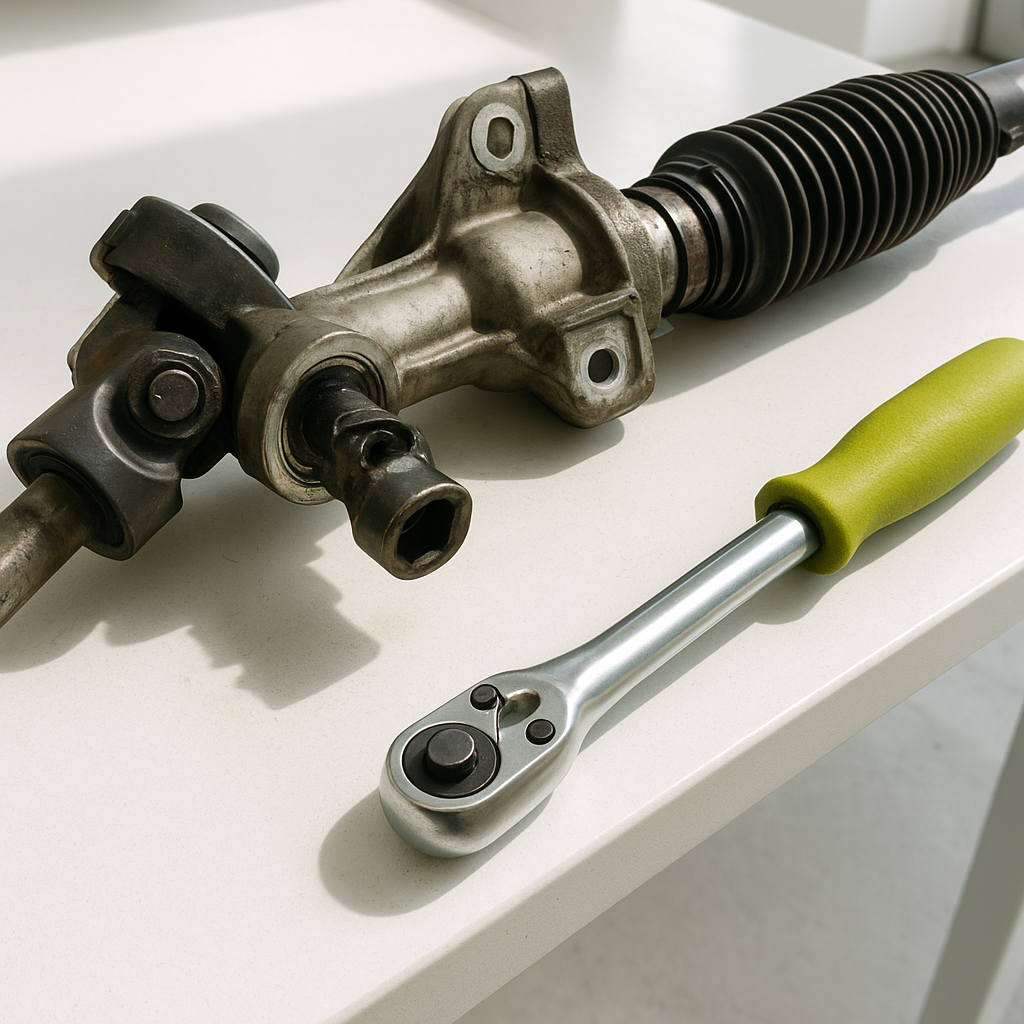
Golf carts use either a recirculating ball steering box or a rack-and-pinion setup depending on make and model. Either one develops internal wear over time. To check the steering box, have a helper hold the front wheels while you turn the steering wheel slightly — if the wheel moves but nothing happens at the box output shaft, the box has internal play or the input shaft connection is loose. Most steering boxes have an adjustment point (often a set screw or lock nut on top of the box) that can take up minor internal slop. However, if the box feels rough, grinds, or has a lot of free movement even at the output shaft, internal wear may be past the point of adjustment and replacement is the better call.
Check the Tie Rods and End Links
Tie rods translate the steering box's motion into actual wheel movement. Each rod has ball-socket joints at either end, and those joints wear over time — particularly on carts driven on rough paths, gravel, or grass. To check them, safely lift and support the front of the cart so the wheels hang free. Grab each tie rod near the ends and try to move it up and down and side to side. There should be minimal movement. Any noticeable clunk, looseness, or roughness at a joint means that end link is worn and should be replaced. A loose tie rod end is not just a steering feel issue — it can cause unpredictable handling and is a real safety concern.
Inspect the Spindles and King Pins
At the outer ends of the front axle, the spindles pivot on king pins (or ball joints, depending on the cart's front end design). Worn king pins are a classic source of front-end slop and are often missed because they're not as visible as tie rod ends. With the wheel still lifted, grab the tire at the top and bottom and try to rock it in and out. Any significant movement here — beyond a tiny amount — suggests king pin or ball joint wear. Then grab the tire at the 9 o'clock and 3 o'clock positions and try to rock it side to side. That motion is more typical of tie rod or steering box play. Combining both checks helps you pinpoint exactly which component is the culprit.
Don't Overlook the Column Itself
On older carts especially, the steering column can develop play at its mounting brackets. The column is typically bolted to the frame in one or two spots, and if those mounts loosen or the rubber bushings inside them deteriorate, the entire column shifts slightly under steering input. Grab the column below the wheel and try to move it in all directions. It should feel completely solid. Any movement at the column itself — independent of the wheel — means checking and tightening the mounting hardware, and inspecting whether any rubber dampening bushings need replacement.
When to Stop Diagnosing and Start Fixing
If you've worked through this sequence and found multiple worn components, resist the temptation to patch just one and call it done. Steering system wear tends to be cumulative — a worn steering box paired with loose tie rod ends creates far more combined play than either problem alone. Fix everything you find, not just the worst offender. Any time a cart has meaningful steering play, it should be considered unsafe for anything beyond the slowest, most controlled use until the problem is resolved. Catching this early, before a joint fails completely or a nut backs off entirely, is always easier and cheaper than dealing with the consequences after the fact.