A little looseness in a golf cart steering wheel is easy to dismiss, especially if the cart still drives in a straight line. But excessive play — where you can rotate the wheel several inches before the front wheels actually respond — is a genuine handling and safety problem. It makes the cart harder to control at speed, wears components faster, and often signals something that will only get worse if ignored. The good news is that most causes are mechanical, visible, and fixable without specialized tools.
Understand What "Too Much Play" Actually Means
Some small amount of free movement at the rim of the steering wheel is normal in virtually every golf cart. The problem starts when that free rotation becomes significant — typically anything more than an inch or two of rim movement before you feel the front wheels start to respond. If you can rock the wheel back and forth and the cart barely reacts, you're dealing with real slop somewhere in the steering system, not just normal tolerance.
Start at the Steering Wheel Itself
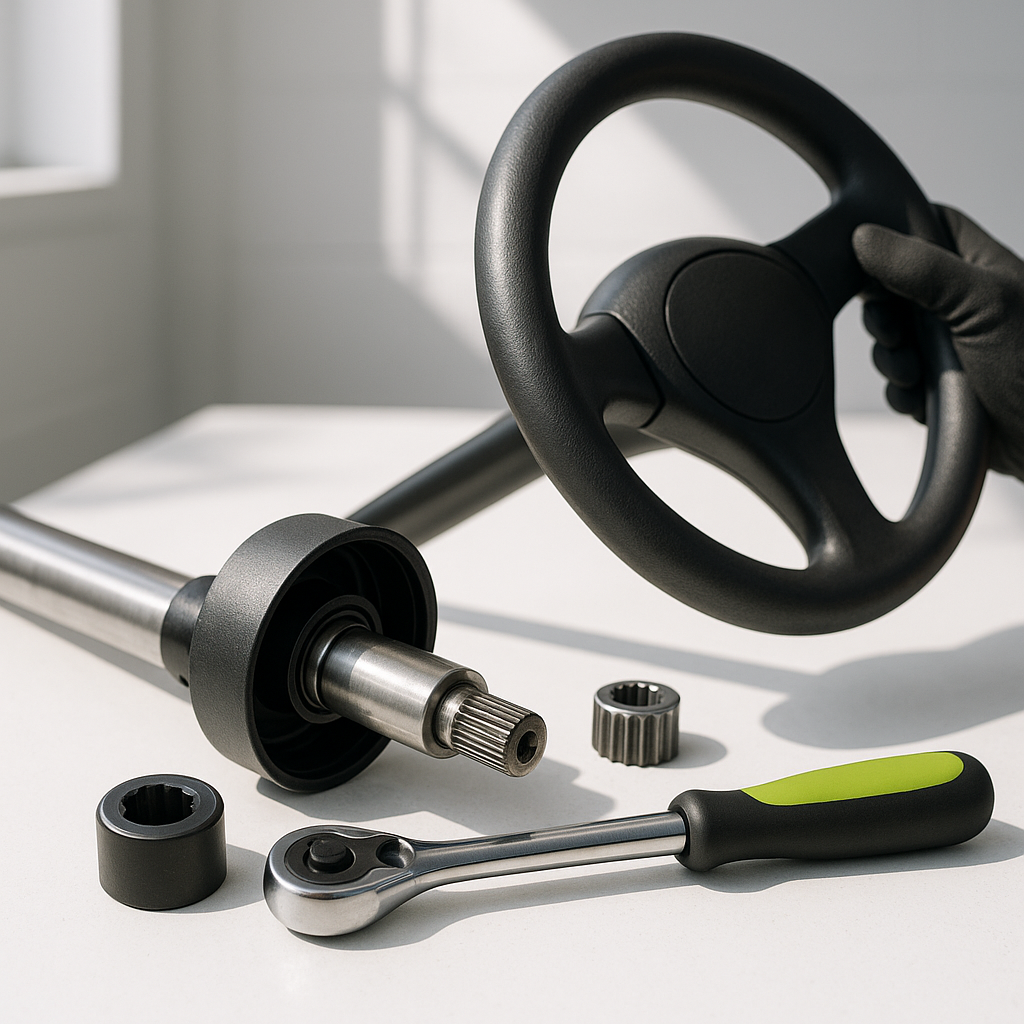
Before diving into the steering column or rack, check the most obvious thing first: whether the steering wheel is actually tight on the shaft. Grab the wheel with both hands and try to pull it straight toward you, then push it away. Any in-and-out movement means the wheel itself is loose on the splined or keyed shaft. On most carts this is a single nut at the center hub — over time vibration works it loose. If the wheel rocks side to side but doesn't pull in and out, the issue is lower in the system. Tighten the hub nut if it's loose and recheck play before continuing.
Check the Steering Column and Coupler
Below the wheel, the steering column connects to either a rack-and-pinion or a steering gear box through a coupler or U-joint. These couplers — often made of rubber or a combination of rubber and metal — absorb vibration but wear out over time, especially on carts that see rough terrain. A worn coupler develops slop that translates directly into wheel play. Inspect it visually for cracking, deformation, or obvious looseness. With the cart stationary and on a flat surface, have a helper hold the front wheels steady while you rock the steering wheel — if you can see movement at the coupler that doesn't transfer to the wheel below it, the coupler is your culprit.
Inspect the Tie Rods and Tie Rod Ends
Tie rods connect the steering rack or gear box to each front wheel's steering knuckle, and the ball-socket joints at each end wear with use. To check them, safely lift and support the front of the cart so the tires are off the ground, then grab each tire at the three and nine o'clock positions and try to move it side to side. Any clunking, clicking, or visible lateral movement at the tie rod ends points to worn joints. Also check the tie rods themselves for bends — a bent tie rod from hitting a curb or obstacle can cause unpredictable play and will affect alignment as well.
Look at the Steering Rack or Gear Box
Golf carts use either a rack-and-pinion assembly or a recirculating ball steering gear box depending on the make and model. Both can develop internal wear that creates play. A rack can develop worn teeth or a loose mounting, while a gear box can wear internally or lose adjustment. With the tires on the ground, have someone rock the steering wheel while you watch the rack or gear box — excessive movement of the housing itself means the mount bolts are loose, while internal slop (wheel moves but rack barely does) suggests internal wear. Gear boxes on older carts sometimes have an adjustable preload screw that can take up slack, but this is a procedure to research for your specific cart model before attempting.
Don't Overlook the Spindles and King Pins
On older golf carts especially, the king pins — the vertical pivot points that allow each front wheel to steer — wear over time and develop slop. To check them, lift the front of the cart, grab the tire at twelve and six o'clock (top and bottom), and try to rock it in that direction. Movement here, as opposed to the side-to-side test for tie rod ends, suggests worn king pins or spindle bushings. This is a more involved repair but an important one — worn king pins affect both steering play and front-end stability.
When to Fix It Yourself vs. Get Help
Tightening a loose steering wheel nut or swapping a worn coupler are reasonable DIY jobs for most cart owners. Tie rod end replacement is also manageable, though it requires an alignment check afterward since toe angle will change. King pin replacement and steering gear box work are more involved — if you're not confident in your mechanical ability or don't have a way to properly support the cart, these are worth having a shop handle. Whatever the cause, don't put off fixing loose steering. It's one of the few golf cart problems where the consequences of letting it slide can be genuinely dangerous.