A golf cart that rides rough, pulls to one side, sits noticeably lower on one corner, or clunks over every bump isn't just uncomfortable — it's telling you something is wrong. Before you reach for a lift kit or any other suspension upgrade, it pays to run through a proper diagnostic. Some of these problems are simple worn bushings. Others point to bent spindles, collapsed leaf springs, or damaged A-arms that a lift kit alone won't fix and could even make worse if the underlying issue isn't addressed first.
Start With a Visual Inspection on Level Ground
Park the cart on a flat, level surface and step back to look at it from the front and rear. If the cart sits lower on one side than the other, that's your first clue. Uneven ride height almost always points to a failed or sagging spring on the low side — leaf spring packs can fatigue over time, especially on carts that regularly carry heavy loads or traverse rough terrain. While you're looking, check for any obviously bent or cracked suspension components. Bent spindles and cracked A-arm welds are more common than people expect on older carts that have seen hard use, and they're not safe to drive on regardless of what else you do.
Check All the Bushings and Pivot Points
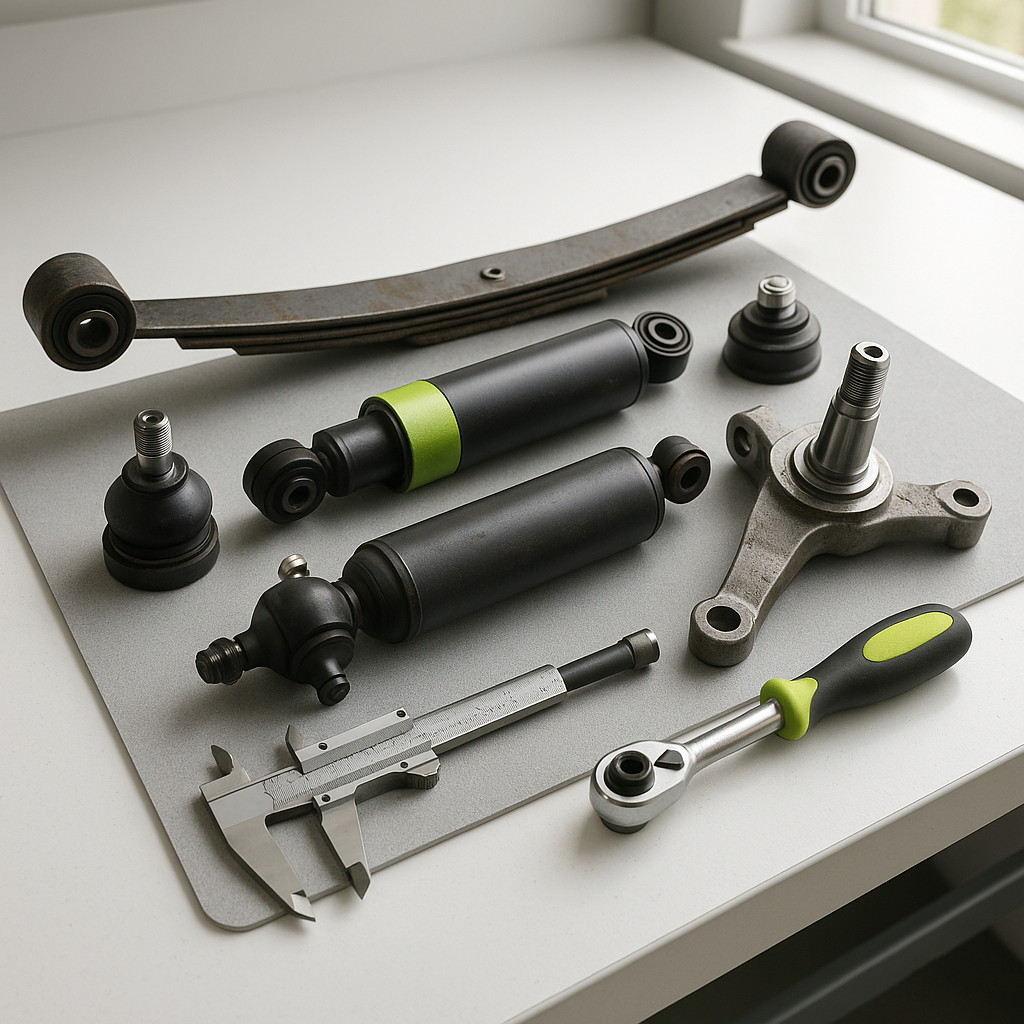
Worn rubber bushings are one of the most common causes of a rough, clunky ride on a golf cart, and they're easy to overlook because the wear happens gradually. With the cart safely supported on jack stands, grab each wheel and try rocking it — top-to-bottom and side-to-side. Any noticeable play beyond a tiny amount suggests worn wheel bearings or loose spindle hardware. Then physically inspect the A-arm pivot bushings and any tie rod end bushings. Rubber that has cracked, dried out, or compressed flat needs to be replaced before any suspension work makes sense. If you're planning to lift the cart, new bushings throughout are essentially mandatory — worn bushings get even sloppier once suspension geometry changes.
Inspect the Leaf Springs or Coilover Units
Most golf carts use either a leaf spring setup in the rear or — depending on the model and year — independent suspension with coilover-style shocks. For leaf springs, look for leaves that are cracked, separated, or have lost their arch. A spring pack that's gone flat will never recover; it needs to be replaced. Check the U-bolts and spring perches for rust and looseness as well. For carts with shock absorbers, push down firmly on each corner of the cart and let go — the cart should rebound once and settle. If it bounces multiple times or feels mushy with no resistance, the shocks are blown and need replacing. Bad shocks dramatically worsen handling and are a safety concern, especially if you're considering larger tires that add more unsprung weight.
Evaluate Steering Feel and Toe Alignment
Suspension problems and steering problems are closely linked. If your cart wanders, pulls, or the steering wheel vibrates at speed, don't assume it's just a tire issue. Get under the front end and check the tie rod ends for play — grab each one and try to move it by hand. Any looseness in a tie rod end is a replacement job, not an adjustment. Also look at the front tires for unusual wear patterns: heavy wear on the inside or outside edges indicates a toe alignment problem that, if left uncorrected, will eat through new tires fast and make any lift kit installation much harder to dial in correctly.
When a Lift Kit Is the Right Next Step
Once you've ruled out — or repaired — damaged components, a lift kit becomes a legitimate upgrade rather than a band-aid over a bigger problem. Lift kits raise the cart's body and suspension to allow for larger tires, better ground clearance on trails, or simply a more aggressive stance. They typically work by either dropping the spindle (a spindle lift) or by relocating the A-arms and adding longer springs (a long-travel or A-arm lift). Spindle lifts are generally simpler and more bolt-on friendly; A-arm lifts offer more travel and a smoother ride but involve more complexity. The right choice depends on your specific cart model, how much lift you want, and what you plan to do with the cart. Always verify that the lift you're considering is engineered for your exact make, model, and year — suspension geometry varies significantly between manufacturers and generations, and a kit that fits a Club Car Precedent won't necessarily fit an EZGO TXT.
After Any Suspension Work, Always Check Alignment
This step gets skipped constantly and causes no end of tire wear and handling grief. Any time you touch the front suspension — whether replacing a tie rod end, installing a lift kit, or swapping springs — the toe alignment needs to be rechecked and set correctly afterward. On a golf cart you can do a rough toe check with a tape measure across the front of the tires versus the rear, but if the cart will see regular road or path use, having a shop confirm alignment is worth the time. It's also the moment to confirm there's no binding in the steering through the full lock-to-lock range, which can happen if lift geometry changes affect steering shaft clearance.