A golf cart that bounces excessively, pulls to one side, sits noticeably lower on one corner, or just feels punishing over anything but perfectly smooth pavement is telling you something. The problem might be worn-out stock suspension components, a failed lift kit installation, or damage you haven't spotted yet. Either way, throwing parts at it without diagnosing the root cause is a good way to waste money and still ride rough. Here's how to work through it systematically.
Start With a Visual Inspection — Cart Off, Parked on Level Ground
Before you touch anything, park the cart on a flat surface and walk around it slowly. You're looking for obvious signs: a corner that sits visibly lower than the others, a tire that's angled inward or outward when it should be straight (toe or camber issues), cracked or collapsed rubber bushings, bent A-arms or spindles, or any suspension component that's clearly out of position. Also check for missing hardware — bolts that have backed out are surprisingly common, especially on carts that see rough terrain. If the cart already has a lift kit installed, inspect every bracket, block, and mounting point for cracks or weld failures.
Check the Leaf Springs and Shock Absorbers
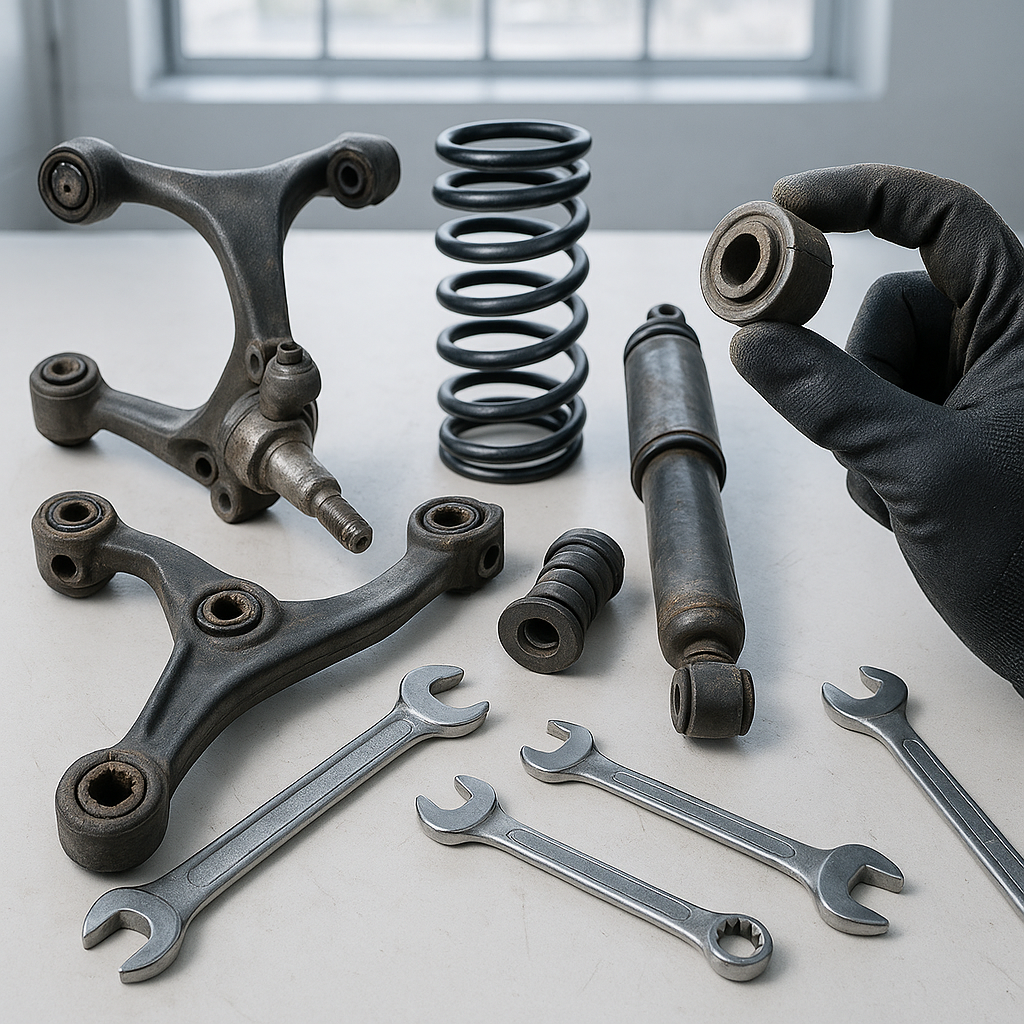
Most golf carts use a fairly simple suspension setup — leaf springs in the rear on many models, and either leaf or independent A-arm setups up front depending on the brand and age. Grab each leaf spring pack and look for broken or separated leaves. A broken leaf is sometimes obvious, but occasionally a spring will crack near a mount and stay in place until you flex it by hand. For shock absorbers, push down firmly on each corner of the cart and release. It should rebound once and settle. If it bounces more than once, or if one corner feels dramatically softer than the others, that shock is worn out. Look for oil weeping from shock bodies as well — that's a definitive sign of failure.
Inspect Bushings, Ball Joints, and Tie Rods
Worn bushings are one of the most common causes of a rough, wandering ride on older carts and on carts that have been lifted without upgrading the suspension hardware. Grab each A-arm and try to wiggle it — there should be minimal play. Do the same with tie rod ends: hold the tie rod and try to move the end in and out of the joint. Any noticeable looseness means that component needs replacement before you chase any other issue. Ball joints, where present, should be checked the same way — jack the wheel off the ground slightly and try to move it top-to-bottom and side-to-side. Clunking or slop is a red flag.
Evaluate Existing Lift Hardware If Already Installed
If your cart already has a lift kit on it — especially if you bought it used — take time to assess the quality and condition of what's there. Spindle lift kits and block lift kits have different failure modes. Block-style lifts can shift if hardware loosens; spindle lifts can develop wear at the spindle-to-A-arm interface. Look for any component that appears bent, cracked, or improperly shimmed. Check that all hardware is the correct grade and fully torqued. A poorly installed or undersized lift kit on a cart used for anything beyond smooth pavement will degrade quickly and can create genuine safety hazards at the front steering components.
Check Tire Condition and Inflation Before Blaming Suspension
It sounds basic, but uneven tire wear and improper inflation mimic suspension problems closely. A significantly underinflated tire on one side will make the cart feel like it's pulling or sitting low. Cupped or scalloped wear patterns across the tread surface indicate a tire that's been bouncing — usually a sign of a failed shock or loose suspension component above it. Check all four tires for inflation, wear pattern, and sidewall damage before you conclude the problem is purely mechanical. Oversized tires on a stock suspension — a common situation when a lift kit is installed — can also cause rubbing, handling changes, and faster wear if the geometry wasn't properly accounted for.
When Suspension Wear Points to a Lift Kit Upgrade
If your inspection reveals that the stock suspension is simply worn out and you've been wanting more ground clearance anyway, combining a full suspension rebuild with a lift kit installation is the sensible approach. Lifting a cart with already-worn components will amplify handling problems rather than solve them. The key considerations when choosing a lift kit are the specific make, model, and year of your cart (fitment is not universal), how much lift height you actually need for your intended use, and whether the kit includes replacement or upgraded suspension geometry components or is purely a lift spacer/block solution. More lift is not always better — higher lifts change the center of gravity and steering geometry in ways that demand respect, especially on slopes.
The bottom line: a rough ride or uneven stance is almost always diagnosable before you spend a dollar. Work through these checks in order, document what you find, and you'll know whether you're looking at a simple component replacement, a suspension refresh, a lift kit installation, or a correction of someone else's previous work. That clarity is what separates a repair that actually fixes the problem from one that just delays the next breakdown.