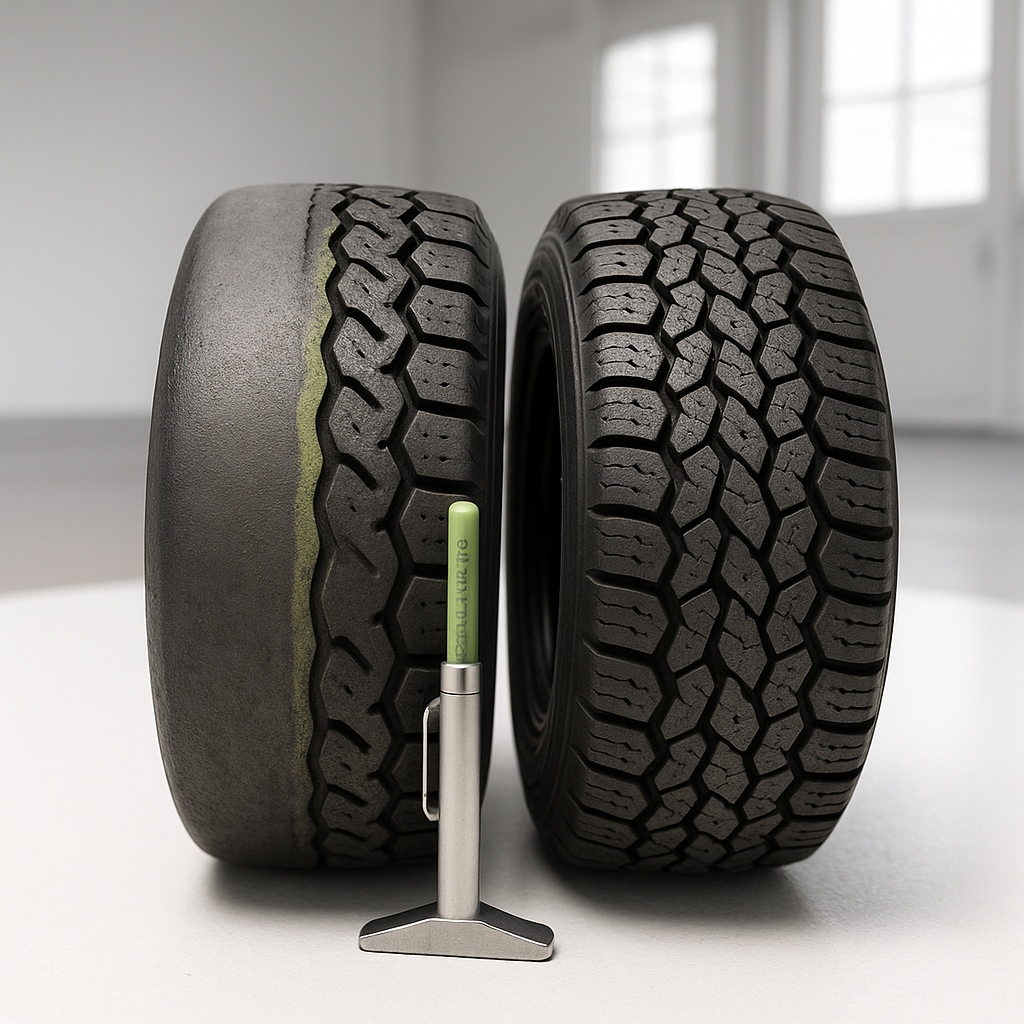
If you've noticed one tire wearing faster than the others, or a strange scalloped or feathered pattern across the tread, don't just replace the tire and move on. Uneven wear is almost always telling you something else is wrong — and ignoring the root cause means you'll chew through your new tires just as fast. This guide walks you through the most common culprits so you can actually fix the problem, not just the symptom.
Start With Tire Pressure
The single most common cause of uneven tire wear on a golf cart is improper inflation — and it's the easiest thing to check first. Underinflated tires wear heavily on the outer edges because the sidewalls bow out and the center of the tread lifts away from the pavement. Overinflated tires do the opposite: the center crown wears fast while the edges stay relatively untouched. Check all four tires cold (before the cart has been driven) with a reliable gauge, and compare to the pressure rating molded into the sidewall of the tire itself. Even one tire running significantly low can create noticeable wear differences side to side.
Check Wheel and Hub Runout
A bent wheel or a hub that's slightly out of true will cause the tire to wobble as it rotates, creating a scalloped or cupped wear pattern around the circumference of the tread. To check for this, lift the corner of the cart safely off the ground and spin the wheel by hand slowly. Watch the tire closely — any rhythmic wobble side-to-side or up-and-down points to a bent rim, a damaged hub, or a wheel that's not seated flush on the hub flange. This is also the time to grab the tire at the 3 and 9 o'clock positions and check for any looseness, which would indicate bearing wear rather than a runout issue.
Inspect Wheel Bearings
Worn or loose wheel bearings allow the hub to shift slightly under load, and that movement shows up as irregular tire contact with the ground. The wear pattern here often looks cupped or choppy rather than smooth. With the wheel off the ground, grip the tire at the top and bottom (12 and 6 o'clock) and try to rock it — any detectable play usually means the bearings need attention. Bearings are a wear item and can fail from age, water intrusion, or lack of lubrication. A grinding or growling sound while driving that changes with speed is another strong signal.
Look at Alignment and Toe Setting
Golf carts use a simple front-end geometry, but the toe setting — how much the front tires angle inward or outward relative to each other — matters a lot for tire wear. A toe-out condition wears the inner edges of the front tires aggressively; toe-in wears the outer edges. This type of wear often has a feathered or sawtooth texture when you run your hand across the tread blocks. Alignment can shift after a hard impact, after any front suspension or steering work, or gradually from worn tie rod ends. If you suspect alignment, have it checked and set properly — this isn't a guess-and-hope situation.
Check Tie Rod Ends and Steering Components
Worn tie rod ends are a frequent but overlooked cause of uneven front tire wear. When the joint has slop in it, the toe setting wanders dynamically while driving, scrubbing the tread in inconsistent directions. To check, lift the front of the cart, grab each front tire firmly at the sides, and try to move it left and right while watching the tie rod ends for any looseness or play at the joints. Compare both sides. Any detectable slop means the ends should be replaced before you put new tires on — otherwise the wear problem will repeat.
Consider the Rear Axle on Solid-Axle Carts
Most golf carts use a solid rear axle, which means rear tire wear issues are usually simpler — typically just pressure or a bent axle from a hard impact. But if one rear tire is visibly wearing faster or differently than the other, it's worth checking whether the axle is true and whether the wheel is fully seated on the hub. A wheel that isn't torqued evenly onto the hub can cause slight misalignment at that corner and lead to localized wear. Re-check the lug nuts and make sure the wheel sits flush all the way around against the hub face.
When to Replace vs. Rotate
If wear is caught early and the root cause is fixed, rotating your tires (moving fronts to rear and vice versa) can help even out remaining wear and extend overall tire life. But if the tread is significantly worn on one side or shows deep cupping, rotation won't recover much — you'll need to replace. Once you've addressed the mechanical cause, keep an eye on pressure monthly and give your tires a visual inspection every few rides. Catching uneven wear early saves money and keeps the cart handling safely.