A lift kit transforms what your golf cart can do, but if vibration or shaking shows up after the install — especially at speed — something in the drivetrain, suspension, or wheel assembly needs attention. This kind of problem doesn't go away on its own, and ignoring it puts extra stress on components that are already working harder with larger tires and a raised center of gravity. The good news: most post-lift vibration has a handful of common causes, and you can work through them methodically without specialized equipment.
Start With the Wheels and Tires
The most common source of vibration after a lift is the wheel and tire setup itself. If you installed new, larger tires along with your lift kit — which most people do — those tires need to be properly balanced. An out-of-balance tire that feels fine at low cart speeds can create a noticeable shimmy once you're moving faster on pavement or hard-packed paths. Check that all lug nuts are torqued evenly and fully seated; it's easy to skip a final pass after remounting wheels. Also inspect each tire for flat spots, sidewall bulges, or uneven seating on the bead. A tire that isn't fully seated against the rim will create a rhythmic thump that gets worse with speed.
Check Your Wheel Spacers and Hub Adapters
Many lift installations involve wheel spacers or hub adapters to push the wheels out for clearance. These need to be properly centered and secured. A spacer that's even slightly off-center effectively creates an imbalance at the hub itself — similar to a bad wheel balance but harder to detect visually. Remove each spacer, inspect the mating surfaces for debris or burrs, reinstall, and verify the wheel spins true before putting weight on it. If spacers were included in your kit, confirm they're rated for the wheel and tire weight you're running.
Inspect the Axles and CV Joints
Lifted carts put CV joints and axle shafts at steeper operating angles than they were originally designed for. This is especially true on independent front suspension setups. When a CV joint is operating near or beyond its designed angle range, it can create vibration that gets worse during acceleration or turning. Get the front end off the ground safely, grab each front axle shaft, and check for play — there shouldn't be meaningful side-to-side slop. Spin the wheel by hand and feel for roughness or resistance that changes as the axle rotates. Also check CV boot condition; a torn boot lets grease escape and contamination in, which accelerates joint wear fast.
Look at the Steering and Spindle Geometry
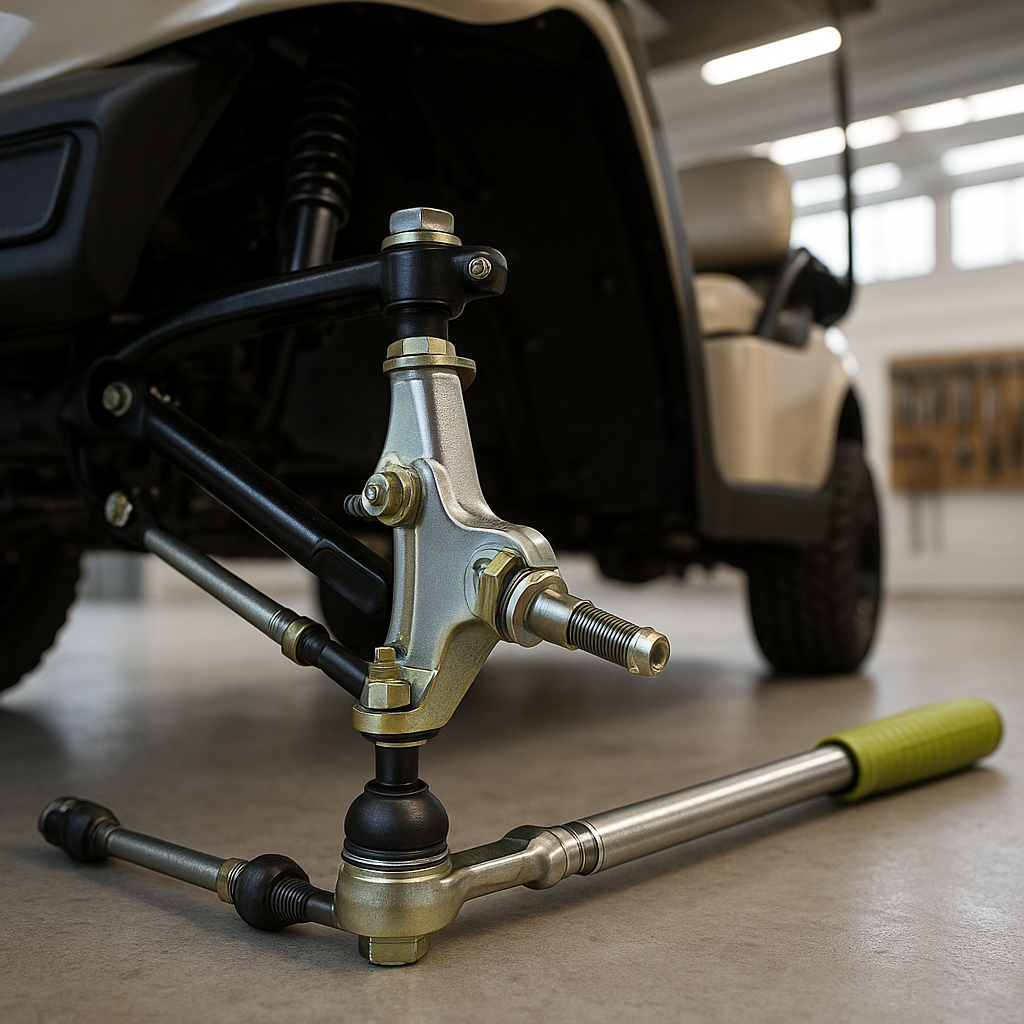
Lift kits alter the steering geometry of your cart, and some setups require additional alignment corrections to dial things back in. Toe that's significantly off — either toed in or toed out — will cause the front tires to fight each other, creating a steering wobble and uneven tire wear that often shows up as vibration at speed. You can do a rough visual toe check yourself by measuring the distance between the front and rear of both front tires at hub height and comparing them, but a proper alignment check with a straightedge or string line is more reliable. Some lifted carts also develop caster or camber issues that need to be addressed with correction components specific to the lift.
Check Lift Block and Hardware Torque
Vibration can also come from the lift hardware itself loosening after the initial break-in period. Lift blocks, bracket bolts, and U-bolts on leaf spring setups are known to settle and loosen somewhat after the first several hours of use — this is normal, but they need to be re-torqued. Go back through every fastener in the lift assembly with appropriate hand tools and make sure nothing has worked loose. A loose lift block doesn't just cause vibration; it's a genuine safety concern because it affects how the suspension loads and unloads under stress.
Don't Overlook the Rear Suspension and Differential
If the vibration is more of a low-frequency shudder under acceleration rather than a high-speed shimmy, look toward the rear. On rear-axle carts, check that the axle housing is sitting squarely in the suspension and that any lift blocks are centered properly under the spring pack. On carts with a rear differential, inspect the differential mounts and listen for any clunking that accompanies the vibration — that's a sign of movement where there shouldn't be any. Electric cart rear motor mounts can also loosen, causing the motor to shift slightly under torque and transmit vibration through the frame.
When to Get a Second Set of Eyes
If you've worked through wheels, axles, lift hardware, and alignment and still can't pin down the source, it's worth having a golf cart shop put it on a rack. Some vibration issues — particularly those tied to CV joint wear or subtle frame geometry changes — are much easier to diagnose when the cart is on a lift and everything can be loaded and unloaded by hand. The goal isn't just to eliminate the shake; it's to make sure your lifted cart is handling safely before you put more miles on it. A lifted cart with unresolved vibration is putting stress on components in ways the manufacturer never intended, and that adds up quickly.