Vibration while driving is one of those problems that's easy to ignore at low speed but hard to miss once it gets bad. The frustrating part is that a shaking or shuddering golf cart can come from several different sources — tires, wheels, hubs, or even the suspension — and the symptoms often overlap. Working through the likely causes in a logical order saves you time and keeps you from replacing parts that aren't actually the problem.
Start With the Tires
Tires are the most common source of vibration and the easiest place to start your diagnosis. First, do a visual check of all four tires while the cart is parked. Look for obvious damage: bulges, flat spots, sidewall cracking, or chunks missing from the tread. Any of these can cause rhythmic shaking that gets worse with speed. Next, check inflation pressure in all four tires — an underinflated or overinflated tire can create an uneven contact patch with the ground and generate significant vibration. Even one tire that's noticeably different from the others is worth correcting before you dig further.
Check for Wheel and Hub Issues
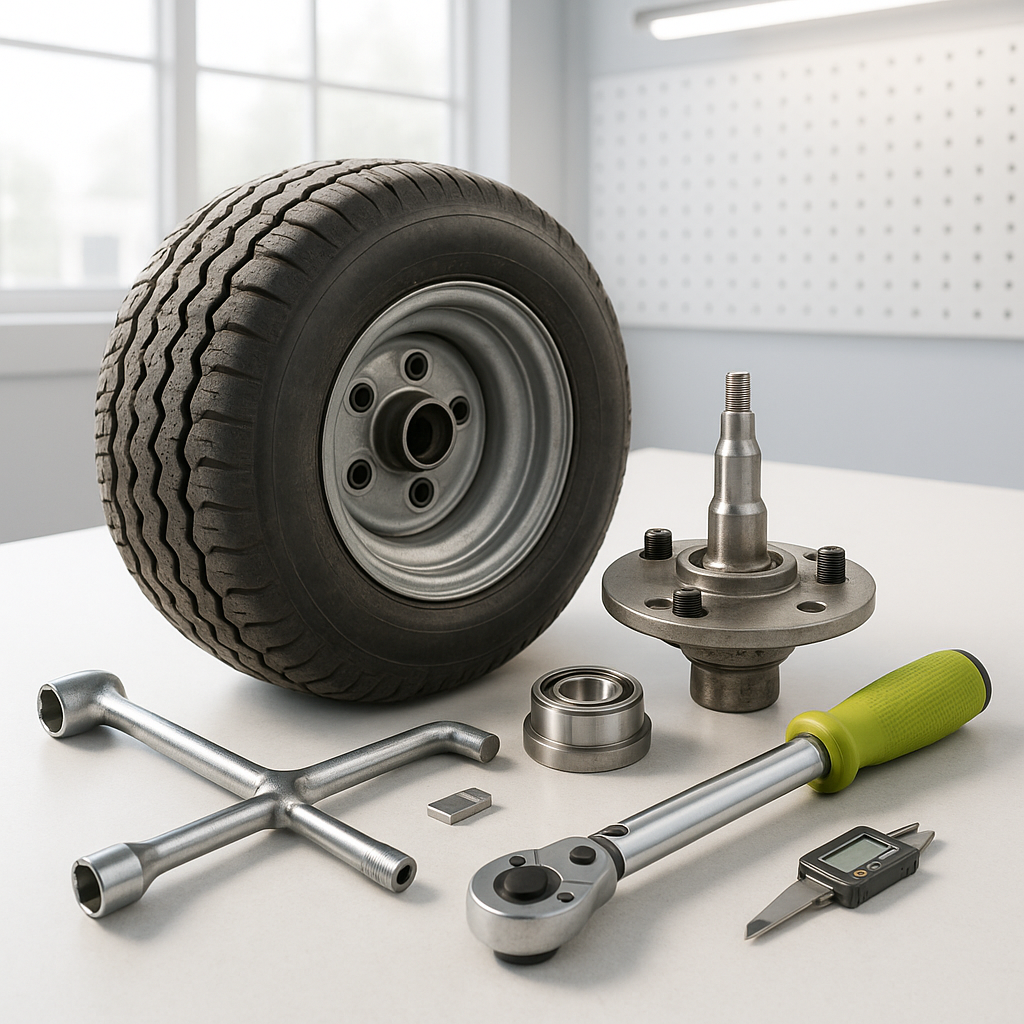
If the tires look and feel fine, shift your attention to the wheels themselves. Grab each wheel at the 3 and 9 o'clock positions and try to rock it side to side — any detectable play can indicate a loose lug nut, a worn wheel bearing, or a damaged hub. Repeat this at the 12 and 6 o'clock positions to check for up-and-down play as well. Loose lug nuts are a simple fix, but worn bearings create a grinding or humming vibration that often changes pitch as you turn slightly left or right while moving. If the noise and shake shift based on steering input, a wheel bearing is a strong suspect. While you're here, inspect the hub caps if your cart has them — a loose or cracked hub cap can rattle and vibrate in a way that feels like it's coming from deeper in the wheel assembly.
Look for Wheel Balance and Runout Problems
Golf cart tires are often run without balancing, especially stock setups, and that's usually fine at the speeds these carts travel. But if you've recently installed larger tires or aftermarket wheels, imbalance becomes a real possibility. A tire that's out of balance will typically produce a vibration that appears at a specific speed range and fades above or below it. Similarly, a bent wheel — even slightly bent — creates runout, meaning the tire doesn't roll in a true circle. You can check for obvious runout by spinning a raised wheel slowly and watching whether the tire wobbles from side to side or hops up and down. A bent wheel almost always needs to be replaced rather than repaired.
Inspect the Suspension and Leaf Springs
On carts with leaf spring rear suspensions, a broken or shifted leaf can cause uneven ride height and vibration, especially under load or on rough ground. Look under the rear of the cart and inspect the spring packs for cracked or separated leaves, and check that the U-bolts clamping the springs to the axle are tight and undamaged. On carts with independent front suspension, inspect the A-arms, tie rods, and any bushings for visible wear or looseness. Worn rubber bushings in particular can transmit road vibration directly into the frame in a way that feels like a wheel problem but isn't.
Consider the Axle and Drivetrain
If vibration is strongest under acceleration or load rather than just at speed, the drivetrain deserves a closer look. On electric carts, check that the motor is mounted securely and that no mounting hardware has loosened over time. On gas carts, check that the engine and transaxle mounts are intact. A worn or damaged CV joint on carts equipped with them can produce a clicking or shuddering vibration that's especially noticeable when turning and accelerating at the same time. Any visible grease flung onto the inside of a wheel well is a telltale sign of a failing CV boot.
Narrow It Down by When It Happens
Pay close attention to the conditions under which the vibration appears — this is often the fastest way to isolate the source. Vibration only at higher speeds points toward tire balance or runout. Vibration that's constant at any speed points toward a bearing or hub. Vibration only when braking points toward warped brake drums or rotors rather than wheels or tires. Vibration only under load or on hills points toward the drivetrain or mounts. Vibration that changes when you wiggle the steering wheel points toward loose tie rods or steering components. Keeping a mental or written log of exactly when and how the shaking happens will help you — or a mechanic — solve it much faster.
When to Stop Driving It
Most vibration problems start minor and worsen progressively, which makes it tempting to keep using the cart until you have time to deal with it. The exception is anything that feels sudden, sharp, or getting rapidly worse — that's a sign something structural may be failing. If you hear grinding, feel a strong pull to one side along with the vibration, or notice a wheel that looks visually tilted compared to the others, stop driving the cart and inspect it thoroughly before putting it back in service. Catching wheel and hub problems early is almost always cheaper and safer than finding out the hard way.