If your golf cart shimmies, wobbles, or develops a rhythmic vibration at certain speeds, don't brush it off as a quirk of an older cart. A wobble that shows up while driving is almost always telling you something specific — and a few systematic checks at the wheel and tire level will point you toward the cause faster than you'd expect. The good news is most of the common culprits are visible and diagnosable without any special tools.
Start With the Obvious: Tire Pressure and Condition
Low or uneven tire pressure is one of the most common causes of a shimmy that owners overlook because it seems too simple. A tire that's noticeably softer than the others will distort under load and cause a rhythmic bounce or pull. Check all four tires with a gauge and inflate them to the manufacturer's spec on the sidewall. While you're at it, look at the tread for irregular wear patterns — cupping (scalloped dips around the circumference) or flat-spotting on one section of the tire can both cause a wobble that doesn't go away even after you inflate correctly. A flat-spotted tire usually happens after sitting for a long time or after a hard stop, and it won't fix itself — the tire needs to be replaced.
Check the Wheels for Damage and Looseness
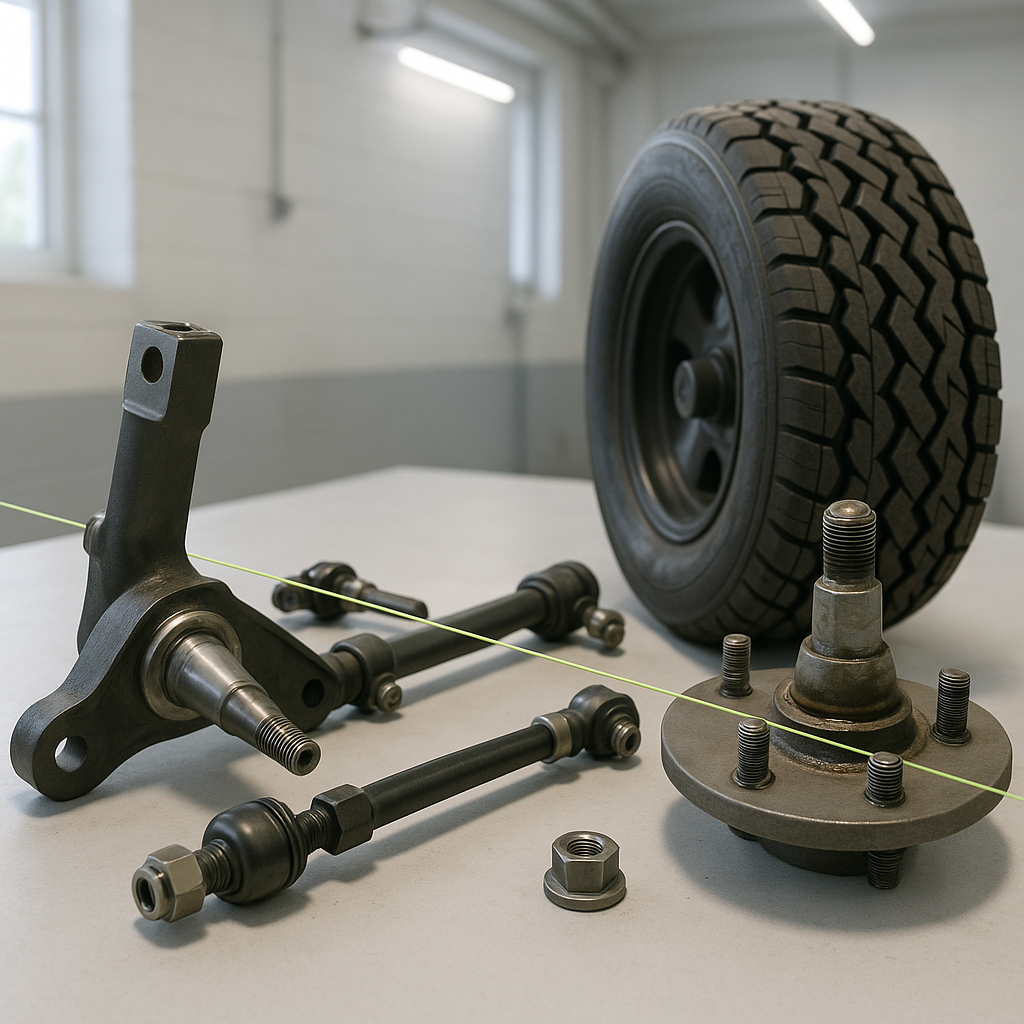
Get each wheel up off the ground one at a time and spin it by hand. A bent rim will show as a visible wobble in the rotation — you'll see the tire tracking side to side rather than spinning true. Even a small bend from a hard curb strike can be enough to cause shimmy at speed. Next, check that all lug nuts are fully torqued. Loose lug nuts are more common than people realize, especially on carts that have had recent wheel changes or lift installs. A wheel that's slightly loose will wobble and can damage the hub over time. While the wheel is spinning freely, look at the hubcap if there is one — a cracked, poorly seated, or incorrectly sized hubcap can actually create its own wobble by sitting off-center against the wheel face and vibrating at speed.
Inspect the Wheel Bearings
With the wheel still off the ground, grab it at the 9 o'clock and 3 o'clock positions and try to rock it side to side. Then do the same at 12 and 6. Any noticeable play — even slight — points to a worn or loose wheel bearing. Bad bearings are a very common wobble cause on older carts and on carts that see heavy use or wet conditions. A bearing that's starting to fail often makes a grinding or humming noise that changes with speed, but not always — sometimes the wobble shows up before the noise does. Don't ignore bearing play; a bearing that fails completely can damage the spindle or hub.
Look at the Front End Components
If the wobble is specifically in the steering wheel or feels like it's coming from the front of the cart, the issue may be upstream of the wheels entirely. Worn tie rod ends, loose kingpin bolts, or play in the steering column can all translate into a front-end shimmy under load. Grab each front tire at the top and bottom and try to rock it — this tests for kingpin or spindle wear. Then grab it at the sides and rock it again to check for tie rod play. Any looseness you find here needs to be addressed, because steering component wear tends to accelerate once it starts.
Consider the Role of Wheel Balance
Golf carts aren't typically balanced the way passenger car tires are, but it matters more than people think — especially if you've upgraded to larger or heavier aftermarket tires and wheels. An out-of-balance tire/wheel combination will produce a vibration that shows up at a specific speed range and gets better or worse as you speed up or slow down. If you've recently changed wheels or tires and a shimmy appeared shortly after, imbalance is a strong suspect. Most tire shops can balance golf cart tires, and it's worth doing if everything else checks out.
When the Problem Is Speed-Dependent
Pay attention to exactly when the wobble occurs. A shimmy that only shows up above a certain speed and smooths out at lower speeds points toward imbalance or a slightly bent rim. A wobble that's present at all speeds and gets worse under load often points to bearing wear or a loose wheel. A wobble that's intermittent and feels like it comes from one corner specifically usually points to that corner's tire condition, bearing, or hub hardware. Narrowing it down this way helps you prioritize where to look first and avoid replacing parts you don't need to.
A golf cart wobble rarely fixes itself, and most causes get worse with continued driving. Running through these checks in order — tires, wheel condition and torque, bearings, steering components, and balance — will get you to the answer quickly in most cases. Fix what you find before getting back on the road, and you'll be back to smooth, confident driving without the guesswork.