If your golf cart is taking longer than usual to stop, pulling to one side when you brake, or feeling like you have to stomp the pedal to get any response, don't ignore it. Brake problems on golf carts are genuinely dangerous — these machines travel on hills, around pedestrians, and near water hazards where a delayed stop can cause real harm. The good news is that most brake performance issues come down to a short list of causes, and you can diagnose the majority of them without specialized tools.
Start With the Obvious: Adjustment Before Parts
On most golf carts, rear brakes are mechanical drum brakes actuated by a cable system — not hydraulic like a car. That means they go out of adjustment over time as cables stretch and brake shoes wear down. Before you assume anything is broken, check whether your brakes simply need adjustment. Most drum brake systems have an adjuster at the wheel itself and tension adjustments at the cable end near the pedal or equalizer bar. If the pedal travels most of the way to the floor before you feel resistance, adjustment is almost always the first fix to try. Consult your cart's service manual for the correct procedure — it varies by make and model, but the concept is universal.
Inspect the Brake Cables
Brake cables are one of the most overlooked failure points on golf carts, especially on older machines or carts that live outdoors. A cable that's fraying, kinked, or corroded internally won't transmit full pedal force to the brake shoes even if everything else in the system is fine. Run your hands along the full length of each cable, looking for kinks, rust, or fraying at the ends where the cable meets the housing. Also check that the cable isn't rubbing against anything that could cause it to bind — a binding cable gives you inconsistent braking from one side of the cart to the other, which shows up as pulling during stops. If the cable feels stiff or gritty when you move it by hand, it's overdue for replacement.
Check the Brake Shoes and Drums
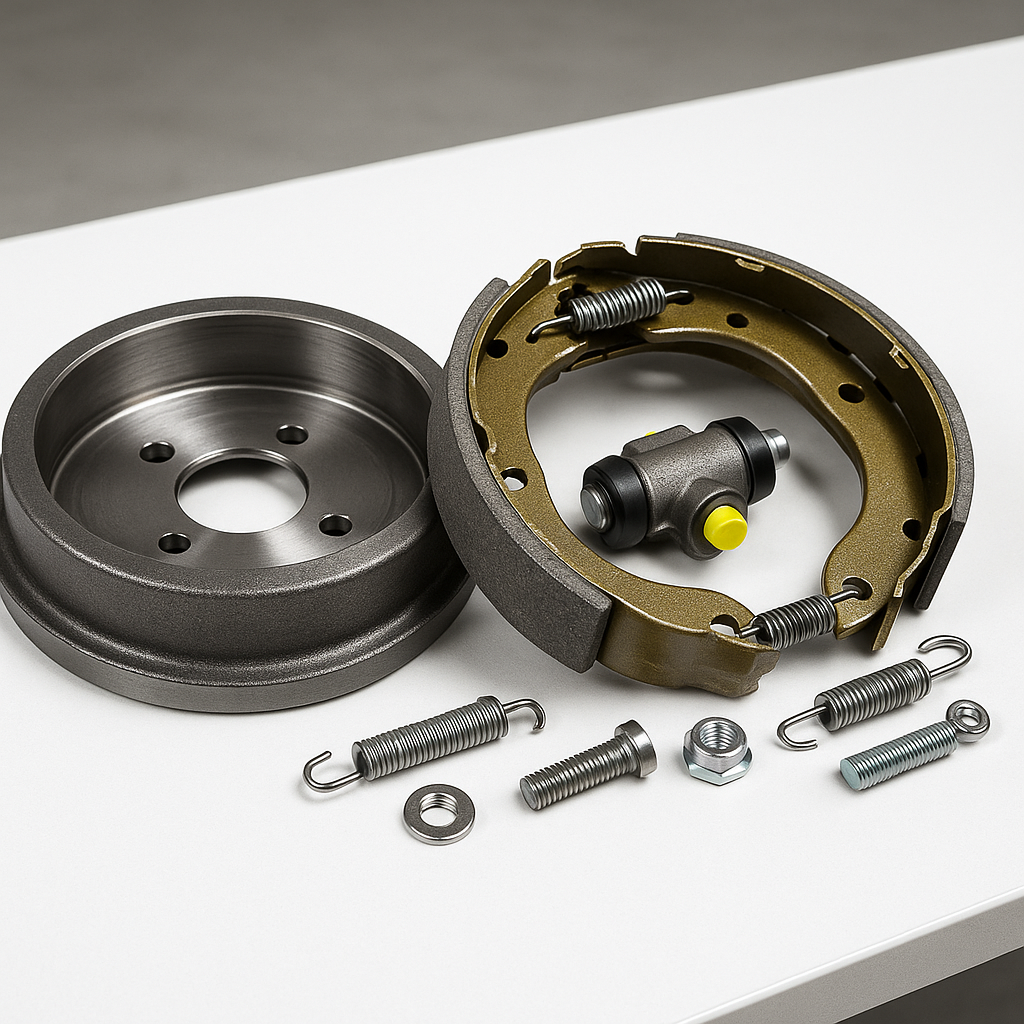
If adjustment and cables check out, pull the drums and take a look at the brake shoes. Worn-down shoes are one of the most common reasons for weak stopping power — once the friction material gets too thin, you're essentially trying to stop with metal-on-metal contact, which is both ineffective and destructive to the drum. Look for uneven wear between the leading and trailing shoes, glazed (shiny, hardened) friction surfaces, or shoes that are contaminated with grease or oil — any of these conditions will dramatically reduce braking force. The drums themselves should be smooth and round; deep scoring, grooves, or a lip around the edge of the drum indicate it's worn past the point where new shoes alone will restore proper performance.
Look for Grease or Oil Contamination
Contaminated brake shoes are a separate problem worth calling out on their own because they're sneaky — the shoes may look fine in terms of thickness, but if they've been soaked with grease from a leaking axle seal or hub bearing, they won't grip properly no matter how well everything else is adjusted. This is also a safety hazard because contaminated brakes are unpredictable — they may work fine cold and then fade badly once they warm up. If you find contaminated shoes, replace them rather than trying to clean them; brake friction material is porous and the grease penetrates deeper than surface cleaning can reach. Then track down and fix whatever is leaking before reassembling.
Check the Equalizer Bar and Linkage
Most golf carts use an equalizer bar to distribute cable tension evenly between both rear wheels when you press the pedal. If the equalizer bar is bent, seized, or sitting off-center, one side of the cart will do most of the braking work while the other side does almost nothing. This creates the pulling-to-one-side symptom and also means your effective stopping distance is far longer than it should be. Inspect the bar for obvious bending or corrosion, and make sure it moves freely through its full range of motion when you operate the pedal by hand with the cart safely supported.
Don't Overlook the Parking Brake
A dragging parking brake is the flip side of the weak-brake problem, but it's worth mentioning here: if your cart is slow to move from a stop, pulls consistently in one direction, or the brake drum is hot to the touch after a short drive, check that the parking brake is fully releasing. A cable that's adjusted too tight or a parking brake mechanism that isn't returning to its fully off position will cause a shoe to drag against the drum constantly, which accelerates wear dramatically and can eventually make the brake ineffective in both directions as the friction material overheats and glazes.
When to Stop Diagnosing and Get Help
Most golf cart brake work is well within the reach of a mechanically inclined owner — the systems are simpler than automotive brakes and designed to be field-serviceable. That said, if you're finding cracked drums, shoes worn completely down to the metal, or cables that have snapped internally, don't try to stretch the remaining life out of what's there. Brake components are inexpensive relative to what a braking failure can cost. Replace worn parts with components rated for your specific cart make and year, get the adjustment right, and test in a controlled area before putting the cart back into regular use on hills or around other people.