A golf cart battery pack that won't hold a charge is one of the most frustrating problems an owner deals with — partly because it has so many possible causes. Before you assume the batteries are dead and need replacing, it's worth working through a methodical diagnosis. The actual culprit is often something cheaper and easier to fix than a full battery replacement.
Start With the Obvious: How Old Are the Batteries?
Battery age matters. Most flooded lead-acid golf cart batteries have a realistic service life of four to six years with proper maintenance, though heavily used or neglected packs often fail sooner. Lithium packs generally last longer but aren't immune to problems either. If your batteries are approaching or past that window, aging cells may simply be the answer — but even then, confirm it with testing rather than assuming. One bad battery in a series pack can drag down the entire system and make all the batteries look worse than they are.
Check the Water Level in Flooded Batteries First
If you're running flooded lead-acid (the most common type in older carts), low water is one of the fastest ways to permanently damage cells. Plates that are exposed to air sulfate quickly and lose capacity. Pop the caps and look — the electrolyte should cover the plates with a small amount of clearance above. If cells are dry or very low, refill with distilled water only, then charge fully before doing any load testing. Don't add water to a completely discharged battery; always charge first if possible, or at minimum charge immediately after refilling.
Test Each Battery Individually
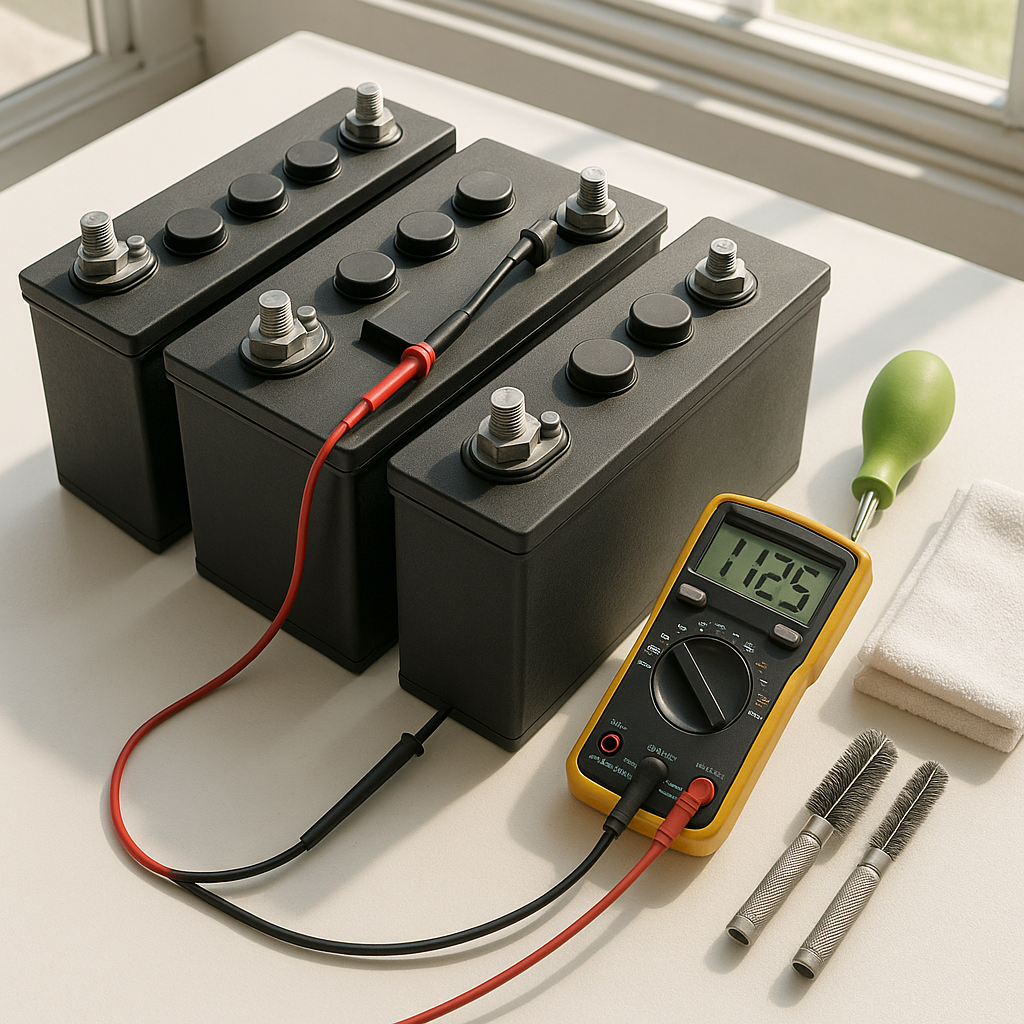
A series battery pack is only as strong as its weakest cell. Use a quality voltmeter to check the resting voltage on each battery individually after the pack has sat unused for several hours. A fully charged flooded lead-acid cell should show a healthy resting voltage appropriate for its nominal rating — any battery reading significantly lower than its neighbors is a red flag. A hydrometer gives you even better information: specific gravity readings across cells reveal exactly which ones have weak or dead cells inside. If one battery consistently reads low or has a cell with drastically different gravity, that battery is failing and pulling the whole pack down.
Look at the Cables and Connections
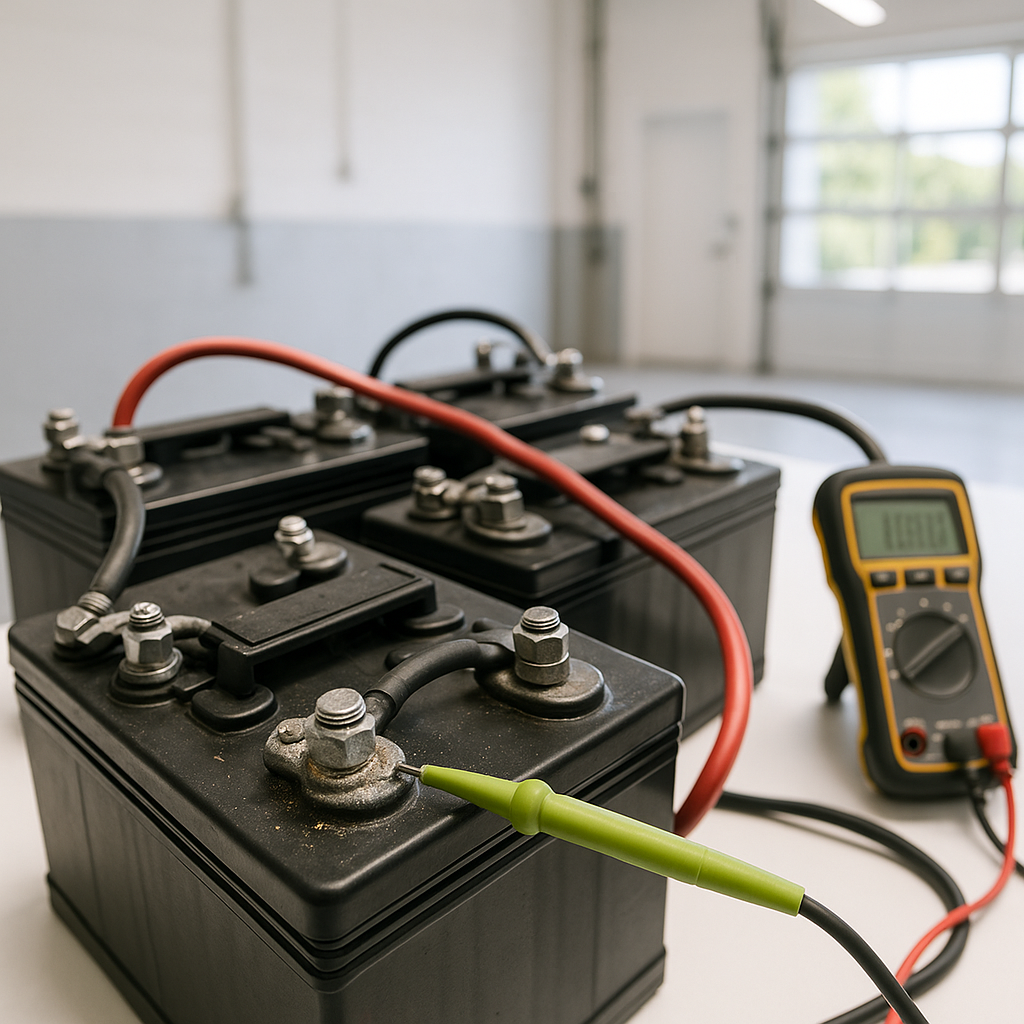
Poor connections are a surprisingly common cause of what looks like a capacity problem. Loose terminals, corroded cable ends, or undersized or damaged cables all create resistance that wastes energy as heat and makes the pack appear weaker than it is. Inspect every battery terminal and interconnect cable end. Connections should be clean, tight, and free of white or greenish corrosion buildup. Also look at the cable insulation — cracked, frayed, or heat-damaged insulation can indicate cables that have been running hot under load, which points to resistance issues. Even a single high-resistance connection can noticeably reduce the effective range of the cart.
Check for a Parasitic Draw
If the cart holds a full charge right after charging but loses it quickly while sitting unused, something may be drawing power when the cart is off. Lights, stereos, USB outlets, and aftermarket accessories are common culprits — especially if they're wired directly to the battery rather than through a switched circuit. With the cart fully charged and sitting, check whether the batteries lose voltage faster than they should over 24 to 48 hours. If they do, disconnect accessories one at a time to identify what's draining the pack.
Evaluate the Charger
A charger that isn't doing its job properly can leave your batteries perpetually undercharged, which causes them to appear weak even if the cells themselves are still healthy. An undercharging battery will sulfate over time and eventually lose real capacity, turning a charger problem into a battery problem. Check that your charger is actually completing a full charge cycle — most modern chargers indicate completion. If your charger is running for an unusually short time or shutting off before the batteries are fully charged, the charger itself may be the issue rather than the pack. Also confirm the charger's output voltage is appropriate for your system's voltage.
When to Load Test
Resting voltage alone doesn't tell the full story. A battery can show an acceptable resting voltage but collapse under real load — exactly the condition that makes a cart feel weak or cut out under hills or heavy use. A battery load tester applies a controlled draw and measures how well the battery holds voltage under that stress. Many auto parts stores and golf cart shops will do this for free or low cost. Load testing is the most reliable way to confirm whether a battery that appears charged is actually capable of delivering usable power. If a battery fails a load test, it needs replacing regardless of what the resting voltage showed.