A golf cart tire that keeps losing air is more than an inconvenience — riding on a chronically low tire puts stress on the wheel, throws off handling, and can damage the rim if the tire goes completely flat under load. The tricky part is that slow leaks can be hard to pin down because the tire may look normal until you're halfway through a round. This guide walks you through a logical diagnostic sequence so you can identify exactly where the air is going.
Start With the Valve Stem
The valve stem is the single most common source of slow leaks on golf cart tires, and it's also the easiest thing to check. Mix a small amount of dish soap with water and dab it generously over the valve stem — cap off and cap on. If you see bubbles forming, the stem core is loose or the rubber stem itself is cracked or perished. Valve stems degrade over time, especially on carts that sit outdoors through seasonal temperature swings. A stem core tool costs almost nothing and replacing the core takes under a minute. If the stem body itself is cracked, the tire needs to come off the rim so the stem can be replaced properly.
Check the Tire Bead and Rim Seating
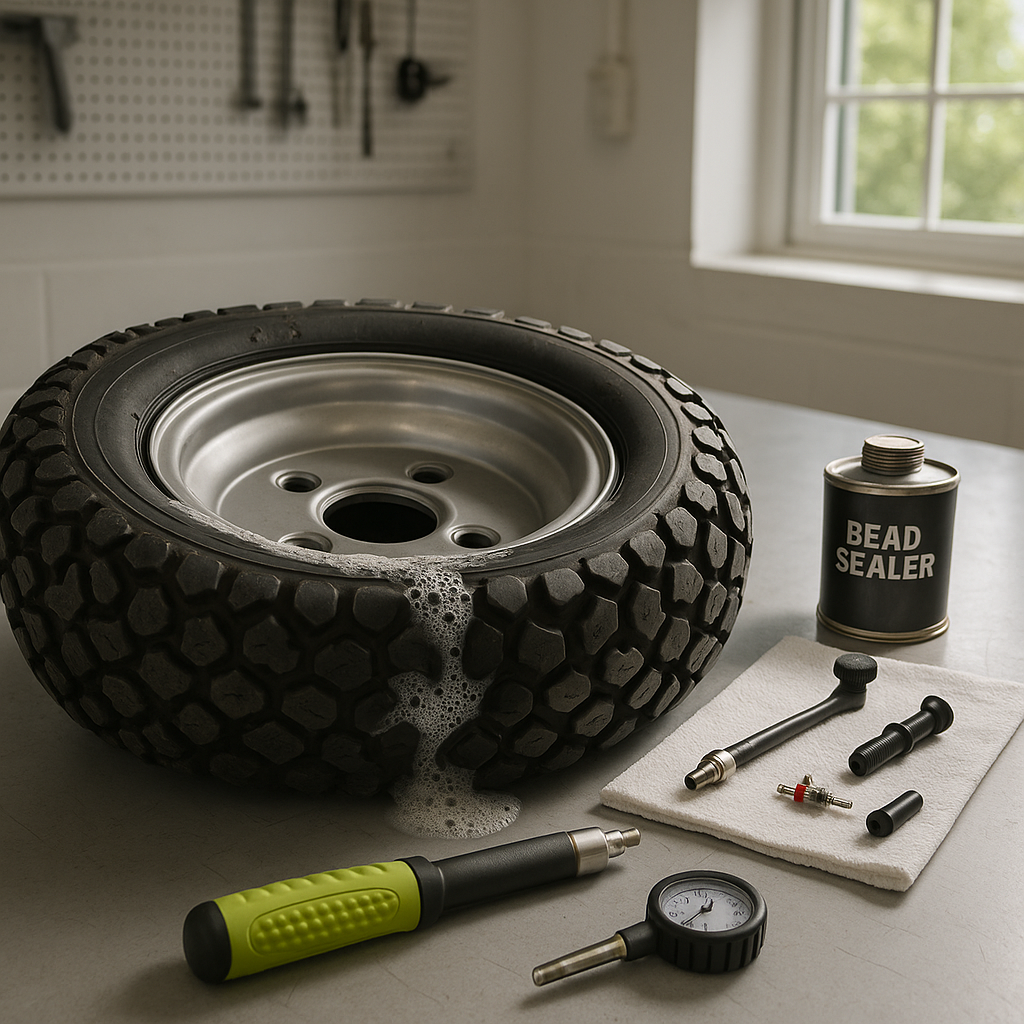
Golf cart wheels — especially aluminum or chrome aftermarket wheels — can develop corrosion or pitting along the bead seat area where the tire seals against the rim. A tire that isn't seated perfectly against a corroded or damaged bead seat will seep air slowly, often around the entire circumference of one side. Inflate the tire to its rated pressure and run your soapy water solution all the way around both bead edges. Bubbling concentrated in a section, or uniformly around one side, points to a bead seal problem. On steel wheels, surface rust is often the culprit. Aluminum wheels can develop oxidation that's less obvious but equally problematic. In either case, the tire needs to be dismounted, the bead area cleaned and inspected, and the tire reseated — sometimes with bead sealer applied.
Inspect the Tire Tread and Sidewall for Punctures
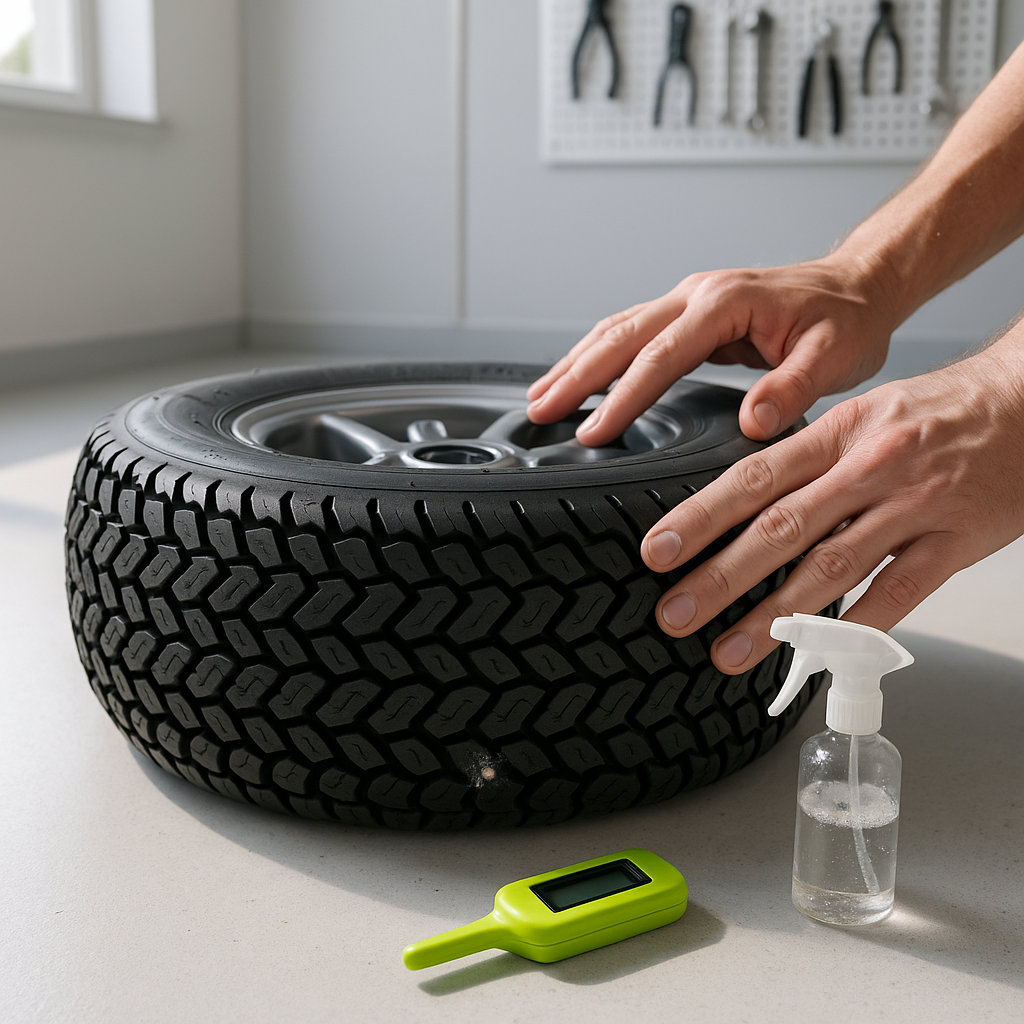
Small punctures from nails, wire, thorns, or sharp gravel are obvious suspects but can be surprisingly hard to spot visually, especially once the object that caused them has fallen out. Run soapy water over the entire tread face and both sidewalls while the tire is inflated. Pay extra attention to the tread grooves — debris tends to hide there. A bubble that forms slowly and consistently over one spot almost always means a puncture. If you find one in the tread area, a plug or patch repair is typically feasible. Sidewall punctures are a different story — the sidewall flexes continuously during use, and repairs there are generally not considered reliable. A sidewall-damaged tire usually needs replacement.
Look at the Wheel Itself
Cracked or bent wheels can leak air even when the tire and valve stem are perfectly fine. This is more common after impact damage — hitting a curb, dropping off a steep cart path edge, or running over debris at speed. Hairline cracks in cast aluminum wheels are especially deceptive because they may not be visible without cleaning the wheel thoroughly first. Check around the spoke bases and along the barrel of the wheel. A bent rim may not be cracked but can prevent the tire bead from sealing properly. If the wheel is visibly cracked, it needs to be replaced — a cracked wheel is a safety issue, not just an air-loss issue.
Consider the Inner Tube if Your Tire Has One
Some older golf cart tires, and certain off-road or turf tire setups, use inner tubes rather than running tubeless. If your setup has a tube, the leak diagnosis shifts entirely to the tube itself. Remove the tire from the rim, inflate the tube slightly outside the tire, and submerge it in water — any air escaping will show up as a steady stream of bubbles. Tube punctures can often be patched, but if the tube is old, pinched repeatedly, or showing signs of cracking at the valve base, replacement is the more reliable fix.
When the Leak Is Intermittent or Pressure Just Drops Slowly
If the tire holds air reasonably well right after inflation but loses a significant amount over several days without any obvious puncture or bead issue, temperature is worth factoring in. Tire pressure naturally drops in cold weather and rises in heat — a tire that seems fine on a warm afternoon may read noticeably low on a cold morning without any actual leak present. That said, if the pressure loss is consistent and significant regardless of temperature swings, keep working through the checks above rather than assuming it's normal. A slow, real leak is easy to dismiss as temperature-related until it becomes a flat at the worst possible time.