If your golf cart's parking brake is hard to engage, won't release fully, or the rear brakes seem to drag even when the pedal is up, the brake cable system is almost always where to look first. Unlike hydraulic brakes on cars, most golf carts use a mechanical cable-actuated drum brake system — simple in design, but prone to specific failure modes that are easy to diagnose once you know what to check. This guide walks you through the real causes, in the order you should check them.
Start With the Obvious: Is the Cable Physically Stuck or Kinked?
Run your hand along the full length of the brake cable from the pedal or handle down to the rear brake assemblies. Look for sharp bends, kinks, or sections where the cable has been pinched against the frame. On older carts, cables that have been routed incorrectly after a repair are a frequent culprit. Also check whether the cable is riding against any moving suspension or drivetrain component — clearance issues can cause intermittent binding that's hard to reproduce until the cart is under a load or on uneven terrain.
Check the Cable Housing and Ferrules
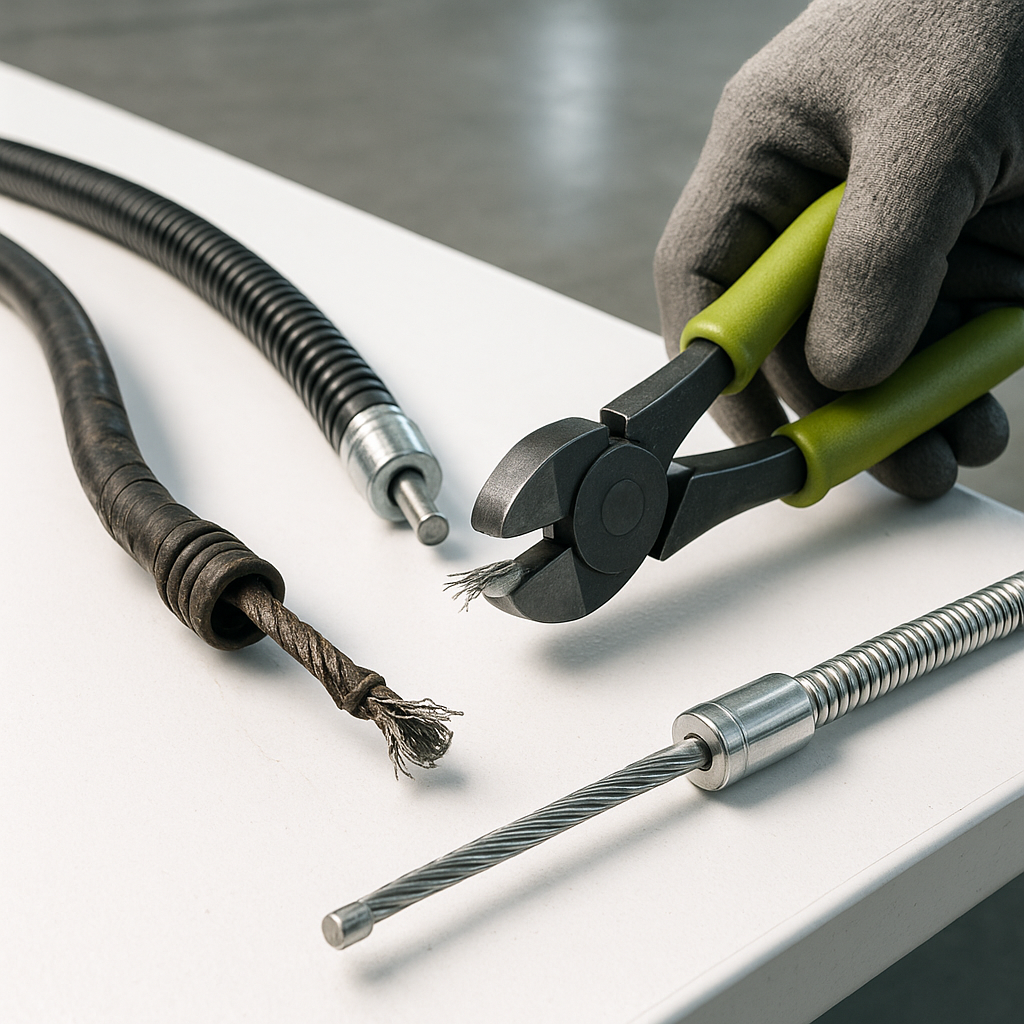
The outer cable housing is just as important as the inner wire. If the housing has cracked, compressed, or separated at a ferrule end, the inner cable can't move freely inside it — the housing flexes instead of guiding the cable, and you lose both pull force and release action. Squeeze the housing along its length and look for sections that feel soft, collapsed, or corrugated. Any section that looks compromised needs replacement, not just the inner cable. A good rule: when the inner wire is worn or broken, replace the housing too.
Look for Rust, Fraying, and Corrosion on the Wire
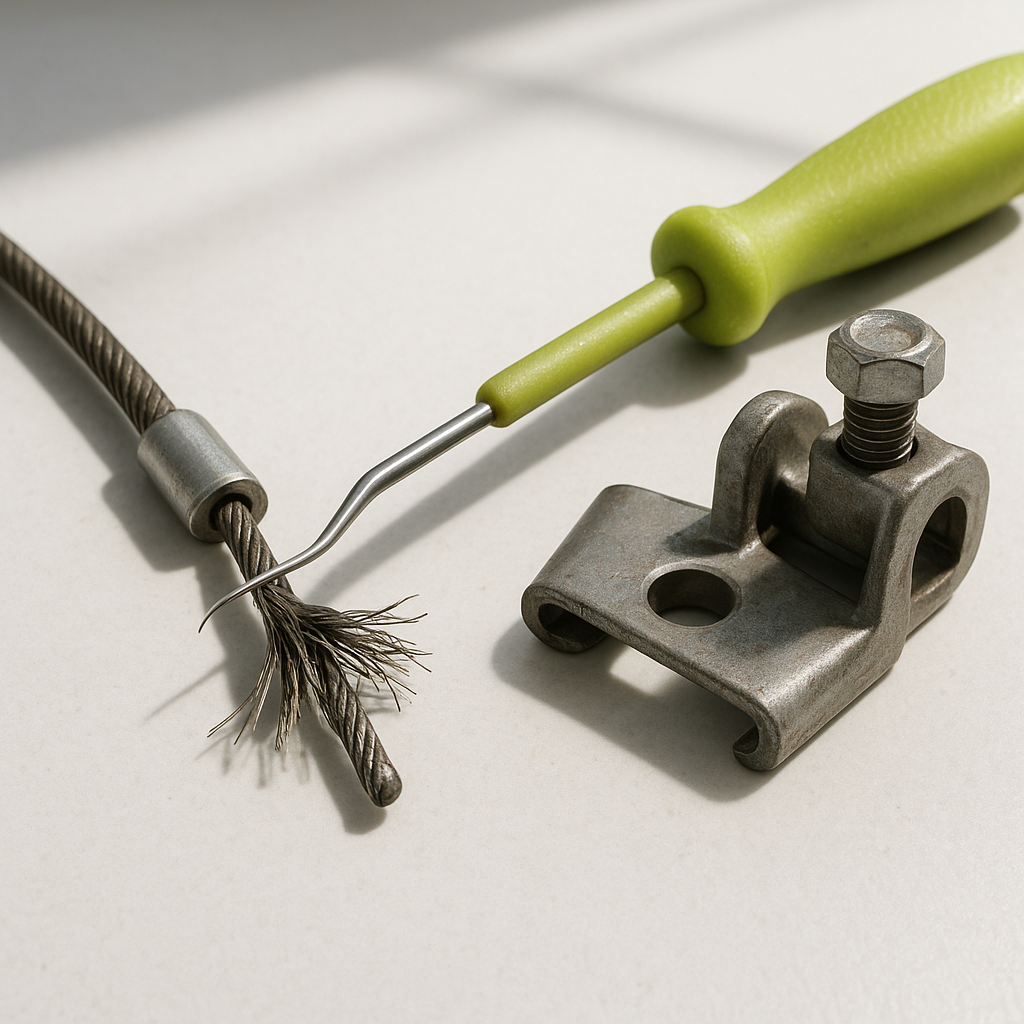
Pull the cable out at the brake end if you can, or at minimum inspect where it exits the housing. A cable that's starting to fray will feel rough when pulled through, and individual wire strands breaking inside the housing will create resistance without any obvious external kink. Rust is the most common issue on carts stored outdoors or in humid climates — even surface rust significantly increases friction inside the housing. If you see rust blooming at either end of the housing, assume the inside is worse. This is a replace-it situation, not a lubricate-and-hope situation.
Inspect the Brake Lever and Equalizer Hardware
On carts with a single cable running to a rear equalizer bar that splits tension to both brake drums, the equalizer pivot point can corrode and seize. When the equalizer doesn't pivot freely, braking force is uneven and the system doesn't release cleanly. Grab the equalizer and move it by hand — it should pivot without resistance. Clean and lubricate the pivot bolt if it's stiff; replace the hardware if it's seized or visibly corroded through. Similarly, check the lever arm at the pedal or handle end: a bent arm changes the cable's pull angle and increases friction at the worst possible point in the system.
Check Cable Tension and Adjustment
A cable that's adjusted too tight will create constant drag on the brake shoes even when the pedal is fully released — you'll notice the cart feeling sluggish, the rear tires getting warm, or the cart being hard to push by hand. Most cable systems have an adjustment nut or barrel adjuster where the cable meets the brake assembly or the equalizer. Back off the adjustment, check whether the drag disappears, and then re-set to the correct tension where the brakes engage firmly without dragging at rest. Don't over-tighten trying to compensate for a stretched or worn cable — replace the cable instead.
When the Cable Checks Out: Look at the Drums and Shoes
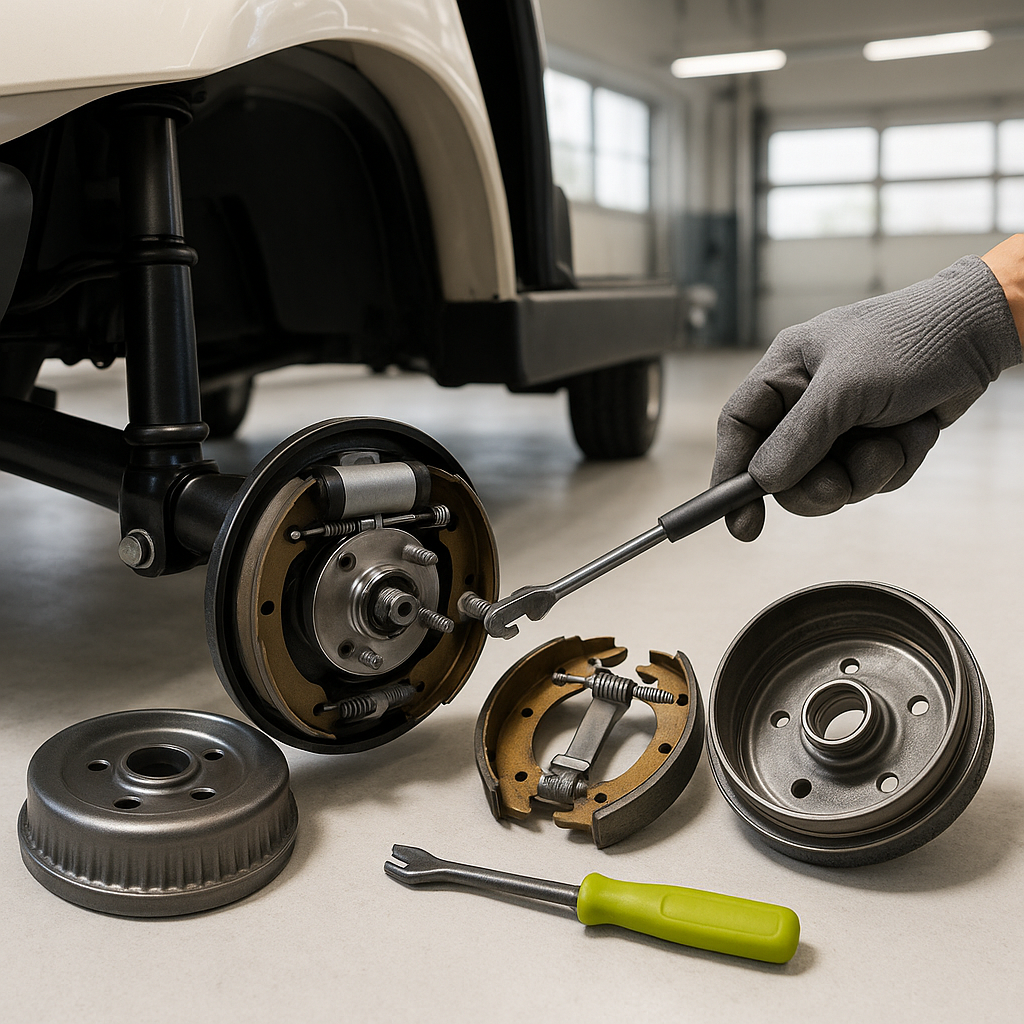
If the cable moves freely and is properly adjusted but the brakes still drag or stick, the problem has shifted downstream to the drum brake hardware itself. Brake shoes can stick to a rusty drum after the cart sits for an extended period, especially in wet climates. The return springs on the brake shoes may be weak or broken, meaning the shoes don't retract fully after each application. Pull the drum and inspect the springs, the shoe pivot hardware, and the drum's interior surface. Scoring, deep grooves, or heavy rust inside the drum can cause shoes to catch and release inconsistently even when the cable is functioning correctly.
Lubrication: What to Use and Where
Cable-actuated brake systems benefit from proper lubrication, but the wrong lubricant causes problems. Use a dry cable lubricant or a dedicated brake cable lube worked in from the top of the housing — avoid heavy greases that attract dirt and can migrate onto the brake friction surfaces. The pivot points on the equalizer, the cable adjuster threads, and the lever arm pivot can all take a light grease or anti-seize. Never get any lubricant on the brake shoe friction material or the inside of the drum — if that happens, the shoes and drum need to be thoroughly cleaned or replaced before the cart is safe to drive.