Golf cart brakes don't get replaced on a schedule the way oil does, so when the time comes, a lot of owners are buying brake components for the first time and aren't sure what to look for. The short version: fitment and material quality matter far more than price. A cheap brake drum or poorly matched cable that doesn't seat correctly is worse than no upgrade at all — and on a vehicle that can carry passengers downhill, there's no room for guesswork.
Fitment Comes First
Golf cart brake parts are not universal across makes and model years — even within the same brand. EZGO, Club Car, and Yamaha all use different brake architectures, and a single manufacturer like EZGO has changed brake designs multiple times across decades of production. Before you buy anything, confirm your exact make, model, and year. Most reputable suppliers list fitment ranges clearly (for example, a brake drum listed for EZGO gas models from a specific year range). If the listing is vague about compatibility, treat that as a red flag. When in doubt, match the part number from your existing component or consult your cart's service manual.
Drum Brakes vs. Disc Brakes
The majority of golf carts on the road use drum brakes, particularly older and mid-range models. Drum brake systems are mechanically simpler, generally less expensive to service, and well-suited to the low-speed, low-heat demands of typical golf cart use. Some newer or performance-oriented carts use disc brakes, which offer better modulation and heat dissipation. Know which system your cart uses before shopping — the parts are entirely different, and mixing components from the two systems isn't possible.
What to Look for in Brake Drums
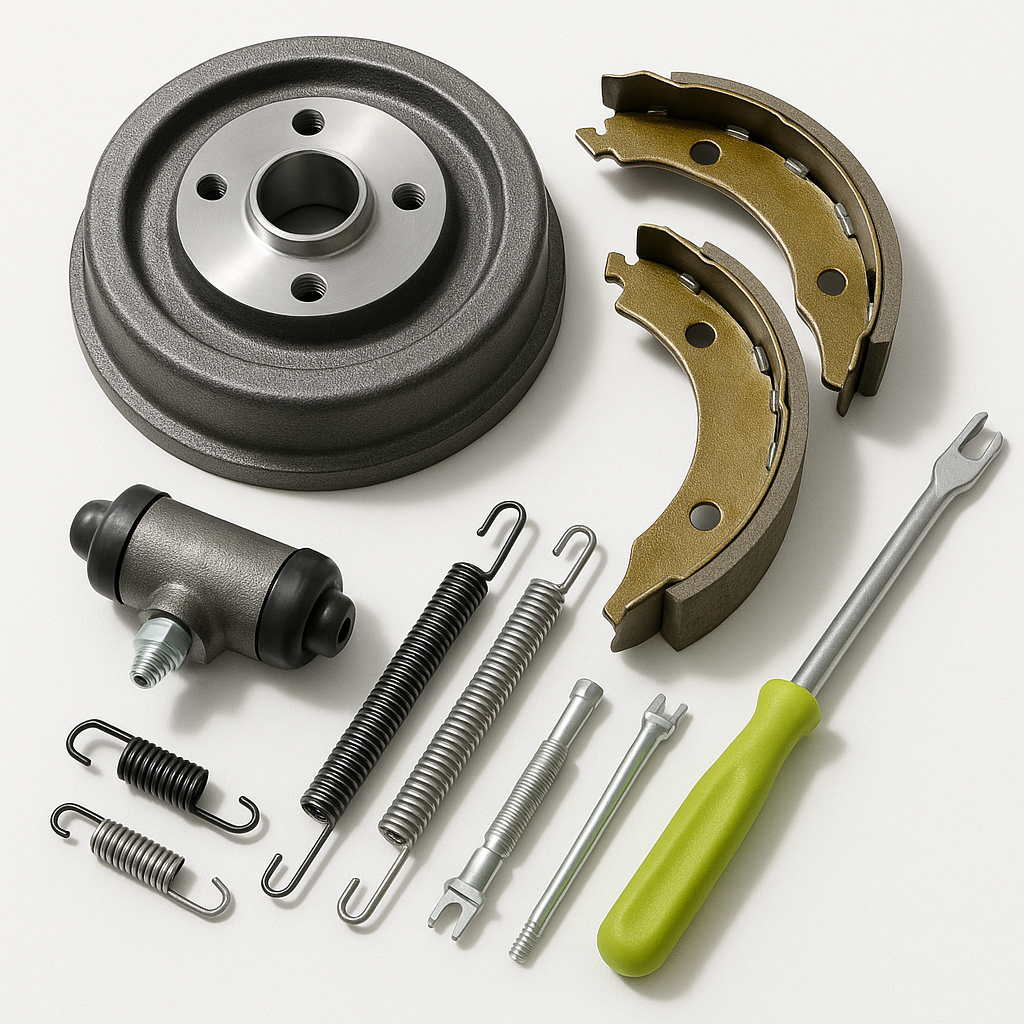
Brake drums should be evaluated for wall thickness, material casting quality, and the precision of the inner friction surface. Cast iron is the traditional and generally preferred material for golf cart drums because of its durability and heat tolerance. Inspect any drum you're considering (or the listing photos closely) for casting flaws, uneven surfaces, or thin walls that suggest a low-quality pour. A drum that measures out of spec on its inner diameter — even slightly — will cause uneven pad wear and poor braking feel. Quality drums will also include the correct bolt pattern and hub bore to match your axle without modification.
Evaluating Brake Pads
For carts with disc brakes — or drum systems that use shoes with replaceable friction material — the compound matters. You want a pad that provides consistent friction across a range of temperatures without being so aggressive that it causes premature drum or rotor wear. Semi-metallic compounds are common and generally reliable for golf cart use. Avoid pads with very low friction ratings, which are sometimes sold cheaply but result in a spongy, ineffective pedal feel. Also confirm that the pad dimensions match your caliper or backing plate exactly — oversized or undersized pads won't bed in correctly and can create noise or uneven wear patterns.
Brake Cables: What to Check
Brake cables are a wear item that's often overlooked until the brakes feel inconsistent or the pedal travel increases noticeably. When evaluating a replacement cable, look for the correct end fittings (the geometry of the cable termination has to match your pedal linkage and actuator exactly), the correct overall length for your model, and a quality outer housing that resists kinking and corrosion. Stainless-lined housings or cables with corrosion-resistant coatings will last longer in wet or coastal environments. A cable that's even slightly too short will put the system under constant tension; too long and you'll have excess slack that's difficult to adjust out.
Hardware and What Should Be Included
Quality brake kits typically include the hardware needed for a complete job — springs, retaining clips, and adjuster hardware for drum systems, or caliper bolts and shims for disc setups. Be wary of component-only listings that don't include the small hardware, because sourcing those separately adds cost and time. Springs in drum brake systems are particularly important: they control shoe return and directly affect pedal feel. Old or stretched springs are a common cause of dragging brakes, so replacing them during any drum service is good practice even if they aren't visibly damaged.
When to Replace vs. Repair
Brake drums can often be resurfaced (turned on a lathe) if they're within the manufacturer's minimum thickness spec and the surface is uniformly worn. If a drum is below minimum thickness, scored deeply, or shows heat cracks, replacement is the only safe option. Similarly, cables showing fraying, kinking, or corrosion at the ends should be replaced outright — attempting to lubricate or stretch a compromised cable is a temporary fix at best. For pads and shoes, follow the friction material thickness minimums listed in your service manual rather than eyeballing it. Brakes are not a system where getting another season out of worn parts is worth the risk.