The motor controller is the brain of your golf cart's drivetrain. It regulates the flow of power from your battery pack to the motor, dictating everything from low-speed smoothness to top-end performance. When a controller fails — or when you're looking to push more performance out of your cart — choosing the right replacement matters more than most people realize. Buy the wrong one and you're looking at electrical damage, wasted money, or a cart that simply won't run.
Voltage and Amperage: Get These Right First
Before you look at anything else, you need to know your system voltage and your motor's amperage requirements. Golf cart electrical systems commonly run at 24V, 36V, or 48V, and controllers are built specifically for each range — they are not interchangeable. Equally important is the amperage rating, which reflects how much current the controller can continuously handle. A higher amp rating generally means better acceleration and hill-climbing ability, but only if your motor and wiring are rated to support it. Mismatching amperage — especially going too high without upgrading supporting components — can damage your motor or cause wiring to overheat. Match voltage exactly, and choose amperage that fits your actual setup and intended use.
Fitment and Compatibility by Make, Model, and Year
Golf cart controllers are not universal. A unit designed for a Club Car DS won't necessarily work in an EZGO TXT, even if the voltages match, because manufacturers use different communication protocols, throttle input types, and solenoid configurations. Always verify compatibility by your cart's specific make, model, and model year — and when possible, cross-reference the part number on your existing controller before purchasing. Year ranges matter too: Club Car and EZGO have made significant electrical system changes across production runs, so a controller listed for a broad year range is worth double-checking against your VIN or serial number.
Series vs. Separately Excited (SepEx) Controllers
Most older and budget-tier golf carts use series-wound DC motors, which pair with series controllers — these are simpler, generally more affordable, and easier to replace. Higher-end and newer carts often use separately excited (SepEx) motors, which require a more sophisticated SepEx controller that independently manages the field and armature windings. SepEx systems offer smoother speed control and better regenerative braking, but the controllers are more complex and typically more expensive. Putting a series controller on a SepEx motor — or vice versa — won't work and can cause damage, so confirm your motor type before shopping.
Build Quality and Thermal Management
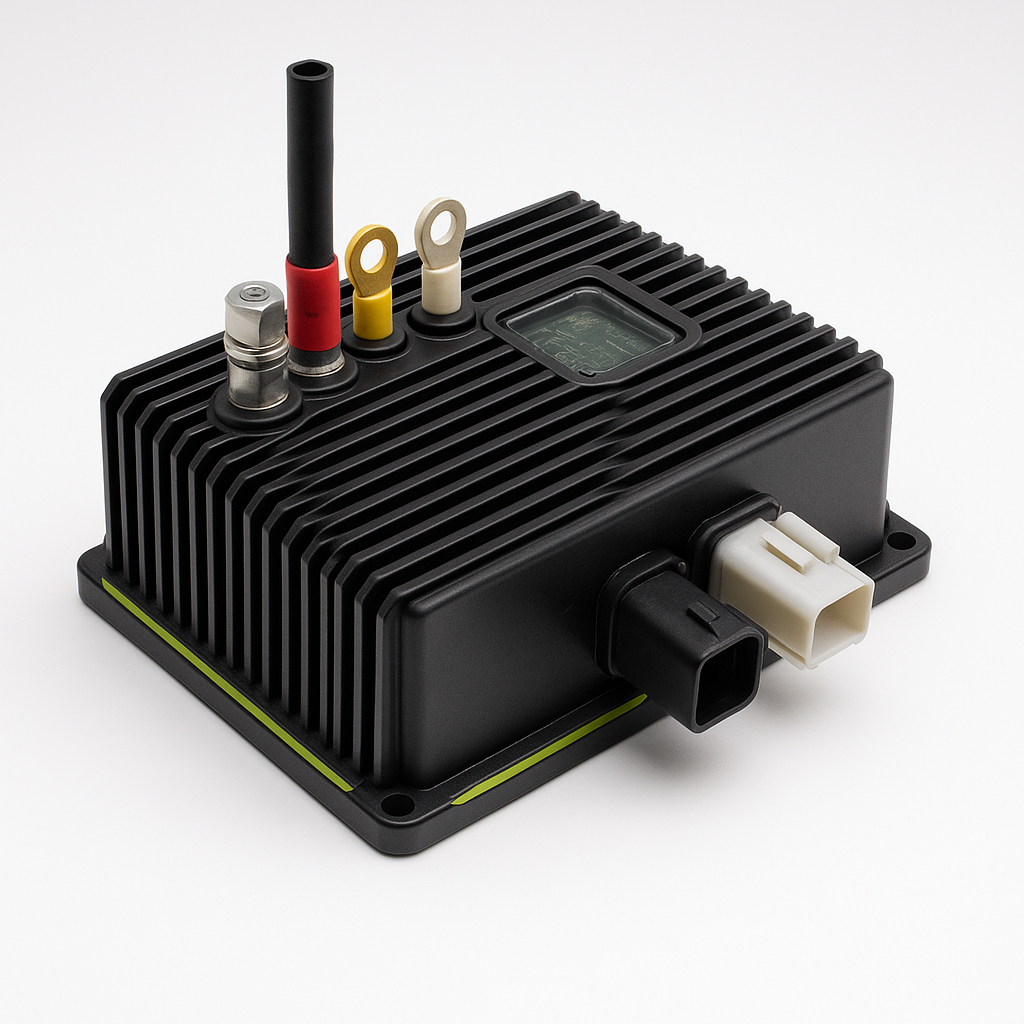
A controller takes real abuse — heat, vibration, moisture, and sustained electrical load. Look for units with solid aluminum housings, which dissipate heat far better than plastic enclosures. Conformal coating on the internal circuit board is a meaningful quality indicator, as it protects against moisture and corrosion in outdoor environments. Some controllers include built-in thermal protection that reduces output when temperatures climb too high, which is a useful safeguard if you're doing a lot of hill work or hauling. Cheap controllers often skip these protections entirely, and that's usually where the cost savings show up — in a shorter service life.
What Should Be Included
A quality controller replacement should come with clear documentation covering compatibility and basic installation guidance. Some units include mounting hardware, and a few come bundled with the throttle potentiometer (the throttle position sensor), since these components wear together and are often replaced at the same time. If a throttle pot isn't included, verify whether your existing one is compatible or plan to source one separately. Wiring pigtails or connector adapters can also simplify installation, especially on older carts where connectors may have degraded.
Performance Upgrades vs. Direct Replacements
If you're replacing a failed controller with the exact OEM spec, a direct replacement is the straightforward path — match the voltage, amperage, and fitment and you're done. But if you're looking to improve performance, some aftermarket controllers offer higher amp ratings than stock, which can meaningfully improve throttle response and hill-climbing ability. Before going this route, be honest about whether the rest of your electrical system — your motor, wiring gauge, solenoid, and battery pack — can support the increased load. Upgrading only the controller without addressing the rest of the system is a common and expensive mistake. A modest, well-matched upgrade will always outperform an aggressive one that overwhelms your supporting components.