If your golf cart's brake pedal sinks all the way to the floor before anything happens — or it stops but doesn't spring back up on its own — don't keep driving until you've figured out why. This isn't a "deal with it later" problem. Brakes that don't engage properly or don't release fully affect both your stopping distance and your drivetrain. The good news is that the brake system on most golf carts is mechanically simple, and most causes of a low or sinking pedal come down to a handful of well-known culprits.
Start with the Obvious: Cable Slack and Adjustment
Most golf carts use a mechanical (cable-actuated) brake system rather than hydraulics, so the most common reason a pedal travels too far before engaging is simple: the brake cable has stretched or the system has gone out of adjustment. Cables stretch gradually over time, and if nobody has ever re-adjusted the system, you can end up with a lot of dead travel before the shoes actually contact the drum. Check the cable tension at the adjuster — usually located at the equalizer bar or at the drum end — and look for obvious slack. If the cable feels loose when the pedal isn't depressed, adjustment is almost certainly part of your problem.
Inspect the Return Spring
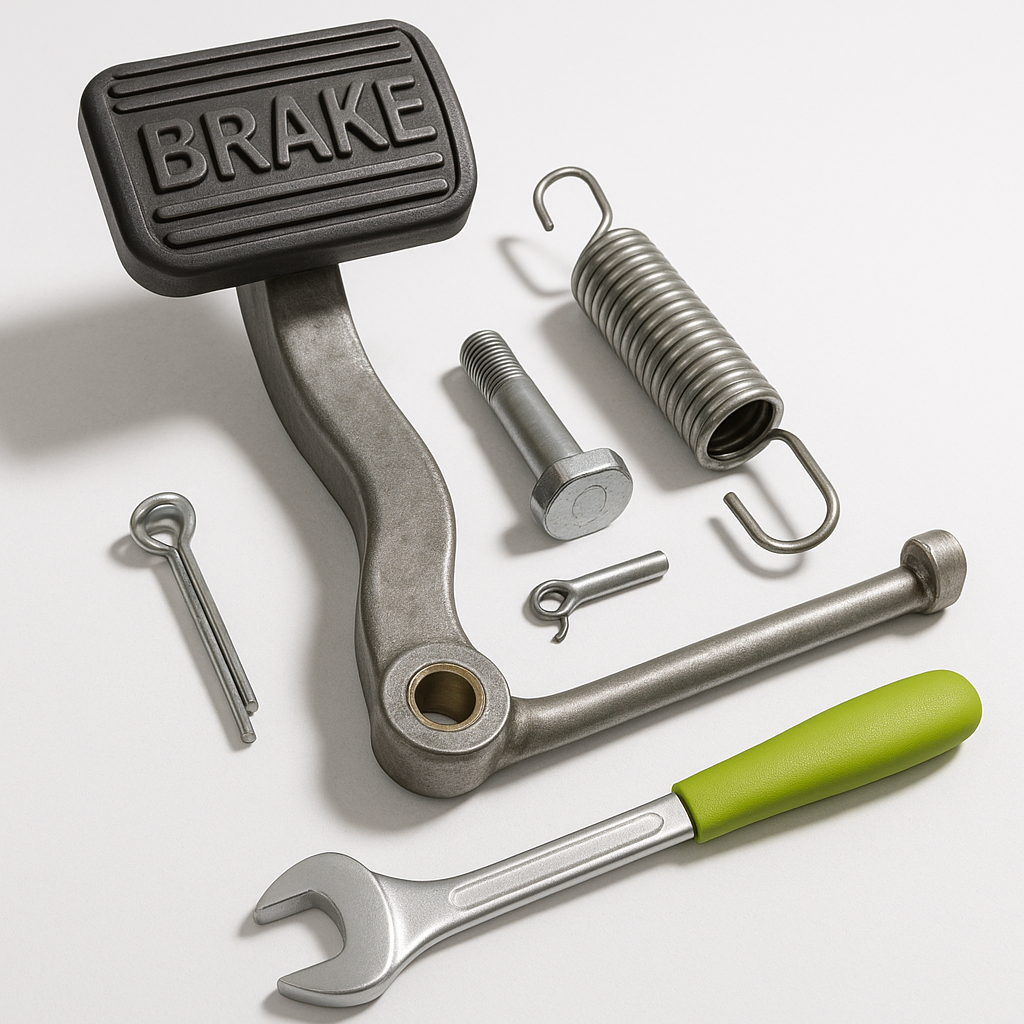
If the pedal sinks fine but doesn't spring back up on its own when you lift your foot, the return spring is the first place to look. There's typically a spring on the brake pedal arm itself, and sometimes one at the cable or actuating mechanism. Springs fatigue and break, especially on older carts that have sat outside in weather. A missing or broken return spring won't cause a loss of stopping power on its own, but it means the brakes may be dragging when you think they're fully released — which loads the drivetrain, generates heat, and wears your drums and shoes prematurely.
Check the Brake Shoes and Drum Condition
Worn brake shoes change the geometry of how the system operates. When shoe material gets thin enough, the shoes have to travel farther to reach the drum surface, which translates directly to more pedal travel before you feel anything happen. Pull the drums and take a look at shoe thickness — if the lining is worn down close to the metal backing, replacement is overdue. While you have the drums off, inspect the drum interior for deep grooves, heat cracks, or an out-of-round condition. A scored or warped drum won't let the shoes seat evenly, which can make engagement feel inconsistent and require extra pedal effort.
Look at the Pedal Linkage and Pivot Points
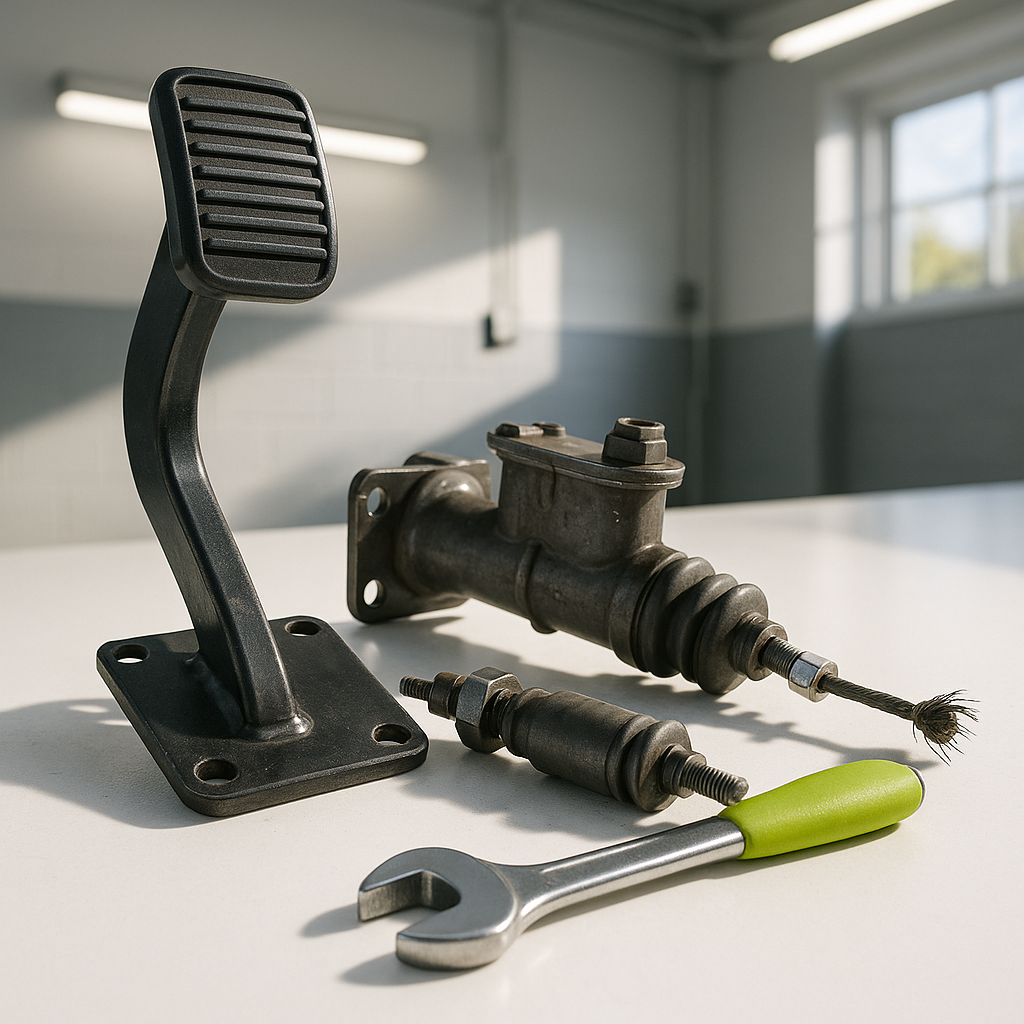
The mechanical linkage between your pedal and the cables includes pivot pins, clevis connectors, and in some cases an equalizer bar that distributes force to both rear wheels. Any of these joints can wear, corrode, or develop slop over time. Grab the pedal by hand and wiggle it — any side-to-side slop or looseness at the pivot point means the linkage isn't transferring force cleanly. Worn clevis pins are especially common and easy to overlook. A pedal that rocks or rattles at its pivot will feel mushy and inconsistent even if the cables and shoes themselves are fine.
Don't Overlook the Cable Itself
Brake cables can fail in ways that aren't immediately obvious. The inner wire can begin to fray inside the housing — you won't see it from the outside, but it reduces effective cable strength and can cause the cable to "give" under load rather than transmit force cleanly. A cable that's kinked, corroded internally, or partially seized inside the housing creates friction that both increases pedal effort and prevents full return. Run your hand along the full length of the cable housing looking for kinks, sharp bends, or spots where the housing has cracked or collapsed. If the cable is original on an older cart, replacing it is cheap insurance.
When to Stop Driving Until It's Fixed
A brake pedal that goes all the way to the floor with little or no resistance is a stop-driving situation — not a "finish the round and deal with it" situation. If you've checked cable tension and the pedal still sinks with almost no stopping force, something more significant may be wrong: a cable that has snapped, a clevis pin that has pulled through, or shoes that are completely worn out. Any of these leave you with severely reduced or no braking. On a golf course this is a nuisance; on a hill or near traffic it's genuinely dangerous. When in doubt, don't drive the cart until you've confirmed the system is functional.
Putting It Together
Brake pedal problems on golf carts almost always trace back to one of four things: cable stretch requiring adjustment, a broken or missing return spring, worn shoes that need replacement, or linkage wear that's introducing slop into the system. Work through these in order — adjustment first, then springs, then shoes and drums, then linkage — and you'll find the cause. The parts involved are inexpensive and the system is accessible, so there's no reason to put off a repair that directly affects your safety.