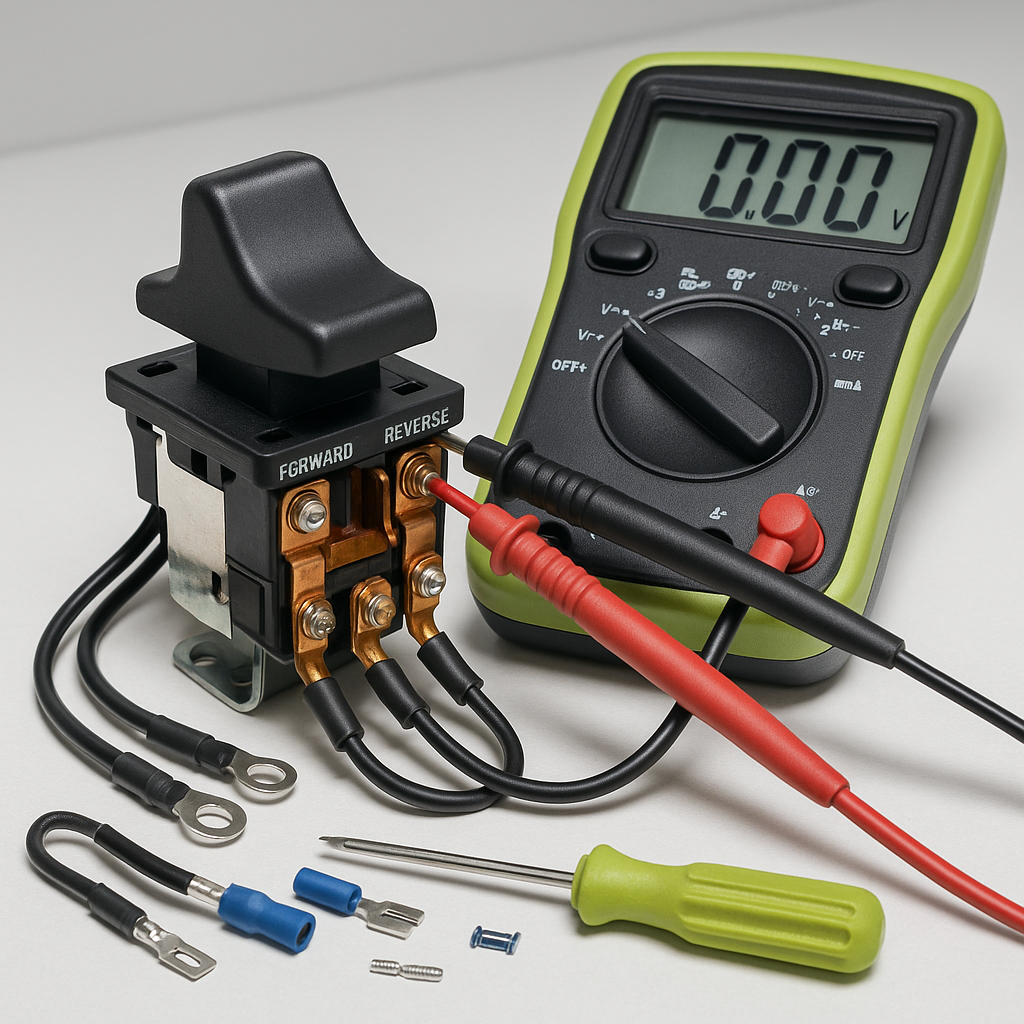
The forward/reverse switch is one of the most-handled components on any golf cart, and that constant use takes a toll. When your cart refuses to move in one direction, moves sluggishly, or behaves erratically when you flip the switch, the F&R switch is often the first place to look. The good news: diagnosing it doesn't require specialized tools or deep electrical knowledge — just a methodical approach and a basic multimeter.
Understand What the Switch Actually Does
On electric golf carts, the forward/reverse switch directs current flow through the motor windings, which physically reverses the motor's rotation. On gas carts, it typically controls an electromechanical engagement system. Either way, the switch sees high current loads every single time you change direction — and over time, the internal contacts corrode, burn, or wear down. A failing switch may work intermittently, work in one direction only, or stop functioning entirely.
Start With the Obvious: Visual and Physical Checks
Before reaching for a multimeter, do a thorough visual inspection. With the cart key off and parking brake engaged, locate the switch — usually mounted near the seat base or under the dash depending on your cart's make and model. Look for obvious signs of heat damage like melted plastic, burn marks, or a scorched smell around the switch housing. Check that the wiring connectors are seated fully and that no wires have pulled loose or frayed where they enter the switch terminals. A loose connection here mimics a bad switch and is a much easier fix.
Check the Switch with a Multimeter
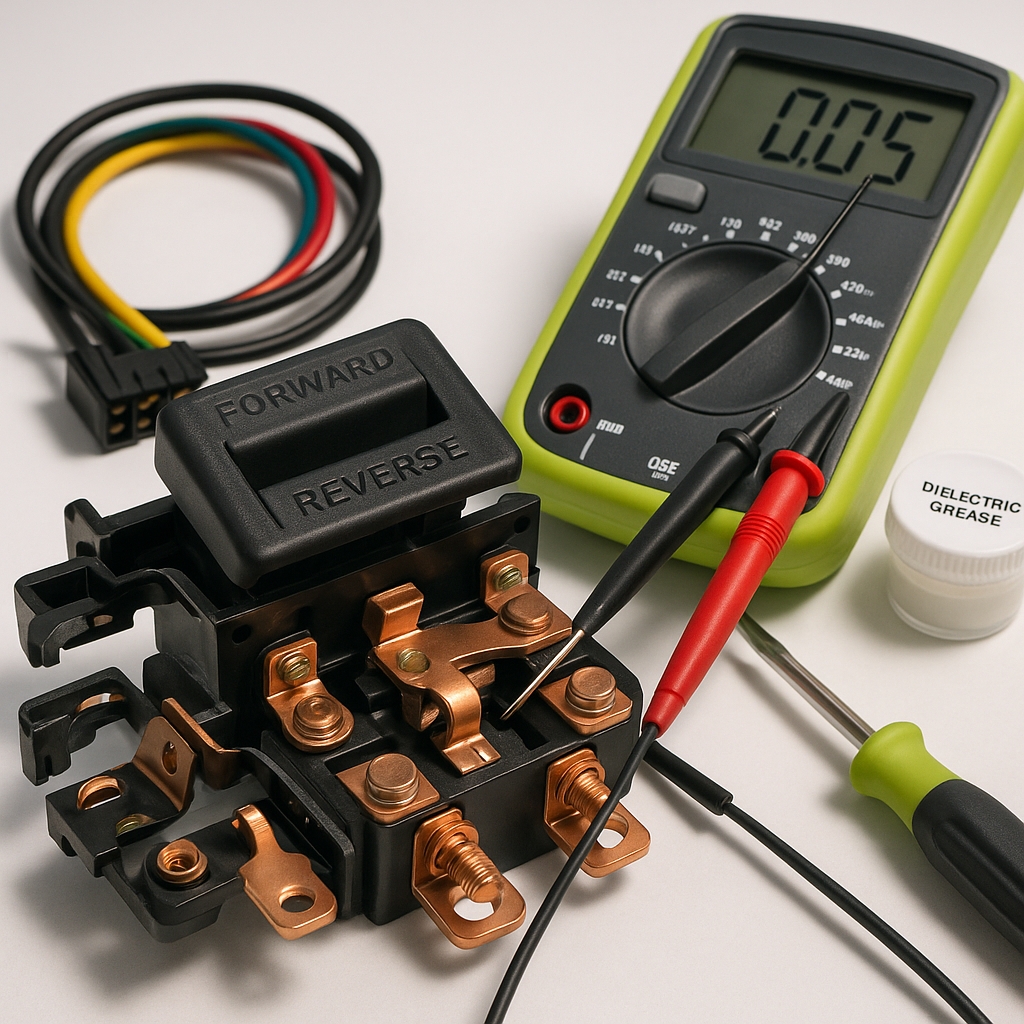
Set your multimeter to continuity or resistance mode. With the cart fully off and discharged, carefully disconnect the switch wiring (photograph the connector positions first so you can reassemble correctly). Test continuity between the appropriate terminal pairs in both the forward and reverse positions. In a healthy switch, you should see a clean closed circuit when the switch is engaged in each direction, and an open circuit when it's not. If you're getting no continuity in one position, intermittent continuity, or high resistance where there should be near-zero, the switch contacts are worn or corroded internally and the switch needs replacement.
Rule Out Related Components First
A bad F&R switch is common, but it's not the only thing that can cause directional problems. Before condemning the switch, also check: the solenoid (a failing solenoid can prevent movement in both directions), the motor controller (which may have directional logic built in), and the accelerator microswitch or pedal assembly. On carts where the F&R switch feeds a signal to the controller rather than carrying full motor current, a wiring fault between the switch and controller can produce identical symptoms. Tracing the full signal path matters — don't just assume it's the switch because it's the most common cause.
Watch for Intermittent Failure Patterns
Intermittent problems are actually the most diagnostic clue you have. If the cart works fine in forward but only sometimes engages reverse — especially when the cart is cold versus warm, or after the switch is wiggled — that points strongly to internal contact pitting rather than a full electrical open. Worn contacts often make connection just well enough to pass current at low load, but break down under the actual load of moving a loaded cart. Wiggling or pressing on the switch housing while trying to reproduce the fault is a legitimate diagnostic technique.
Safety Notes Before You Start
Golf cart electrical systems carry enough current to cause serious burns or injury if shorted. Always work with the key removed, the cart in a parked and stable position, and — on electric carts — disconnect the main battery pack negative cable before probing switch terminals directly. Let any capacitors in the controller discharge before working near those components. If your cart uses a 48V or higher system, treat it with the same respect you'd give household line voltage.
When to Replace vs. When to Clean
Mild corrosion on the switch terminals and connectors can sometimes be cleaned with electrical contact cleaner and a small wire brush, buying you more time. But if the contacts inside the switch body itself are pitted, burned, or worn — which you can often see if the switch housing is removable — cleaning won't restore reliable operation. F&R switches are generally inexpensive and straightforward to replace, and a known-bad switch is always worth swapping out rather than nursing along. Intermittent electrical faults in drivetrain control components are a safety issue, not just an inconvenience.