Brake noise on a golf cart is one of those problems people tend to ignore longer than they should. It starts as a faint squeal, gets written off as dust or a wet morning, and then turns into a full grinding sound that you can feel through the pedal. By that point, you're often dealing with more damage than you would have had you caught it early. Here's how to actually work through the diagnosis, step by step, so you know what you're dealing with before you start ordering parts.
Start With the Type of Noise
The character of the noise tells you a lot. A high-pitched squeal that happens only when braking — especially when the cart is cold — often points to glazed brake shoes or drums. The friction surfaces get hardened and shiny over time, particularly if the brakes have been overheated or rarely used. A metallic grinding sound, especially one that gets worse as you apply more pressure, typically means worn brake shoes that have gone through their friction material and are now metal-on-metal against the drum. A rhythmic scraping that pulses in and out as the wheel turns — even when you're not braking — suggests something is dragging: either a shoe stuck in the partially-applied position, a broken return spring, or debris caught inside the drum.
Check for Brake Dust and Debris First
Before you assume the worst, pull the wheels and do a visual inspection. Golf carts are low to the ground and open to the elements — grass clippings, sand, small pebbles, and general grit find their way into brake drums regularly. Remove the drum carefully and look inside. If you see obvious contamination, clean the drum and shoe surfaces with brake cleaner, inspect for damage, and reassemble. Sometimes this alone resolves a noise that seemed serious. While you have it apart, check for cracking or scoring on the inside surface of the drum. Light scoring can sometimes be addressed by resurfacing, but deep grooves mean replacement.
Inspect the Brake Shoes and Lining Thickness
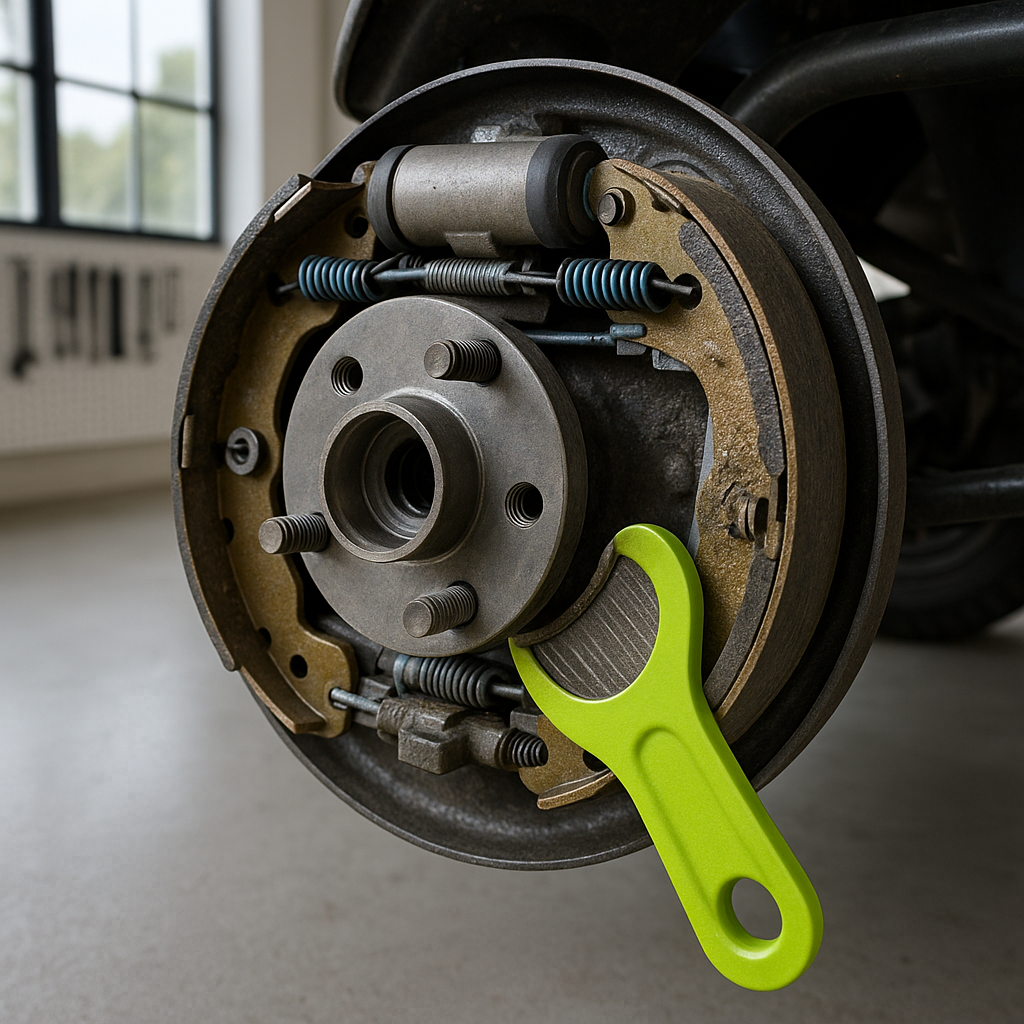
With the drum off, look at the brake shoes. The friction lining — the material bonded or riveted to the curved metal shoe — should have meaningful thickness remaining. If you can see the metal backing plate of the shoe through the lining, or if the lining is at or near the level of the rivets (on riveted-style shoes), the shoes are worn out and need replacement. Also check for uneven wear. If one side of the shoe is thicker than the other, or if one shoe in a pair is significantly more worn than its partner, that points to a hardware problem — worn or broken return springs, a sticking wheel cylinder (on hydraulic systems), or a misadjusted adjuster — rather than simply old shoes.
Check the Hardware and Adjuster
Golf cart drum brakes rely on a set of springs to pull the shoes away from the drum when you release the pedal. If a return spring is stretched, weakened, or broken, the shoe drags constantly against the drum — which creates both noise and accelerated wear. Inspect every spring for obvious damage or deformation. The adjuster (the star wheel or threaded adjuster between the shoes) also matters: if it's seized and won't back off properly, the shoes may be set too tight against the drum. Try backing the adjuster off slightly if you're getting consistent drag noise even with the brake pedal fully released.
On Cable-Actuated Systems, Check the Cable and Lever
Most golf carts use a mechanical cable system rather than hydraulic lines. A frayed, kinked, or corroded brake cable can cause the brakes to apply unevenly or fail to release fully — both of which cause noise and uneven wear. With the cart safely supported and stationary, have someone press and release the brake pedal while you watch the cable move at the wheel end. The actuation should be smooth and the cable should return freely when the pedal is released. If there's hesitation in the return, or if the cable moves stiffly through its housing, the cable itself is the problem. Also check the brake lever arm at the drum — it should pivot smoothly on its pin and return to rest without hanging up.
Don't Overlook Wheel Bearing Noise
Not all noise that seems to come from the brake area is actually brake noise. A worn wheel bearing produces a grinding or rumbling sound that can be mistaken for a brake issue, particularly because it often shows up when cornering or under load. To tell the difference: with the cart safely jacked up and supported, grab the wheel at the 9 o'clock and 3 o'clock positions and try to rock it side to side. Any perceptible play or clunking points to a bearing. Then spin the wheel by hand and listen — a grinding or rough feeling as it spins, independent of any brake application, is a classic bearing symptom. Fixing the brakes won't help if the noise is actually coming from the bearing.
When to Replace vs. Adjust
If the shoes still have usable lining, the drum is in good shape, and the hardware is intact, a proper adjustment and cleaning may be all that's needed. But if the lining is worn down, the drum is deeply scored, or any of the springs or hardware are compromised, replacement is the right call. Brake components are safety-critical, and the cost of a new set of shoes and hardware is trivial compared to the cost of a damaged drum — or an accident caused by brakes that couldn't do their job.