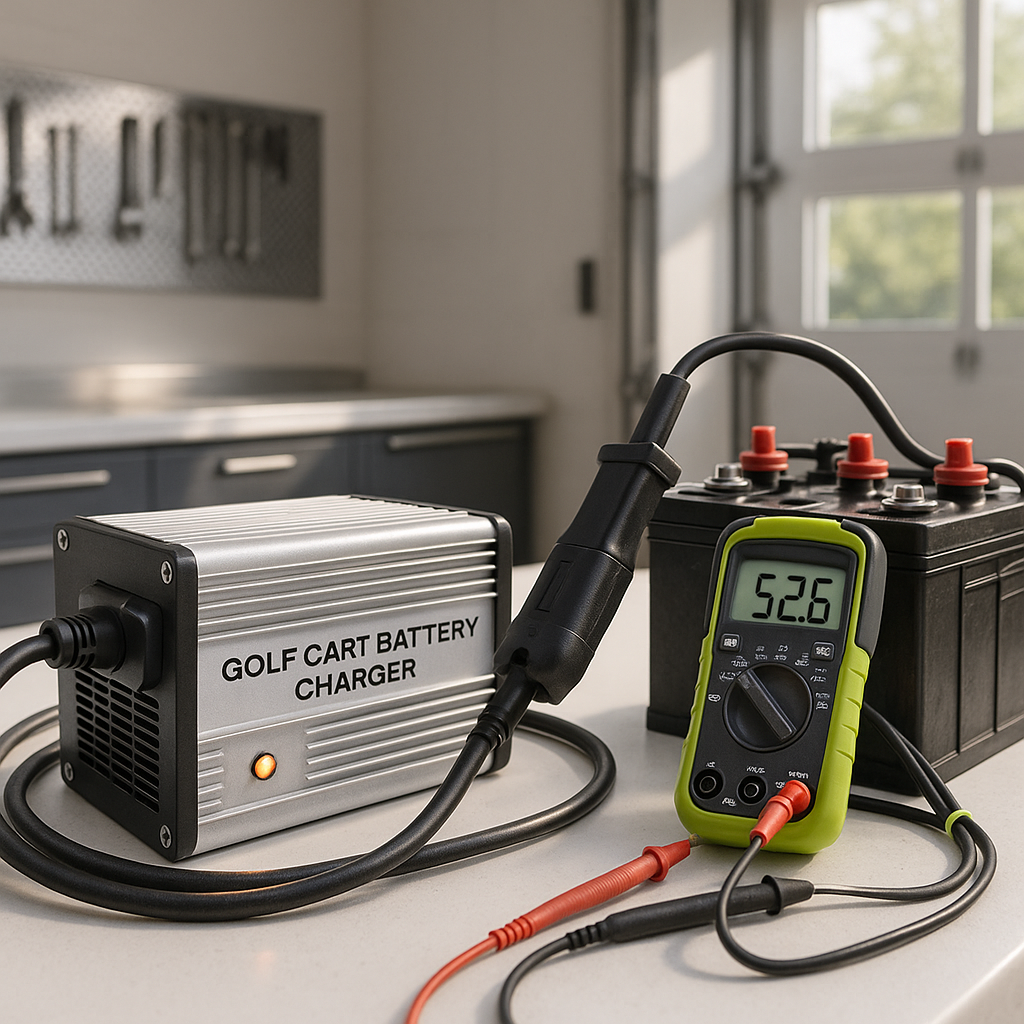
A charger that shuts off early is one of the more frustrating problems in golf cart ownership because the symptom is deceptive — the cart looks like it charged overnight, but the batteries never actually reached a full state of charge. Over time, consistently undercharged batteries sulfate and lose capacity, so diagnosing this quickly matters. The good news is that the likely causes are a manageable list, and most of them are checkable without any special equipment beyond a basic voltmeter.
Rule Out the Simple Stuff First
Before assuming a component has failed, check the obvious: Is the outlet the charger is plugged into delivering consistent power? A tripped GFCI outlet, a loose connection at the wall, or an extension cord that's too light for the charger's draw can all cause an intermittent shutoff that looks like a charger fault. Plug the charger directly into a known-good wall outlet with nothing else on the circuit and try again. Also inspect the charger's AC cord and the DC output cord for any pinched, frayed, or heat-damaged sections — a damaged cord can cause the charger to trip its internal protection and shut down.
Check the Battery Voltage Before Charging Starts
Most automatic chargers use the battery pack's resting voltage to determine whether and how to charge. If the pack voltage is extremely low — well below what the charger expects to see — many chargers will refuse to initiate a full charge cycle, or will run a brief recovery attempt and then cut off. Measure the total pack voltage with a voltmeter before plugging in the charger. If individual batteries have dropped significantly below their rated voltage, the charger may read the pack as defective and quit early as a protection measure. This is especially common after a battery has been run completely flat.
Inspect the Battery Connections and Cables
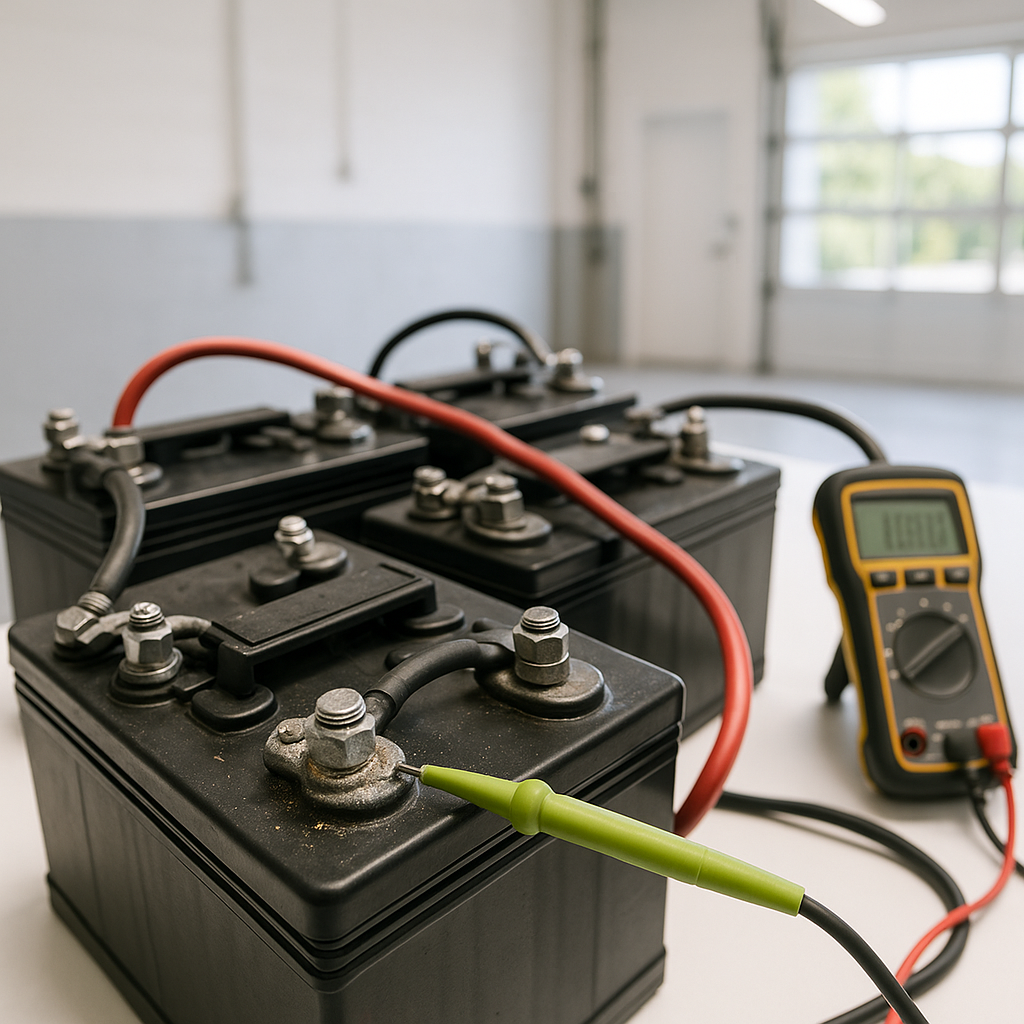
Loose or corroded cable connections create resistance in the charging circuit. A charger that senses abnormal voltage drop or current behavior at the pack may interpret this as a fault condition and cut the cycle short. Pull each battery cable connection and look for corrosion under the terminal, loose clamp bolts, or cables that have worked loose from the lug. Even connections that look fine externally can have internal corrosion if water has wicked into the cable end. Clean and re-tighten every connection in the battery bank, including the interconnect cables between batteries, and retest.
Look at Each Battery Individually
A charger that cuts off early is often responding to one weak or failing battery in the pack dragging the whole circuit out of spec. When you charge a series-connected bank, one bad cell can cause the overall pack voltage to spike or behave erratically, triggering the charger's automatic shutoff. If you have a hydrometer, check the specific gravity of each cell after a charge attempt — a cell that reads significantly lower than the rest is likely the culprit. A voltmeter can also reveal a battery that sits notably lower than its neighbors after a charge cycle. One bad battery in a bank will undermine the entire pack and repeatedly confuse the charger.
Consider the Charger's Thermal Shutoff
Most modern automatic chargers have a thermal protection circuit that cuts the charge if the unit overheats. If your charger is in an enclosed space, sitting in direct sun, or has blocked ventilation vents, it may be hitting its thermal limit before the charge cycle completes. Move the charger to a cooler, well-ventilated area and see if the problem goes away. Also check whether the charger's case feels unusually hot at the point of shutoff — warm is normal, hot enough to be uncomfortable is a sign of either a ventilation problem or an internal issue.
Test the Charge Port and OBC If Applicable
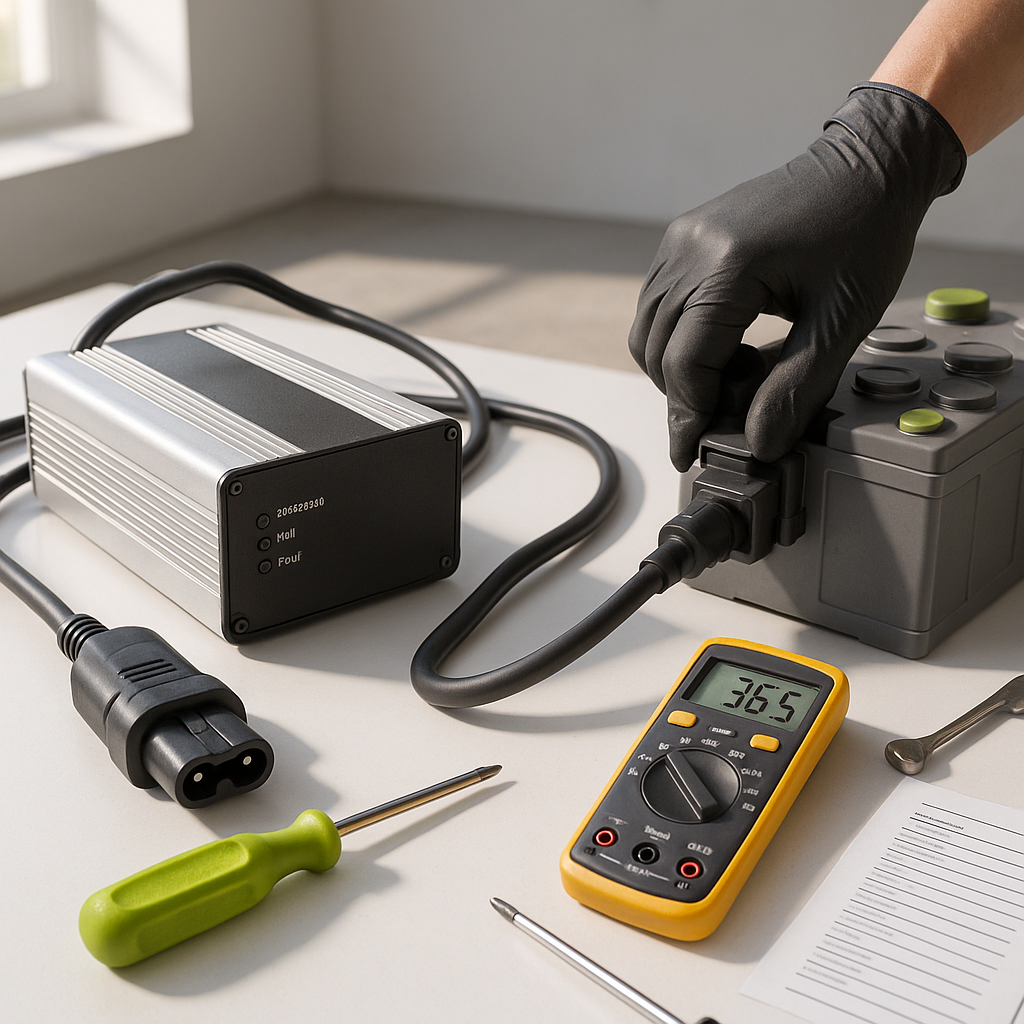
On carts equipped with an onboard computer (OBC) that manages charging, a fault in that module can cut the charge cycle early even when the charger itself is functioning correctly. If you've checked everything else and the charger works correctly when tested on a different cart or battery bank, the OBC is worth investigating. Some owners bypass the OBC temporarily as a diagnostic step, though this should only be done with a clear understanding of the charging limits of your specific battery type. A failed charge port receptacle — with a bent pin or burned contact — can also cause intermittent disconnects that look like a charger shutoff.
Chasing an early-shutoff problem is largely a process of elimination: confirm good power at the outlet, confirm the battery pack is within the charger's expected voltage range, ensure all connections are clean and tight, identify any weak individual batteries, and rule out thermal and OBC issues. In most cases, one of these checks will point directly at the root cause — and fixing it will restore reliable full charge cycles before any further battery damage sets in.