A charger that turns on is a good sign — but if it shuts off too early, runs all night without finishing, or gets stuck in a loop, you still have a real problem. This is one of the more frustrating golf cart electrical issues because the charger appears to be working, which makes the root cause easy to miss. The good news is that most cases come down to a handful of well-known culprits, and you can work through them systematically without any special tools.
The Charger Shuts Off Too Early
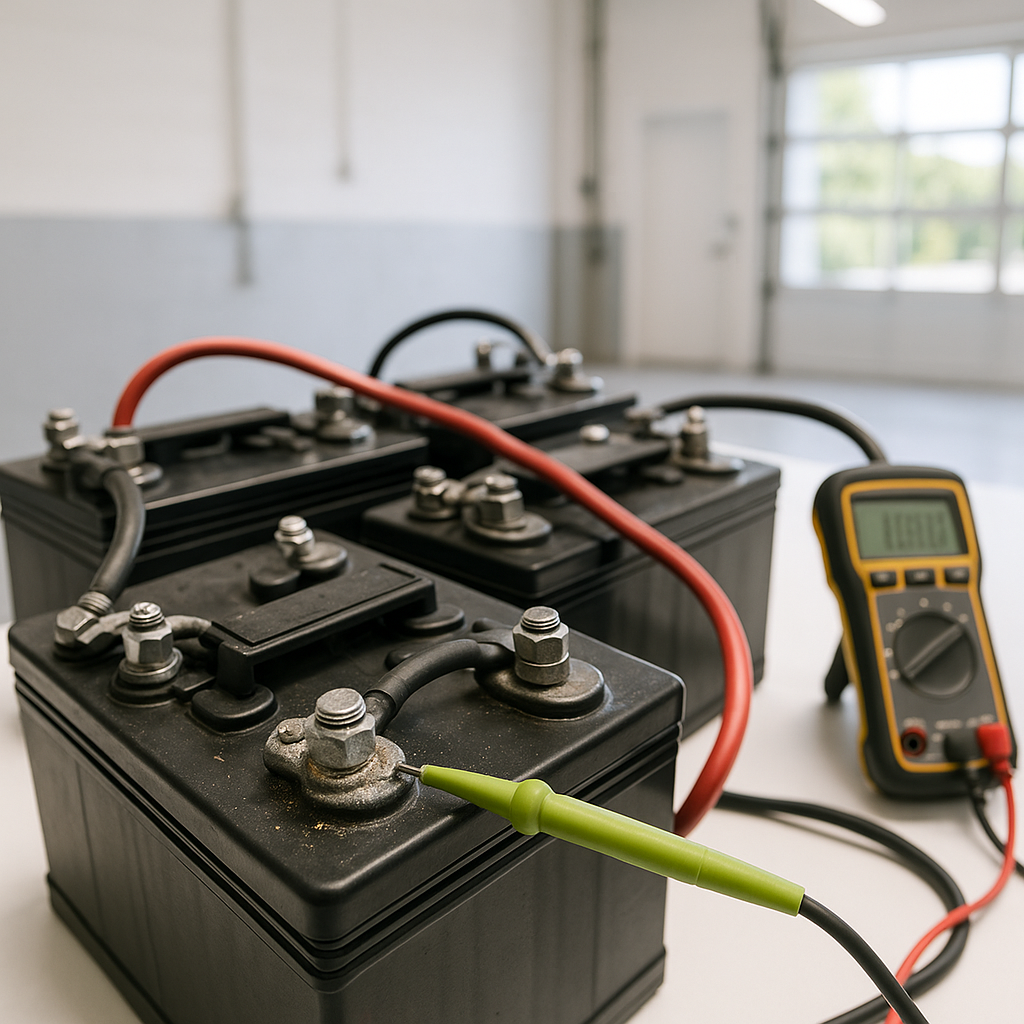
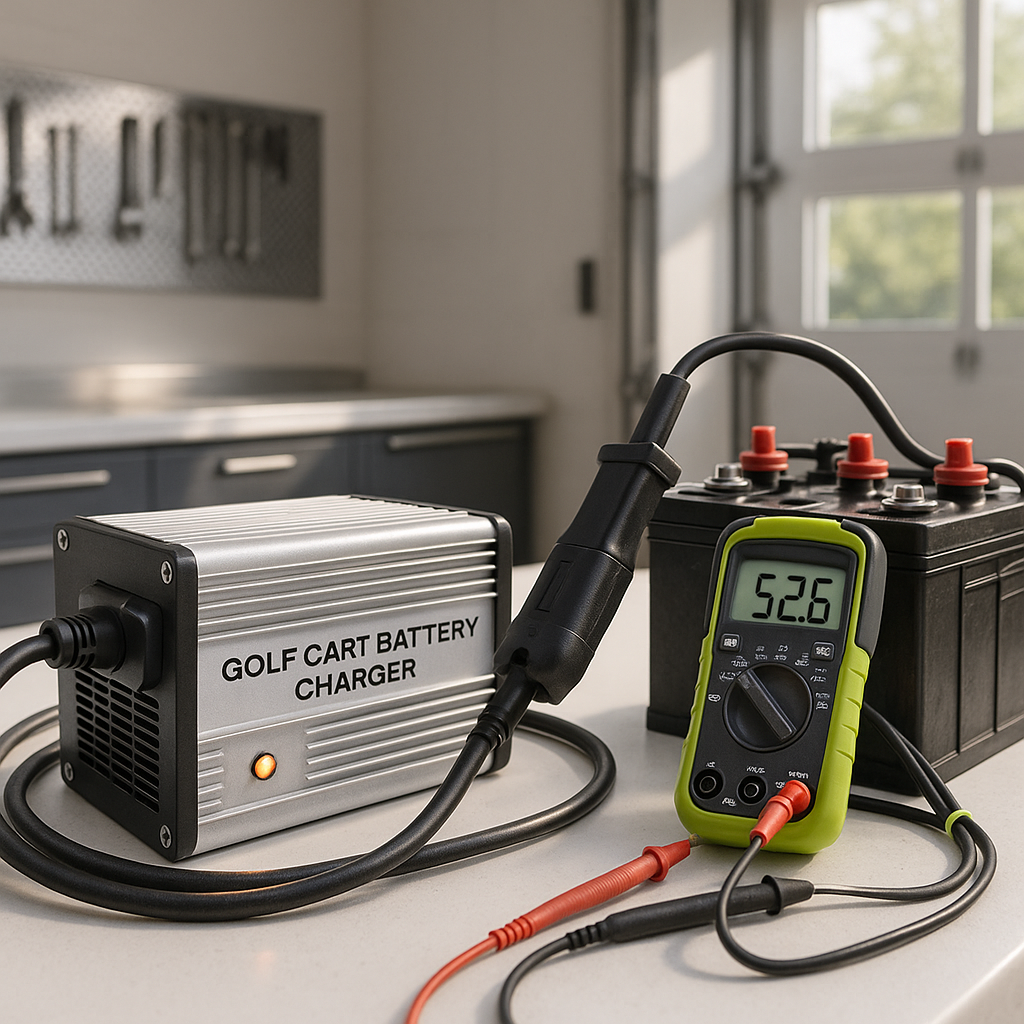
If your charger kicks on, runs for a short time, and then shuts off before the pack is actually full, the most common cause is a battery pack voltage that's dropped below what the charger expects to see. Most automatic chargers are designed to detect a minimum resting voltage before they'll complete a full charge cycle — if one or more cells in your pack are deeply discharged or failing, the charger's internal logic may interpret the situation as a completed or abnormal charge and cut out early. Check the resting voltage of your full pack with a multimeter before you plug in. Then check individual batteries. A single weak or dead battery dragging the pack voltage down is almost always the issue when the charger quits early.
The Charger Runs But Never Shuts Off
A charger that runs indefinitely — for six, eight, ten hours or more without finishing — is usually a sign that the batteries genuinely cannot accept a full charge. This happens most often with older or sulfated batteries that have lost capacity. The charger keeps pushing current because the pack never reaches the target voltage that would trigger the shutoff circuit. Before blaming the charger, test each battery individually with a load tester or have them tested at a shop. If the batteries check out, the charger's shutoff circuit itself may be faulty — some chargers have internal relays or timer circuits that wear out over time.
Check Your Battery Cable Connections First
Loose or corroded battery cable connections are behind a surprising number of incomplete charging complaints. A poor connection between cables and terminals creates resistance that the charger reads as a voltage problem — it can cause early shutoff, erratic behavior, or a charger that cycles on and off repeatedly. Before you dig deeper into the charger or the batteries themselves, clean every terminal connection in the pack, check that cables are firmly seated, and look for any signs of heat damage or melted insulation near the terminals. A cable that's undersized, corroded internally, or has a damaged lug can create enough resistance to throw off the entire charging cycle.
Look at the Charger Plug and Receptacle
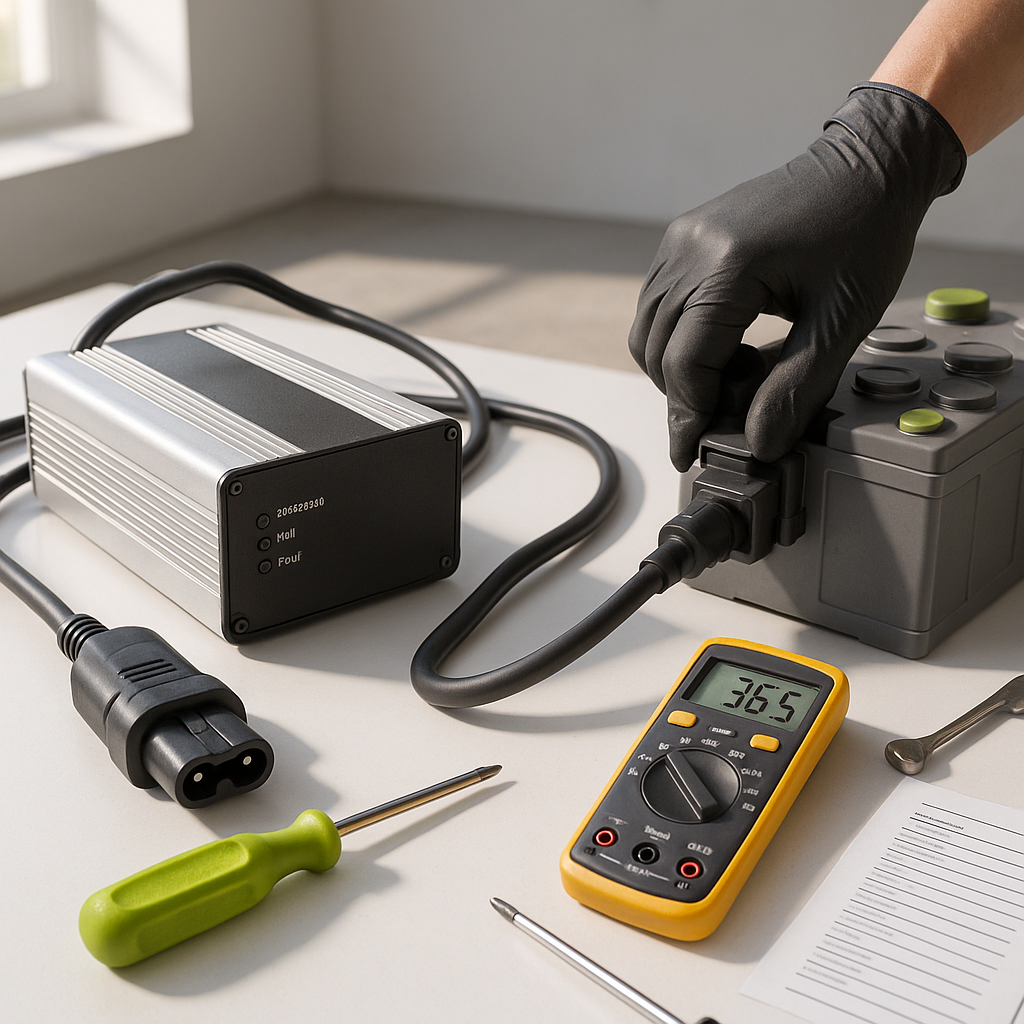
The connection between the charger cord and the cart's charging receptacle is a mechanical joint that sees a lot of use and wears out. Pins that are burned, bent, or corroded create intermittent contact — enough to let the charger start, but not enough to sustain a clean connection through a full cycle. Unplug the charger and inspect both the plug and the receptacle carefully. Any blackening, pitting, or loose fit means that connection needs attention. A bad receptacle is inexpensive to replace and often overlooked as a cause of incomplete charging.
Heat and Ventilation Matter More Than People Think
Chargers have thermal protection built in — if the unit overheats, it will shut down to protect itself. If your charger is stored in a confined space, mounted in direct sun, or has its vents blocked, heat-related shutoffs are entirely possible. The charger may cool down, restart, and repeat the cycle, never fully completing a charge. Make sure the charger has adequate airflow during operation and isn't sitting on a surface that traps heat underneath it. If the charger casing is hot to the touch during normal operation rather than just warm, that's worth paying attention to.
When the Problem Is Actually the Charger's Algorithm
Automatic chargers use voltage and current sensing to decide when a charge cycle is complete, and those sensors can drift or fail over time. If you've ruled out bad batteries, corroded cables, and connection issues, and the charger still won't complete a normal cycle, the charger's internal electronics may be the problem. Some chargers allow you to reset them by unplugging from both the wall and the cart for several minutes — this clears any fault state the charger has stored. If that doesn't help, and the charger is several years old, replacement is often more practical than repair. Charger electronics are not typically serviceable at home.
When to Call It
If you've worked through connections, cleaned terminals, confirmed your battery pack is in reasonable health, and the charger still won't complete a cycle properly — don't keep forcing it. Running a faulty charger repeatedly on a marginal pack accelerates battery damage. At that point you're better off getting your batteries professionally load-tested and having your charger bench-tested or replaced. Catching the actual failure now costs far less than replacing a full battery pack that got cooked by a charger stuck in a bad cycle.