A little slop in a golf cart's steering is easy to ignore at first, but it tends to get worse over time — and once there's enough free play that the cart wanders on its own, you have a genuine safety issue. The good news is that excessive steering play almost always traces back to one of a handful of well-known causes, and most of them are straightforward to check yourself before spending money on parts.
Start With the Steering Wheel Itself
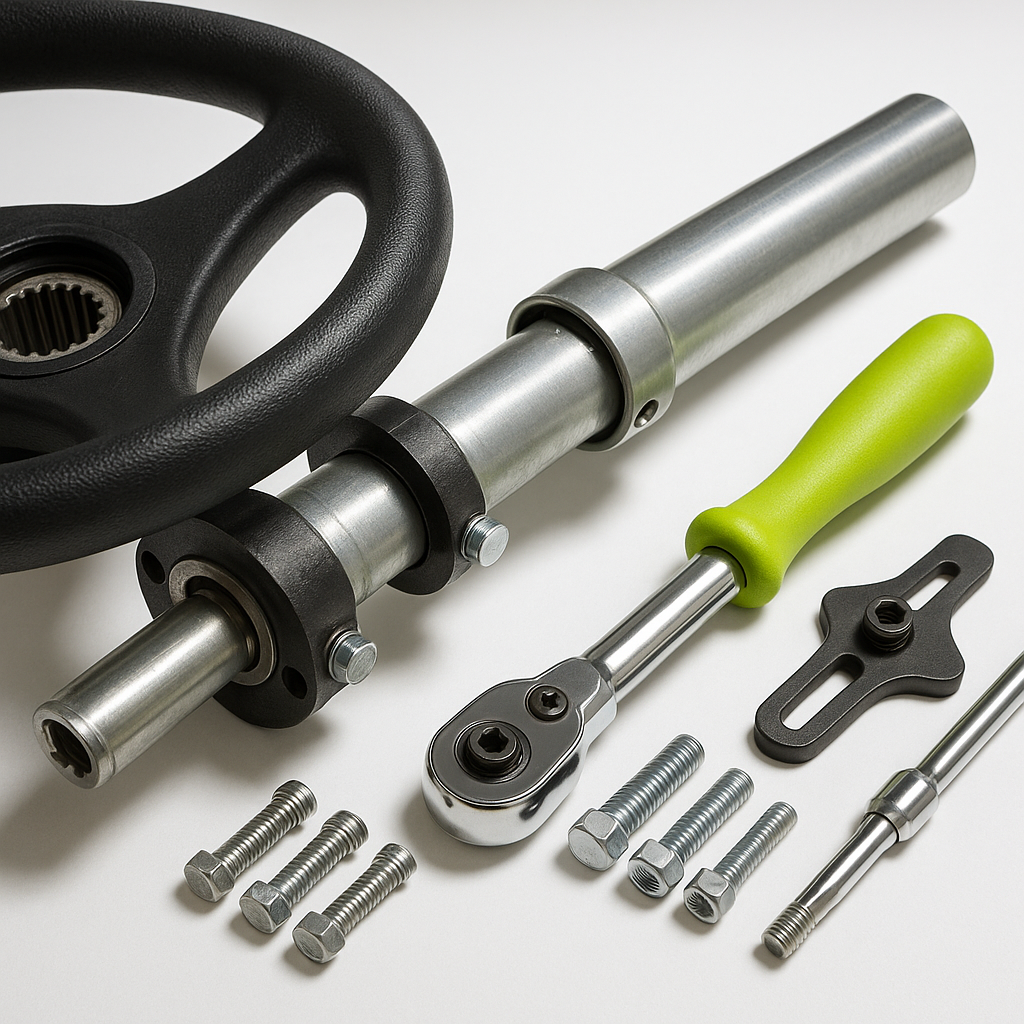
The most obvious place to begin is the steering wheel hub and the splined shaft it mounts to. Grab the wheel with both hands and try to rock it toward and away from the dash — not rotating it, but pushing and pulling. Any significant in-and-out movement suggests the center nut has backed off or the splines are worn. On most golf carts the center nut is hidden under a cap in the middle of the wheel. Remove that cap and check whether the nut is tight. If the splines themselves are worn or stripped, no amount of torquing the nut will fix the slop — the wheel or the shaft (or both) will need replacement.
Check the Steering Column and Coupler
Below the wheel, the column connects to the steering rack or gear box through some form of coupler — often a rubber or plastic joint that absorbs vibration. These couplers wear out and develop slop without any outward sign of damage. Have a helper hold the steering wheel still while you watch the coupler and column joints as they apply gentle back-and-forth rotation. Any visible lag between what the wheel does and what moves below the coupler points directly at that joint. Worn couplers are a common and inexpensive fix.
Inspect the Tie Rods and Tie Rod Ends
Tie rods translate the steering input to the front wheels, and the ball-socket joints at each end wear over time — especially on carts that see rough terrain or have high mileage. To check them, raise the front of the cart safely off the ground so the tires are free, then grab each front tire at the 9 o'clock and 3 o'clock positions and try to wiggle it side to side. Any looseness that isn't coming from the wheel bearing itself is usually worn tie rod ends. Check both sides. Also inspect the tie rods for visible bends from hitting curbs or obstacles — a bent tie rod affects both play and alignment.
Look at the Steering Rack or Gear Box
Golf carts use either a rack-and-pinion setup or a worm-gear steering box depending on the model and age. Both can develop internal wear that creates a dead spot or overall looseness. With the front wheels on the ground, have a helper slowly turn the steering wheel while you watch the steering rack or box for any housing movement — the box itself should be completely stationary. If you see it shifting, the mounting bolts have loosened. If the housing is solid but there's still play, the internal gears are likely worn. Rebuilding a steering box is a job for someone comfortable with the task; replacement is often the more practical route.
Don't Overlook the Wheel Bearings
Worn front wheel bearings can mimic steering play in a confusing way. Redo the tire-wiggle test, this time gripping the tire at 12 o'clock and 6 o'clock positions and rocking it top-to-bottom. Movement here points to wheel bearings rather than steering components. Also spin each wheel by hand with the cart safely supported — a growling, rough, or grinding feel as it rotates confirms a bearing is on its way out. Bearings that are worn enough to create noticeable play need prompt attention, since they can fail completely.
Mirror and Visibility Connection
It's worth noting that excessive steering play affects more than just handling — it makes mirrors far less useful. When your steering inputs aren't translating cleanly to the wheels, your sight lines shift unpredictably, and even a well-adjusted mirror stops giving you accurate information about what's behind and beside you. Fixing the steering problem first makes any mirror adjustment you do afterward actually stick.
When to Stop DIY Diagnosing
If you've worked through all of the above and can't isolate where the play is coming from, or if multiple components are worn simultaneously, it's time to have a qualified golf cart technician do a full front-end inspection. Steering is one system where guessing and installing parts randomly isn't a good approach — the consequences of getting it wrong at speed are serious. But in most cases, a methodical check of the wheel hub, coupler, tie rod ends, steering box, and wheel bearings will lead you straight to the culprit.