A musty or moldy smell inside your golf cart is one of those problems that's easy to ignore until it becomes serious. What starts as a faint odor after a rainy week can turn into visible mold on seat cushions, deteriorating floor mats, and a deeply unpleasant riding experience. The good news is that the cause is almost always traceable, and most fixes don't require any special tools — just a systematic inspection and some elbow grease.
Start With the Obvious: Find Where Moisture Is Getting In
Before you clean anything, you need to find the source. If you treat the symptom without fixing the cause, the smell will come back within weeks. Walk around the cart after a light rain or after washing it and look for water pooling in the footwell, under the seat base, or along the edges of the floor. Check whether your enclosure panels — if you have them — are sealing properly at the seams and zipper closures. Loose or cracked enclosure panels are one of the most common reasons moisture accumulates inside carts, especially in climates where the cart sits outside regularly. Also check whether your cart has drainage gaps in the floor — many do — and whether they're blocked by debris, which forces water to sit rather than run off.
Inspect the Seat Cushions and Foam
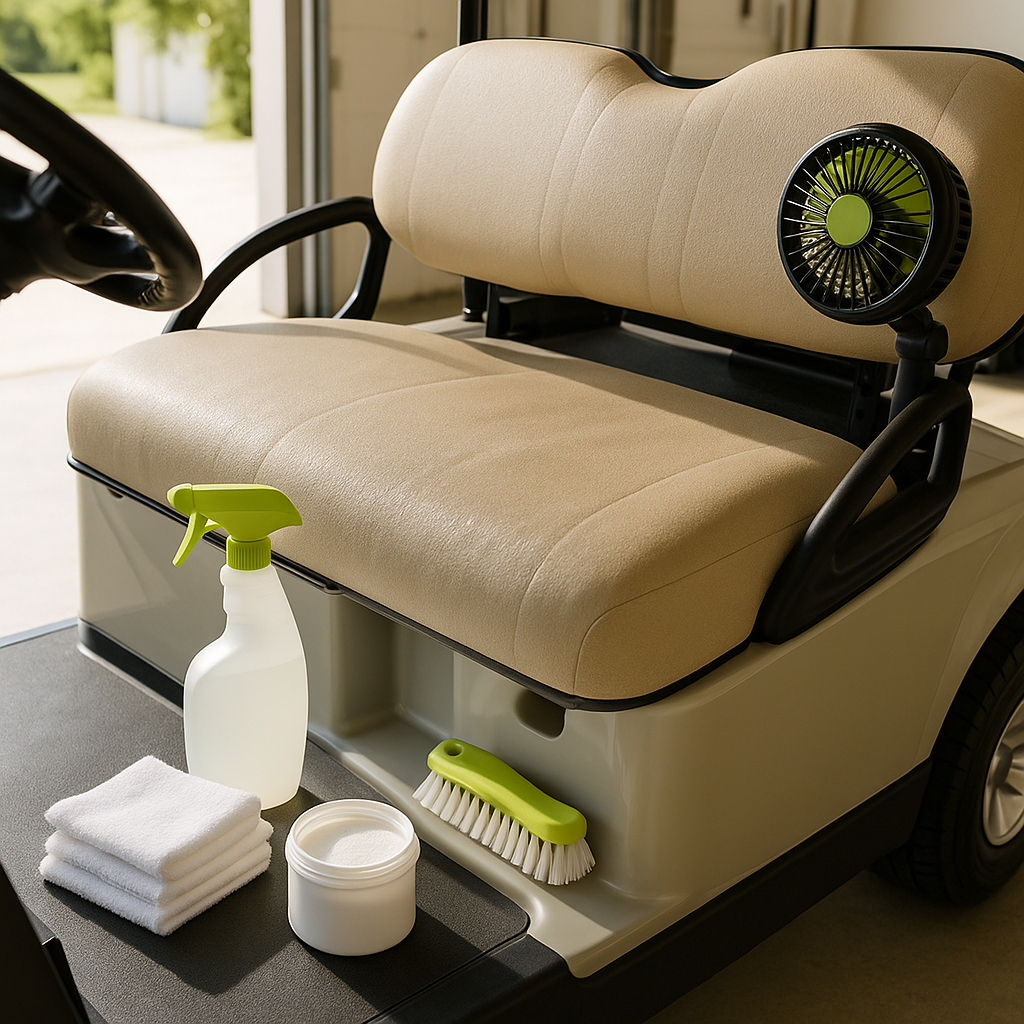
Seat cushions are the number-one place mold and mildew take hold in a golf cart. The vinyl or fabric cover may look fine on the outside, but if the foam underneath has absorbed water, it holds that moisture for a long time — long enough for mold to establish itself deep in the material. Press firmly on each cushion and check whether you can feel or hear moisture, or whether a damp smell intensifies. If the foam is saturated, surface cleaning alone won't fix it. You'll need to either dry it completely in direct sunlight over several days or replace the foam insert. Seat covers that are cracked, torn, or have broken stitching at the seams are the main entry point for water — any compromise in the cover's surface lets moisture straight into the foam.
Check the Floor Mats and Flooring Underneath
Remove your floor mats completely and set them aside. Look at the floor surface underneath — this is where many owners are surprised to find standing water or a heavy film of mildew that's been hidden under the mat for months. Rubber and carpet-style mats can trap moisture against the floor, especially if they fit tightly against the edges and prevent air circulation. While the mats are out, inspect the floor itself. If your cart has a carpeted floor or a composite floor board, check for soft spots, discoloration, or that characteristic musty smell that intensifies when you press on the material. Some floor boards can absorb water over time and become structurally compromised, not just smelly.
Clean and Treat What You Can Save
For vinyl seat covers and hard floor surfaces, a diluted solution of white vinegar and water is an effective, cart-safe first treatment for mildew. Apply it, let it sit for several minutes, and scrub with a stiff brush. For heavier mold growth, an enzyme-based cleaner designed for marine or outdoor upholstery tends to work better than household cleaners because it breaks down the organic material the mold feeds on rather than just bleaching the surface. After cleaning, the single most important step is thorough drying — mold regrows quickly on any surface that stays even slightly damp. If weather allows, park the cart with the enclosure open in direct sunlight for a full day. For foam cushions that were damp but not destroyed, standing them on edge in the sun for several hours dramatically accelerates drying.
Address the Long-Term Fix: Sealing and Protection
Once you've cleaned up the existing problem, think about prevention. If your enclosure has gaps or failing zipper seals, those need to be repaired or replaced — no amount of cleaning will help if water keeps getting in every time it rains. For seat covers, a UV-protective vinyl conditioner applied regularly keeps the material supple and crack-resistant, which is what keeps water out of the foam in the first place. If your floor mats don't have drainage holes and your cart sits outside, consider whether the mat design is actually trapping water rather than managing it. Some owners who store carts outdoors in wet climates use a breathable cart cover rather than a full enclosure, which dramatically reduces interior humidity buildup when the cart isn't in use. Keeping the footwell clear of leaves and debris also ensures any water that does get in can drain out rather than sit.
When to Replace Instead of Repair
Not everything can be cleaned back to serviceable condition. If seat foam has been wet long enough to develop black or green mold that goes through to the core of the cushion, replacement is the only real answer — mold that deep cannot be fully eliminated by surface treatment and will continue to off-gas spores and odor. Similarly, if a carpeted floor section has soft or crumbling material, or if a composite floor board has delaminated from moisture intrusion, cleaning is pointless. At that stage, a replacement mat or floor liner that fits your specific cart model is a straightforward upgrade that will last far longer than trying to rehabilitate a damaged original. Look for materials designed for outdoor exposure — closed-cell foam backing, marine-grade vinyl, or heavy-duty rubber — rather than standard automotive interior materials, which aren't designed for the moisture exposure a golf cart endures.