A mirror that won't hold its angle is more than annoying — it's a genuine safety problem. If you glance up and the mirror has drifted, you've lost the visibility you were counting on. The good news is that mirrors losing their adjustment is almost always a mechanical issue with a straightforward fix. Working through the common causes systematically will get you to the right solution without throwing parts at the problem.
Start With the Mounting Hardware
The single most common reason a golf cart mirror won't stay put is loose or worn hardware at the mounting point — not at the mirror head itself. Check wherever the mirror attaches to the cart: the windshield frame, the roof strut, or the grab bar. Over time, vibration from driving works fasteners loose. Tighten any bolts or clamps at the base and see if that resolves the problem before going any further. If the fastener tightens but immediately feels loose again, the threads may be stripped, which calls for a larger replacement fastener or a thread repair before anything else will hold.
Check the Mirror Arm Pivot or Joint
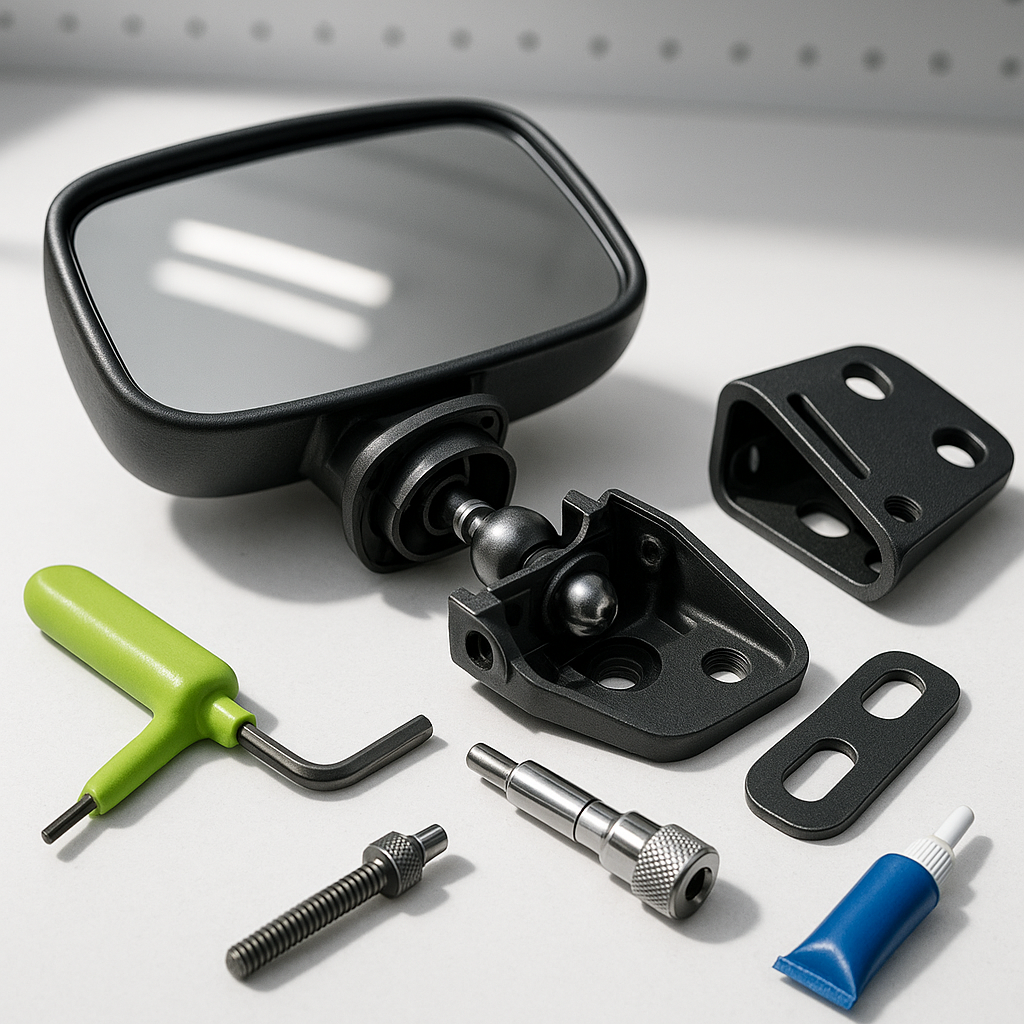
Many golf cart mirrors use a pivot joint or ball-and-socket connection that lets you angle the mirror head. These joints rely on friction — either from a tensioned bolt, a friction washer, or the clamping force of the housing itself — to hold position. When that friction surface wears smooth or the tensioning bolt backs out from vibration, the mirror head will flop freely. Try snugging up any adjustment bolt or nut at the pivot point. If the joint feels gritty or rough, cleaning it out and reassembly often helps. If the pivot hardware is visibly rounded, cracked, or the plastic housing is deformed, that component needs to be replaced — no amount of tightening will restore friction to a worn-out joint.
Inspect the Mirror Mounting Clamp
If your mirror mounts via a clamp — which is common for universal-fit mirrors installed on round tubing — the clamp itself may be the culprit. A clamp that's sized slightly too large for your tubing diameter will never grip reliably no matter how tight you run the hardware. Check that the clamp is properly matched to your cart's tubing size. Also look for any paint, rust, or coating buildup on the tubing at the contact point; these can act like a lubricant and prevent the clamp from biting properly. Cleaning the contact surface and confirming clamp-to-tube fit is a quick check worth doing before assuming the mirror itself is defective.
Consider Vibration as the Root Cause
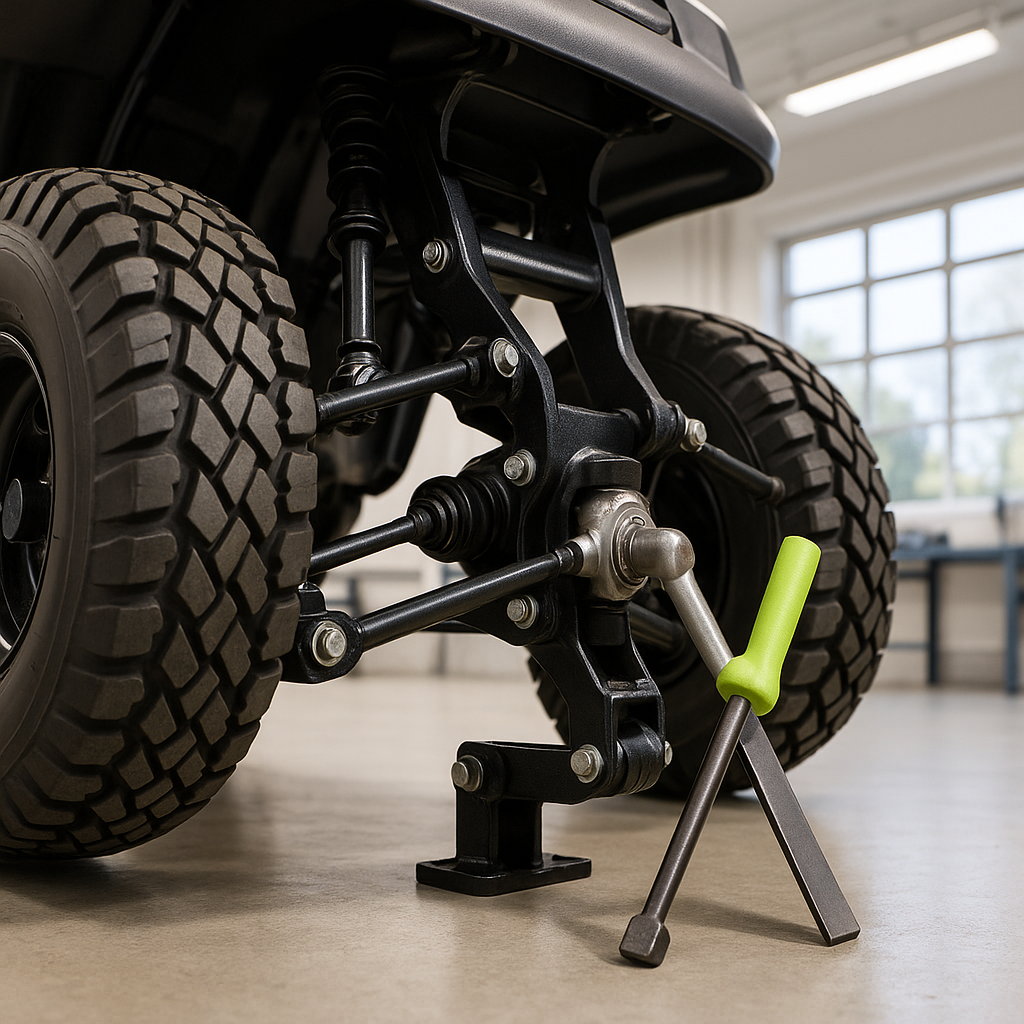
Even hardware that's properly tight can lose its position over time if vibration is severe enough. Carts running on rough terrain, carts with worn or improperly inflated tires, or carts with suspension problems transmit more vibration to everything mounted on them — including mirrors. If your mirror hardware is genuinely tight and still keeps drifting, it's worth asking whether the underlying vibration level is higher than normal. Check tire pressure and look for obvious suspension wear. You can also add a thread-locking compound to fasteners that are prone to backing out, but address excessive vibration at the source if you can.
When the Mirror Mount Itself Is the Problem
Some mirrors ship with mounting hardware that is undersized or made from materials that don't hold up to outdoor use. If you've confirmed that the clamp fits the tubing, all fasteners are properly tightened, and the pivot friction is intact but the mirror still won't stay, the mount may simply be inadequate for the application. Upgrading to a mirror with a heavier-duty mounting system — or adding a secondary anti-rotation bracket — is a legitimate fix in this case. Look for mounts with wider clamp contact surfaces and robust pivot hardware rather than all-plastic joints if you're replacing a mirror that has repeatedly given you this problem.
Rear View Mirrors: A Different Set of Issues
Interior rear view mirrors that mount to the overhead bar or windshield frame have their own quirks. The friction mechanism on these is often a single bolt through the mounting bracket, and it's easy to overtighten and crack the bracket or undertighten and have the mirror drop over every bump. Check that the bracket itself isn't cracked — a hairline crack near the mounting hole will make the assembly impossible to tension properly. Also verify that the mirror is mounted to a solid, rigid part of the frame; mounting to a part of the roof or windshield that flexes during driving means the mirror will move every time that panel moves, regardless of how well the mirror hardware is set up.
Most golf cart mirror adjustment problems come down to hardware that's loose, worn, or mismatched to the mounting surface. A methodical check — base fasteners, pivot joint, clamp fit, and vibration levels — will isolate the issue in most cases without any special tools. When hardware is genuinely worn out or undersized, replacing it is the right call. A mirror that holds its position reliably is one of the cheapest safety upgrades you can make to any cart.