Your cart runs great for ten minutes, then suddenly bogs down, cuts out, or refuses to move — and by the time you get back to the garage it seems fine again. Intermittent power loss is frustrating precisely because it disappears when you try to show it to someone. But there's almost always a real, findable cause. The key is understanding what systems are involved and working through them in order rather than throwing parts at the problem.
Rule Out the Obvious First: Batteries and Connections
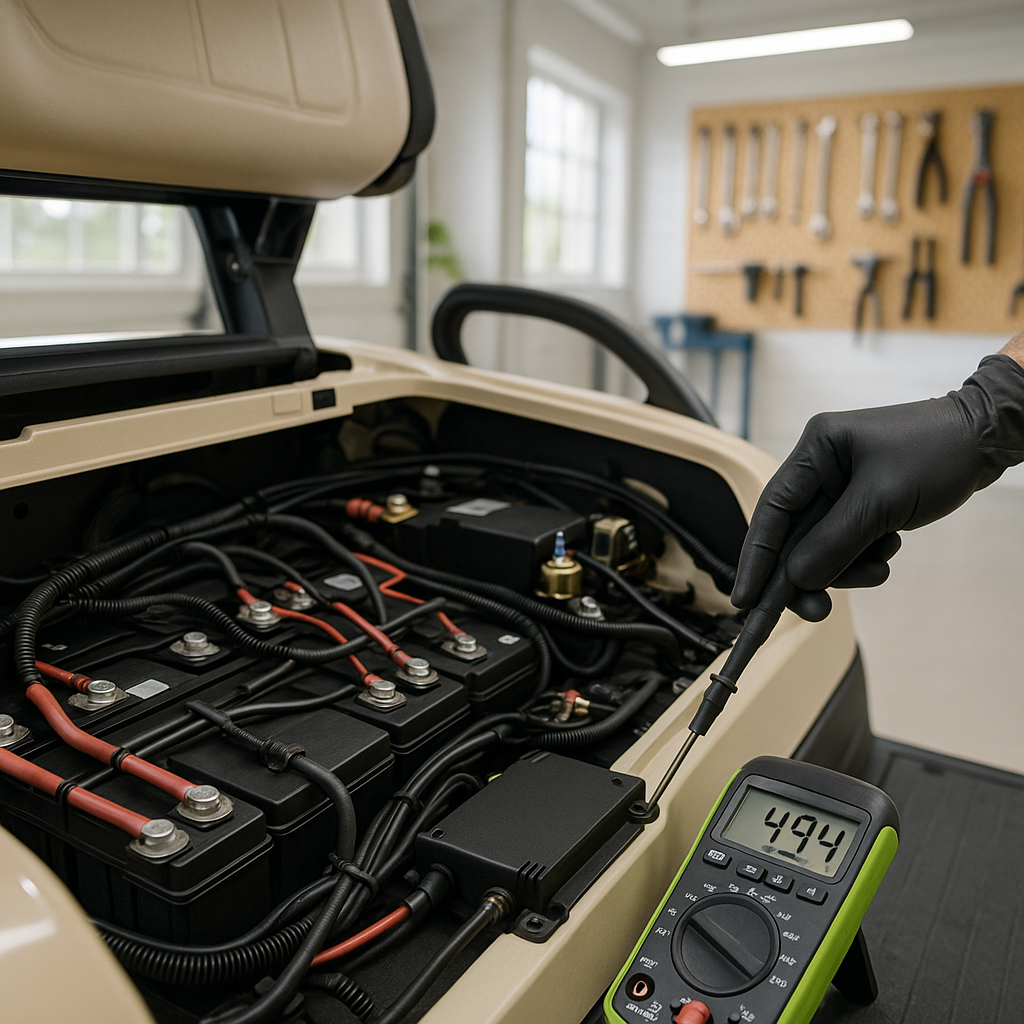
Before suspecting the controller, check your battery pack under load. A pack that reads full voltage at rest can collapse under demand — especially if one or more cells are weak. Use a hydrometer or a load tester to check each battery individually, not just the pack total. While you're at it, inspect every cable connection end to end: battery posts, inter-battery cables, the main positive and negative leads to the controller and motor. A loose or corroded connection that heats up under load and then recovers as it cools is a classic intermittent fault that mimics controller failure almost perfectly.
Check the Solenoid
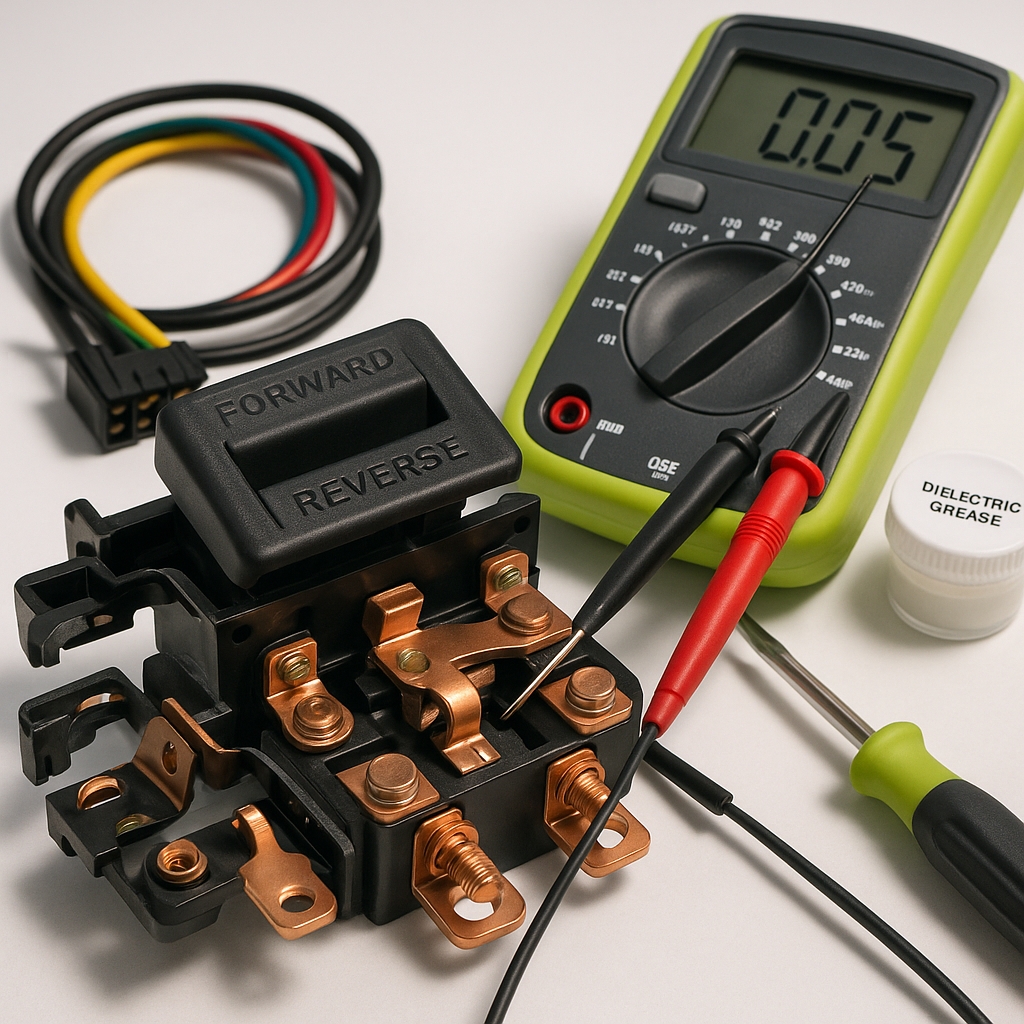
The solenoid sits between your batteries and controller, and it takes a beating over time. A worn solenoid can engage inconsistently — especially when it gets hot — causing sudden cutouts that feel exactly like a controller fault. Listen for the click when you press the pedal. If it clicks but power doesn't follow, or if the clicking becomes inconsistent as the cart warms up, the solenoid is a serious suspect. You can test the solenoid's main contacts with a multimeter to see if voltage is passing through cleanly when it's engaged.
Throttle Sensor and Pedal Assembly
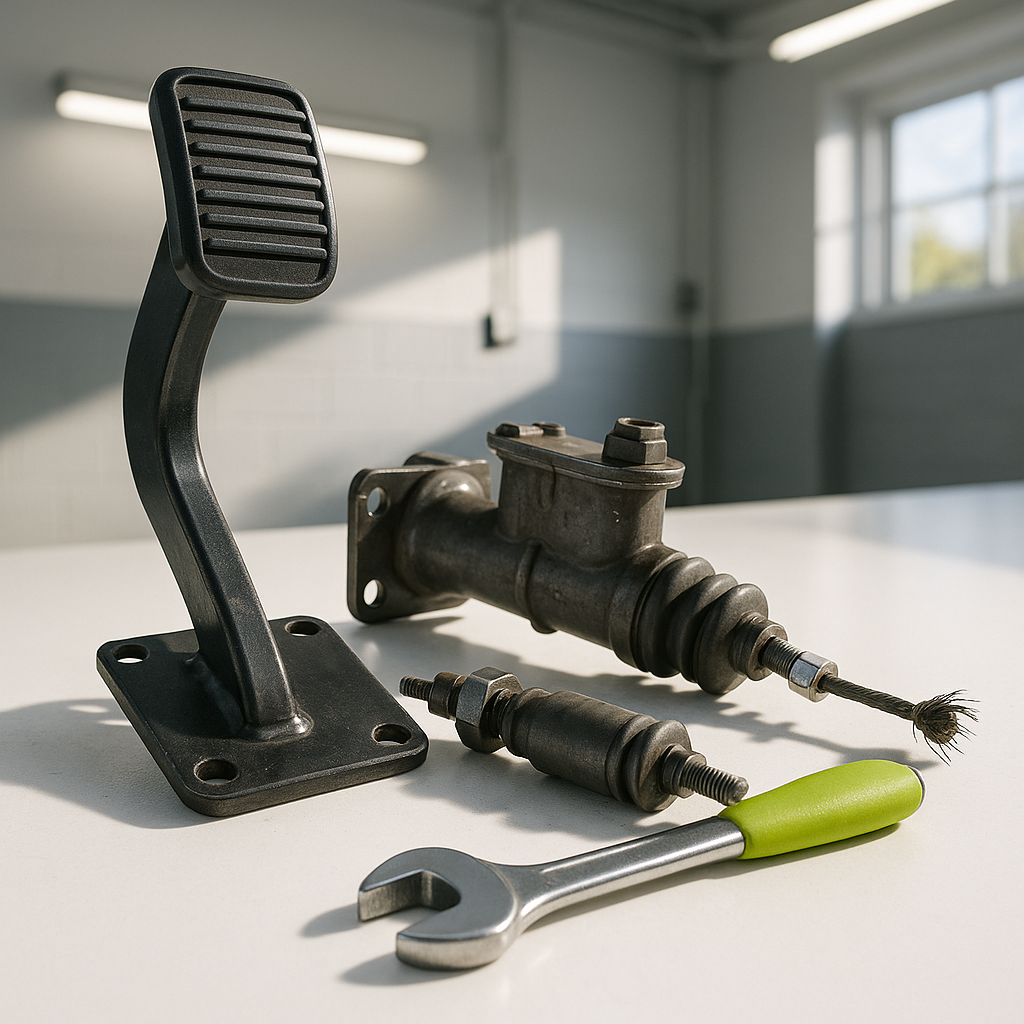
Most modern electric golf carts use either a potentiometer or an inductive throttle sensor to tell the controller how much power to deliver. If that sensor is sending erratic or out-of-range signals, the controller will cut power as a protection response — and it can happen suddenly and unpredictably. Check the throttle assembly for worn contacts, loose wiring, or physical damage to the sensor. On carts that have a potentiometer-style throttle, the resistance should sweep smoothly from minimum to maximum with no dead spots or spikes. A cheap multimeter can confirm this while someone slowly presses and releases the pedal.
The Controller Itself and Thermal Cutback
Motor controllers have built-in thermal protection — when internal temperature gets too high, they deliberately reduce or cut power to protect themselves. This isn't a failure; it's the system working as designed. But if it's happening frequently, it signals an underlying problem: a motor drawing too much current due to mechanical drag, undersized wiring causing resistance and heat, or a controller that's simply too small for the load being placed on it. Let the cart cool completely and see if it recovers. If it does, and the pattern is consistent — runs fine, cuts out after sustained use, recovers after rest — thermal protection is almost certainly involved. Inspect the controller's heat sink and mounting; proper thermal contact with its mounting surface matters significantly.
Motor Condition
A motor with worn brushes, damaged armature windings, or contaminated commutator bars will draw excessive and erratic current. That irregular current draw triggers the controller's protection circuits, causing cutouts. If your cart has a brush-type DC motor, inspect the brushes for length and condition and look at the commutator surface for scoring, pitting, or carbon buildup. This is often overlooked because the motor itself seems to run — but running poorly and running correctly are very different things from the controller's perspective.
Wiring Harness and Ground Integrity
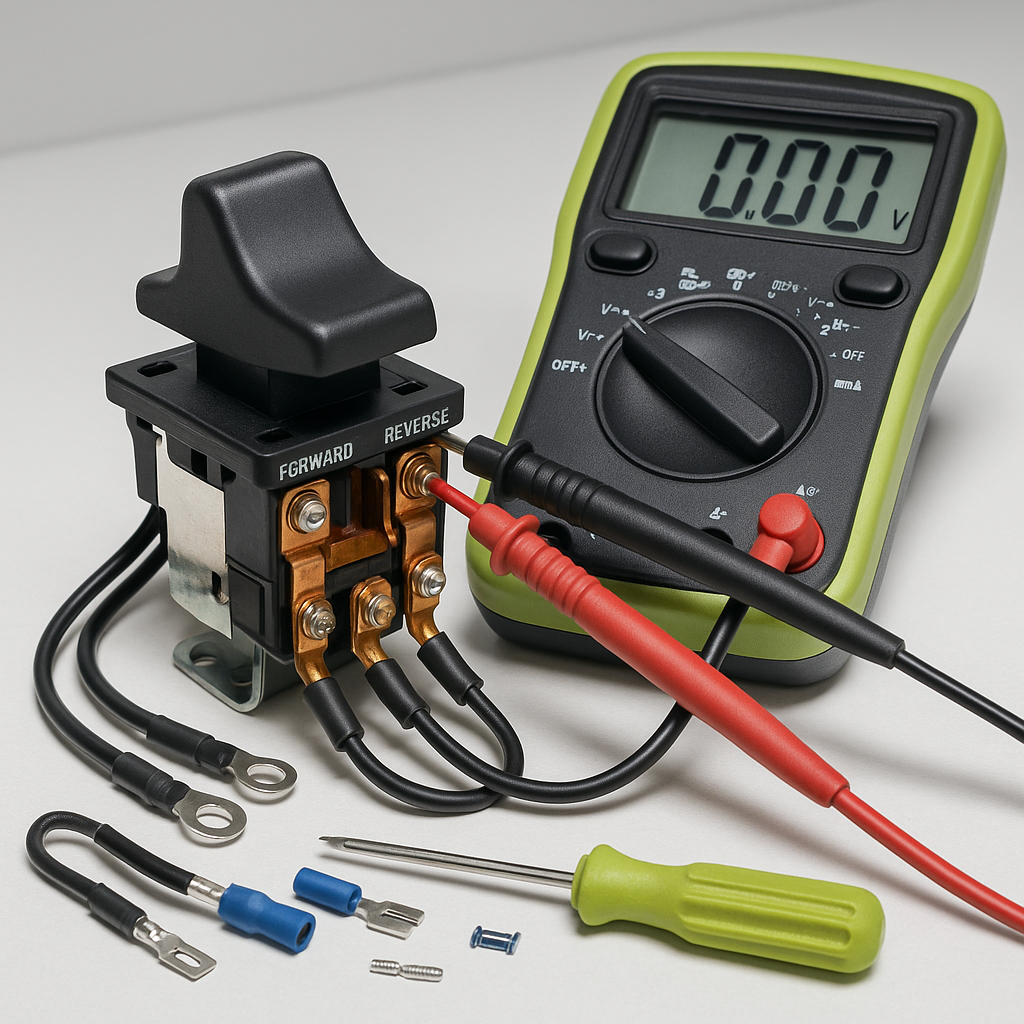
A failing ground — whether at the motor, controller, or chassis — can create symptoms that look like almost anything: sudden cutouts, sluggish response, intermittent operation. Trace your ground path from the main negative battery terminal through every connection point. Look for chafed insulation, corroded terminals, or loose ring terminals that have developed resistance over time. On older carts, the wiring harness itself can develop cracked insulation that causes intermittent shorts under vibration or heat, which will trigger protection shutdowns in a modern controller.
When to Suspect the Controller Specifically
If you've checked batteries, connections, solenoid, throttle sensor, motor, and wiring and everything looks solid, the controller becomes the most likely remaining culprit. Internal component failures — particularly in the FET transistors that control power delivery — can cause exactly this kind of intermittent fault. Some controllers have diagnostic LED codes or fault outputs that can point you in the right direction; consult your cart's service manual for how to read them. At this stage, having a shop with a controller programmer or diagnostic tool verify the controller's behavior under load is the most reliable next step before committing to a replacement.