Golf cart mirrors take a beating. Between rough pavement, cart paths with dips and roots, and the general vibration of a vehicle without a lot of mass damping it out, even a properly installed mirror can develop visibility problems over time. If you're getting a blurry, shaky, or otherwise useless reflection while driving, the fix is almost always one of a handful of well-known culprits — and most of them are easy to track down yourself.
Start With the Mount Point
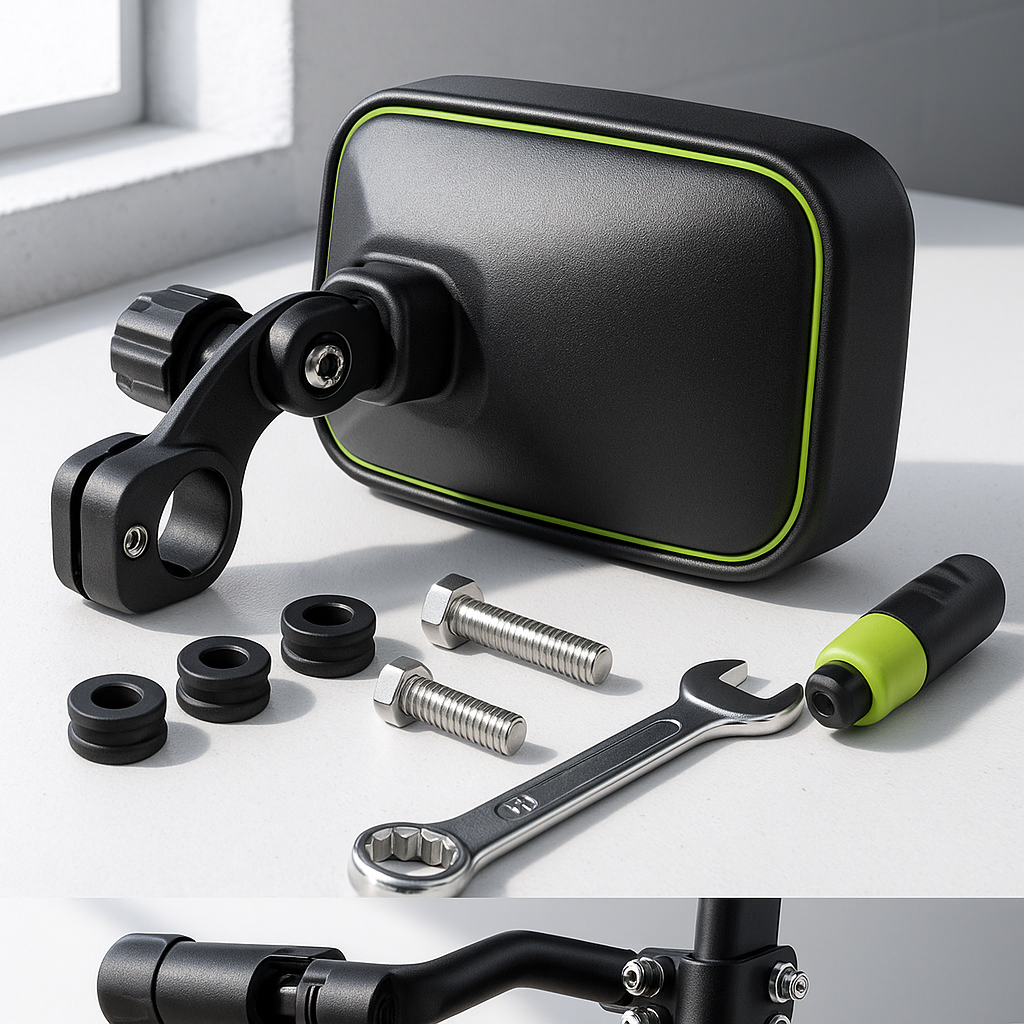
The most common cause of mirror vibration is a loose connection at the mounting point — the spot where the mirror arm attaches to your cart's frame, roof support, or windshield. Even a tiny amount of play at the mount gets amplified out at the mirror head, turning a barely-perceptible wobble into a completely useless image at speed. With the cart parked and the engine or motor off, grab the mirror arm as close to its mount as possible and try to wiggle it in every direction. If you feel any movement that isn't coming from a deliberate pivot or adjustment joint, that's your problem. Check whatever hardware secures the base — bolts, clamps, or set screws — and tighten them. Don't overtighten on plastic housings or windshield frames, but make sure there's no slop left.
Check the Mirror Arm Itself
Some mirrors use a telescoping or folding arm, and the joint in the middle of that arm can loosen independently from the base mount. Run your hand along the full length of the arm and feel for any flex or wobble. A loose pivot joint here will cause the same shaky-image problem even if the base is rock solid. Many arms have a small set screw, collar bolt, or locking ring at any pivot point — find it and snug it up. If the arm itself is cracked or bent, no amount of tightening will help; the arm needs to be replaced.
Inspect the Mirror Head Adjustment Mechanism
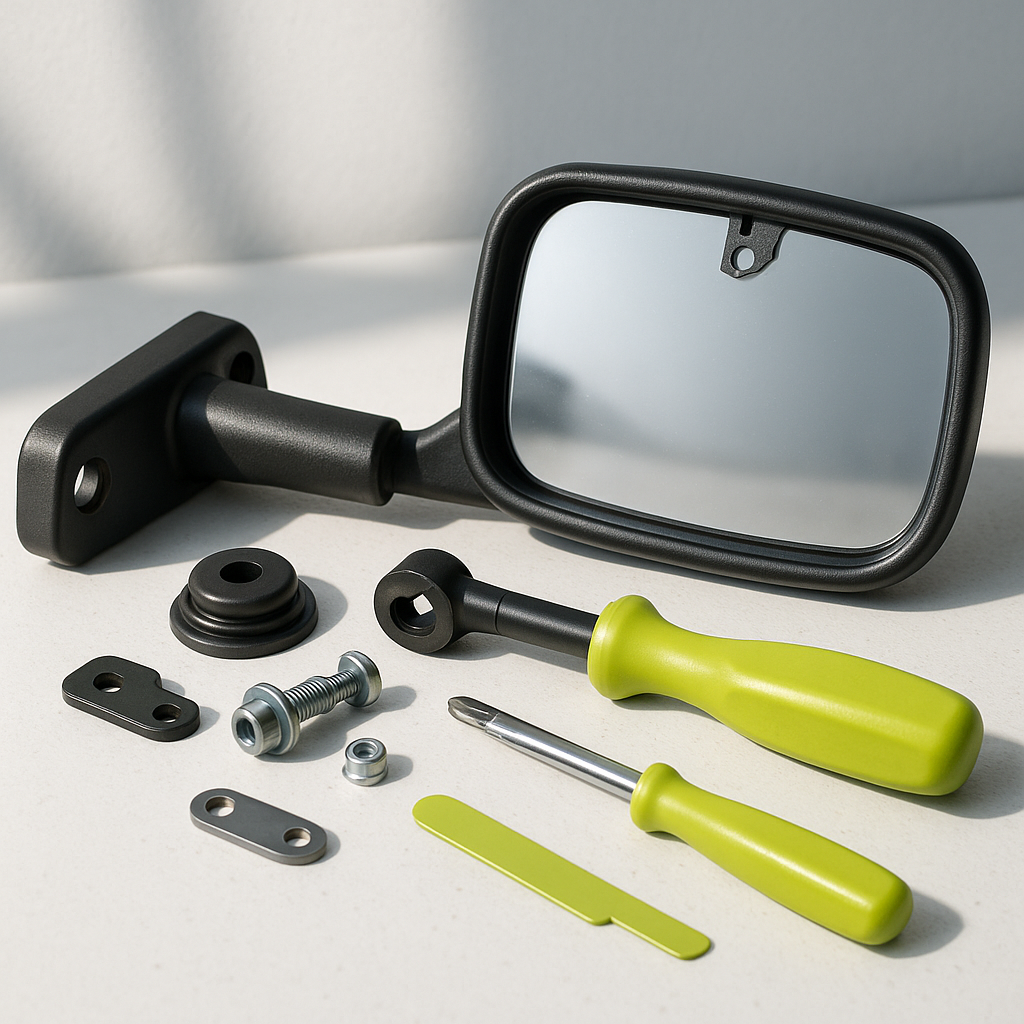
Nearly all golf cart mirrors are designed to be manually adjusted — you push the mirror head to point it where you want it, and friction or a locking mechanism holds it there. That friction or locking mechanism wears over time. If your mirror head is loose enough to flop around while driving, the mirror will vibrate independently of everything else. Try adjusting the mirror to your preferred position and then gently pushing on the face of the mirror with one finger. If it moves easily, the pivot is worn. Some pivots can be tightened with a small screw or nut hidden behind the mirror head or inside the housing. Others are worn past adjustment and the mirror head assembly needs to be replaced.
Look at Where the Cart Is Being Driven
This sounds obvious, but it's worth saying: some vibration is environmental, not mechanical. A mirror that's perfectly tight on smooth pavement can look like it's shaking apart on a rough gravel path or a bumpy hillside course. Before you dig too deep into hardware, test the mirror on the smoothest surface available. If vibration disappears on smooth ground, the mirror hardware is probably fine — your visibility problem on rough terrain is a physics issue, not a loose bolt. In that case, mirrors with a ball-and-socket or dampened pivot tend to hold their image better over rough ground than simple friction pivots do.
Check for Wind-Induced Flutter
If your cart has a windshield or enclosure and you've noticed the mirror vibration is worse at higher speeds (say, on a long flat fairway or a road-legal cart situation), wind flutter may be the issue. A mirror head that's angled to catch a lot of airflow, or one positioned where it catches turbulence off the windshield edge, will vibrate at speed even when mechanically tight. Try repositioning the mirror angle slightly — even a small rotation can move it out of the turbulent airflow and dramatically reduce flutter. If the mirror arm sticks out far from the cart body, a shorter arm or a mount positioned closer to the windshield edge may help.
Examine the Mounting Surface
On carts where the mirror mounts directly to a plastic windshield frame or a thin sheet-metal strut, the mounting surface itself can flex and transmit vibration. If the frame or strut the mirror is bolted to has any flex when you push on it, tightening the mirror hardware alone won't fully solve the problem. Adding a backing plate, washer, or reinforcing the mount with a secondary clamp point can stiffen the whole assembly. On windshield-mounted mirrors especially, check that the windshield frame itself is secure — a windshield that's loose in its channel will vibrate everything attached to it.
When Hardware Is Fine But Visibility Still Suffers
If everything is mechanically tight and you're still getting poor visibility, the mirror glass or reflective surface itself may be the problem. Older mirrors develop crazing, fogging, or delamination that blurs the image regardless of how stable the mirror is. Check the mirror surface in good light — if you see clouding, small cracks in the reflective coating, or distortion that's visible even when the mirror is perfectly still, the mirror head needs to be replaced. There's no way to restore a degraded reflective surface in the field. The good news is that mirror heads are typically inexpensive and straightforward to swap out.