A golf cart mirror that vibrates, shakes, or bounces while you're moving gives you a blurry, useless reflection instead of a clear view behind you. It's a safety problem, not just an annoyance. The good news is that mirror vibration almost always comes down to one of a handful of root causes, and most of them are easy to diagnose without any special tools. Work through this guide systematically and you'll know exactly what's going on before you spend a dime on a fix.
Start With the Mount: Is the Mirror Actually Secured?
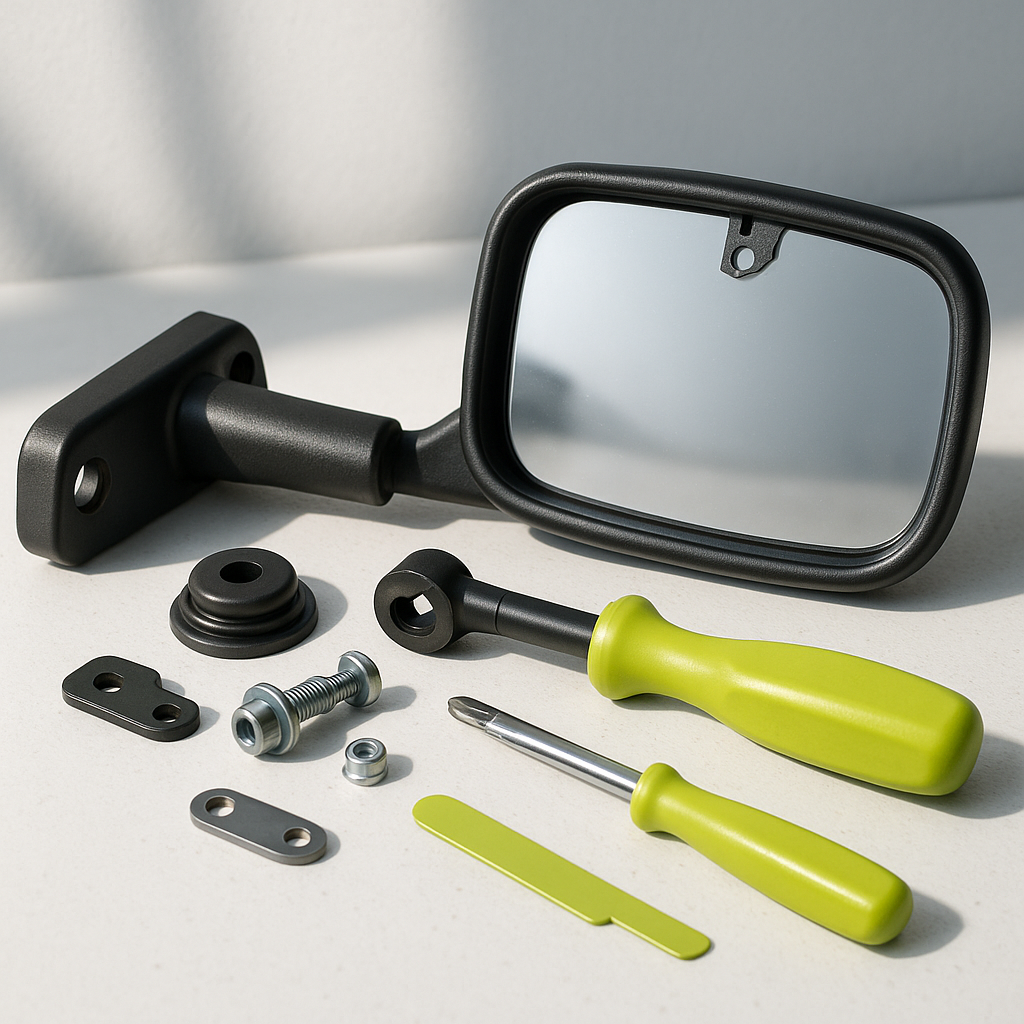
The single most common cause of a vibrating mirror is a loose mounting point. Before you assume the mirror itself is defective, get hands-on with the mount. Grip the entire mirror assembly — bracket and all — and try to wiggle it at the point where it attaches to the windshield frame, roof support, or dash. Any play at that connection point will amplify into significant shake once you're rolling over cart paths or turf. Check every bolt, clamp, or screw in the mounting hardware. Fasteners back out over time from normal vibration, and a quarter-turn of tightening is often all it takes. If the hardware is intact but the mount surface itself is cracked or deformed, no amount of tightening will help — the mounting point needs to be repaired or replaced first.
Check the Mirror's Own Pivot and Adjustment Joint
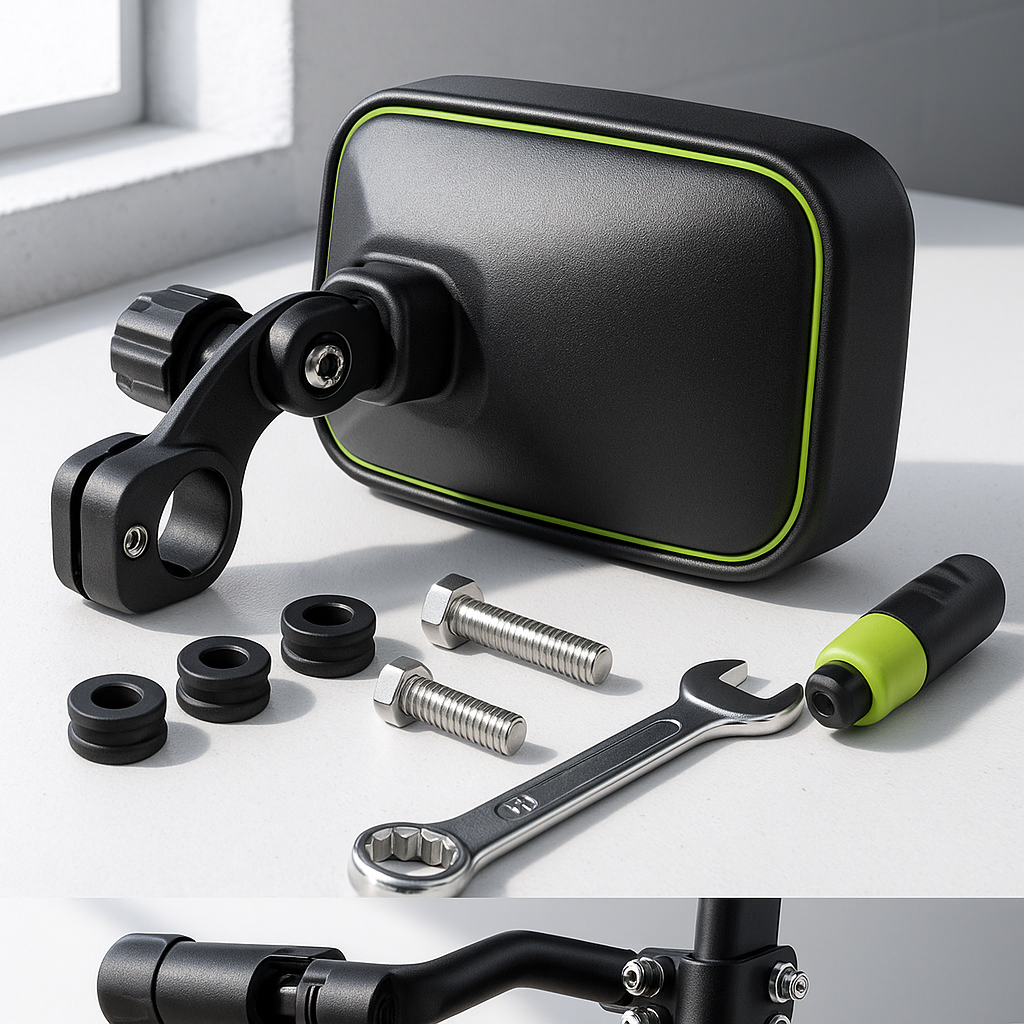
Most golf cart mirrors use a ball-and-socket joint or a pivot screw to allow angle adjustment. These joints are designed to hold a set position, but they wear down with use and UV exposure. If the vibration is happening at the mirror head itself — meaning the bracket is solid but the mirror face flutters — the problem is almost certainly a worn or loose pivot. Locate the adjustment point and check whether it has any detectable looseness when you apply light pressure in multiple directions. On screw-type pivots, there's usually a nut or tension screw you can snug up. On ball-and-socket designs, wear is harder to reverse; if the joint is truly worn out, replacement is the practical answer. A pivot that's only slightly loose can sometimes be shimmed or treated with a thread-locking compound on the adjustment hardware, but don't over-tighten to the point where you lose adjustability entirely.
Consider the Surface You're Mounting To
Even a perfectly tight mirror can vibrate if it's mounted to a surface that itself vibrates heavily. Thin windshield frames, hollow plastic roof supports, and unsupported dash panels can all act as resonators that transfer vibration directly to the mirror. Test this by briefly pressing your hand firmly against the mounting surface while someone else drives slowly — if the mirror vibration drops significantly when you dampen the panel, the surface is the amplifier, not the mirror. In these cases, reinforcing the mount with a backing plate, adding a rubber vibration-dampening washer between the bracket and the mounting surface, or relocating the mirror to a stiffer structural point can solve the problem entirely.
Look at Your Cart's Overall Vibration Level
Sometimes the mirror isn't the problem at all — the cart is simply vibrating more than it should, and the mirror is just the most visible symptom. Worn or unbalanced tires, loose wheel lug nuts, a bent wheel, or a damaged drive belt or motor coupling can all create chassis-level vibration that no mirror mount will fully absorb. If you notice the vibration getting worse at certain speeds, check your tires first: look for flat spots, uneven wear, or obvious damage, and make sure all wheels are torqued properly. If the cart shakes noticeably when you stand next to it while someone else drives, the vibration source is mechanical and the mirror problem will follow you to any mirror you install until the underlying issue is addressed.
Inspect the Mirror Glass or Housing for Damage
A mirror that's cracked, has a loose glass insert, or has a warped housing can vibrate in ways that a secure mount can't fix. Run your finger around the edge of the mirror glass and check whether it's fully seated in its housing. Some budget mirrors use a press-fit or adhesive to hold the glass, and that bond can fail over time — especially in temperature extremes. Gently flex the housing and listen for any creaking or movement. If the glass is rattling in the frame, a thin bead of weatherstripping or foam tape around the perimeter of the glass can take up the slack and eliminate the rattle without permanently bonding the glass if future adjustment is needed.
When the Mirror Is Fine but Still Won't Stay Steady
If everything checks out — mount is tight, pivot is solid, cart runs smooth — but the mirror still vibrates at speed, you may simply be dealing with the aerodynamic limits of a flat mirror mounted on a relatively exposed bracket. This is especially common on side mirrors mounted outboard of the roof or on the A-pillar of a lifted cart. At highway-legal speeds or in open-air conditions, wind load on a flat mirror face creates flutter. The practical fixes are: switching to a mirror with a smaller surface area, adding a mirror stabilizer brace that ties the bracket to a second mounting point, or choosing a mirror designed with a convex face and streamlined housing that presents less drag. None of these are exotic modifications — they're standard solutions used on everything from motorcycles to UTVs.
The Bottom Line on Mirror Vibration
Mirror vibration follows a short diagnostic tree: loose mount, worn pivot, resonating surface, chassis vibration, or loose glass — in roughly that order of likelihood. Start at the attachment point, work your way inward toward the mirror face, and only then look outward at whether the cart itself is the vibration source. Most fixes are simple mechanical tightening or hardware upgrades. If your mount is genuinely sound and the vibration persists, the mirror design itself may not be suited to your cart's mounting geometry or driving conditions, and swapping to a more rigid, better-matched unit is the right call.