Installing a lift kit is one of the most popular modifications golf cart owners make, and for good reason — it opens the door to larger tires, better ground clearance, and rougher terrain. But a surprisingly common complaint after the install is that the ride quality got noticeably worse: harsher over bumps, bouncy at speed, or just generally unsettled. This isn't inevitable, and it usually points to one of a handful of specific issues you can work through systematically.
Start With the Obvious: Check All Hardware for Tightness
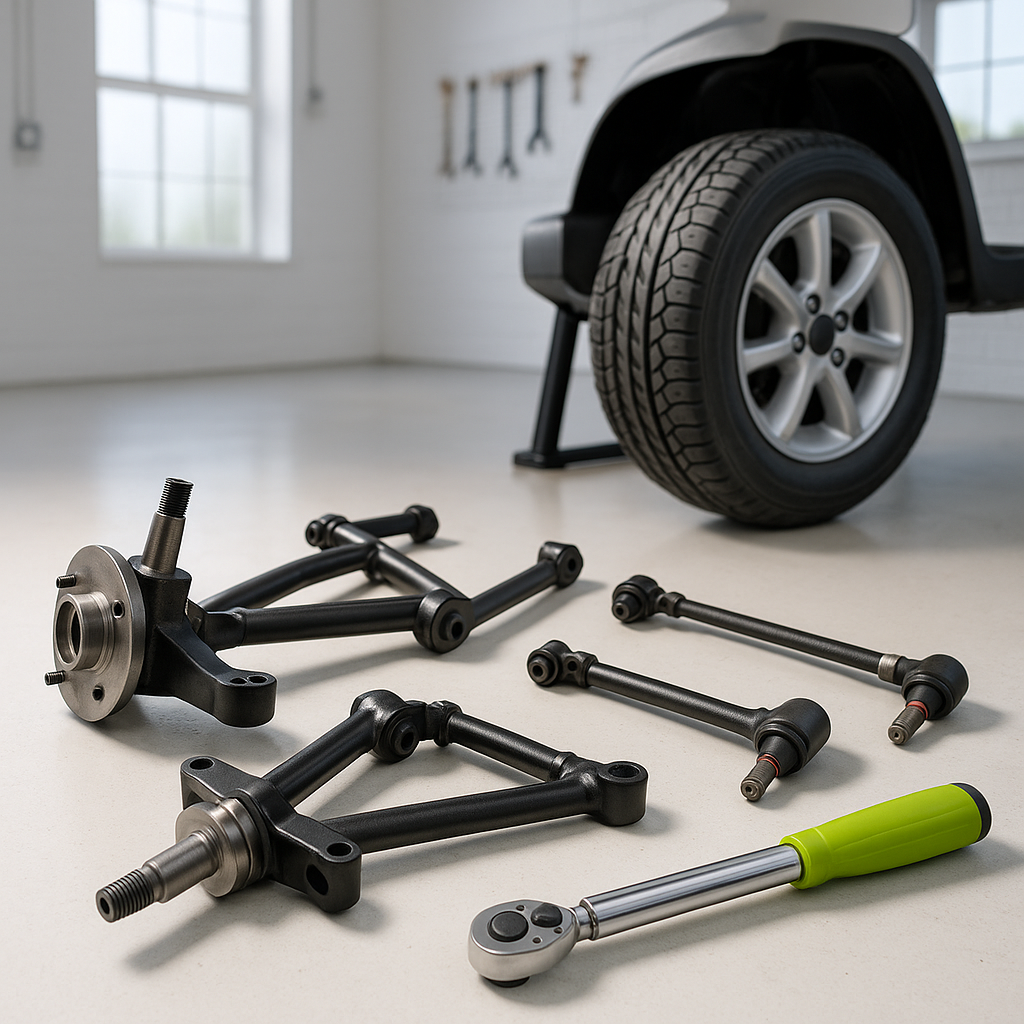
Before anything else, go over every bolt and fastener in the lift system with a wrench. Loose hardware is the number one cause of clunking, rattling, and poor ride feel after a lift install. Lift components — spindles, A-arms, blocks, drop brackets, leaf spring U-bolts — all experience significant stress during first use and can work themselves loose. If bolts weren't torqued properly during installation, or if the cart was driven aggressively before hardware fully settled, you'll often feel it as a harsh, choppy ride. Tighten everything to spec and take the cart for a short test drive before moving on to other diagnostics.
Inspect the Shock Absorbers
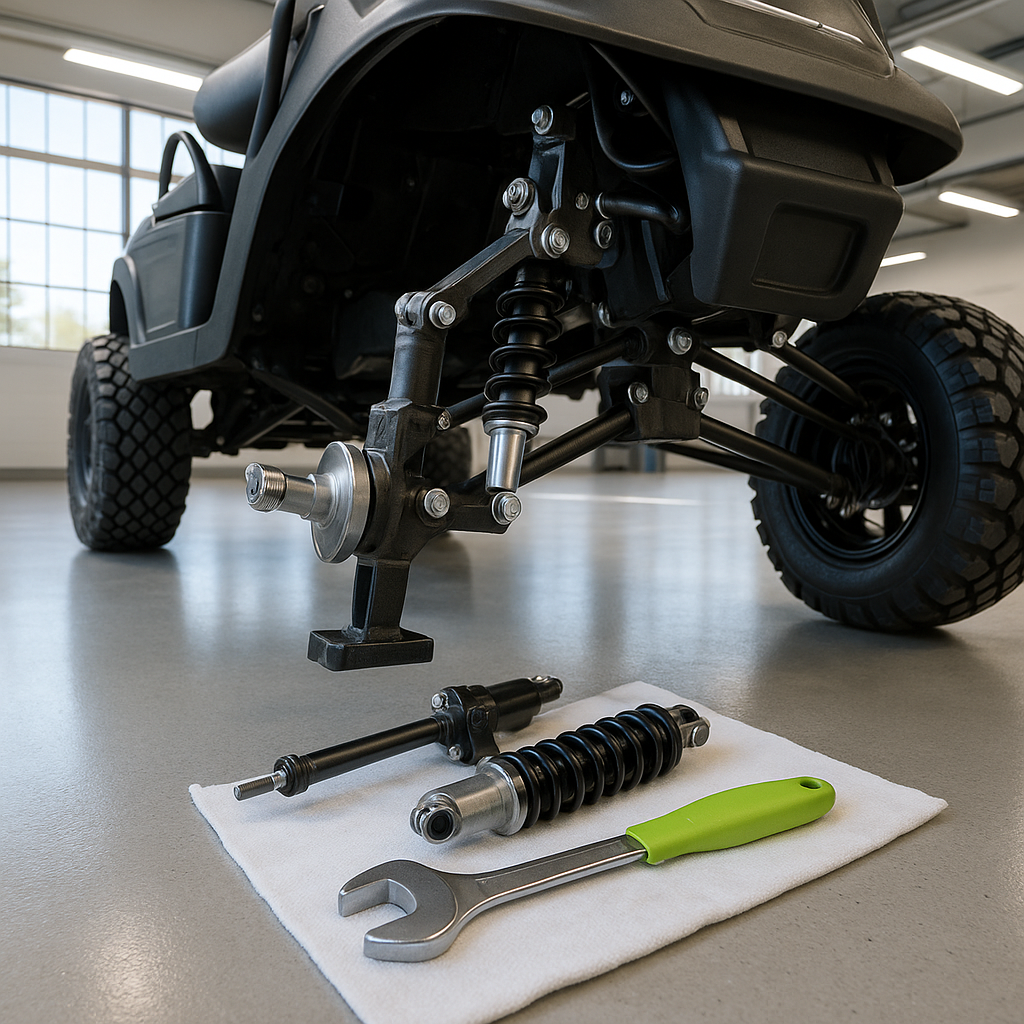
Many lift kits require longer or differently valved shock absorbers to work correctly at the new ride height. If the original factory shocks were reused on a lift that extended the suspension travel significantly, they may be operating outside their effective range — either bottoming out on compression or topping out on rebound. Push down firmly on each corner of the cart and release it: the body should return smoothly to position and stop. If it bounces more than once, the shock on that corner is worn out or undersized for the lift height. Also look for oil weeping from the shock body, which is a clear sign it's blown and needs replacement.
Look at Spring Condition and Seating
Carts with leaf spring suspensions can develop ride problems after a lift if the springs are old, fatigued, or seated incorrectly in their perches. A spring that has lost its arch won't absorb bumps the way it should — it'll transmit more impact directly to the frame. Check that each leaf spring is properly centered on its axle perch and that the U-bolts are clamping the spring squarely. On coil-spring or torsion-bar setups, verify that the springs haven't shifted out of their seats, which can happen during installation if the suspension wasn't properly supported.
Check Tire Pressure and Wheel Balance
Larger tires installed alongside a lift kit are frequently the actual culprit behind a rougher ride — not the lift components themselves. Oversized or off-road tires often call for different inflation pressures than the stock tires did, and running them at the wrong pressure (especially overinflated) creates a noticeably harsher, bouncier feel. Check the tire manufacturer's recommended pressure range for the specific tire size you're running and adjust accordingly. Also consider whether the new tires and wheels were balanced after installation — an unbalanced wheel can create vibration and instability that gets worse at higher speeds.
Examine the Camber and Toe Alignment
Lift kits change suspension geometry, and if alignment wasn't checked or adjusted after installation, the result can be tires that aren't tracking straight or sitting at the correct angle. Incorrect toe-in or toe-out causes tires to scrub against the pavement rather than roll cleanly, which you'll feel as resistance, vibration, or a pulling sensation. Camber — the vertical tilt of the wheel — affects how evenly the tire contacts the ground. Both should be inspected after any lift installation. Many golf cart lift kits include camber-correction spindles or alignment adjustments for exactly this reason; if yours did and those adjustments were skipped, go back and address them.
Look for Interference or Contact Points
At full suspension compression — when the cart hits a hard bump — lift components can contact the frame, body, or other parts they weren't close to in stock configuration. This kind of metal-to-metal contact produces a sharp clunk and can feel like an extremely abrupt, jarring hit. Have someone watch the suspension closely while you slowly drive over a significant bump, or carefully compress the suspension by hand while the cart is stationary and look for anything rubbing or bottoming out. Common contact points include lift spindles on body panels, longer shackles contacting the frame, or drop axles touching other components at the limit of travel.
When the Problem Is the Lift Design Itself
Finally, it's worth acknowledging that not all lift kits are equal. Some budget-oriented kits change ride height without adequately accounting for the geometry changes that come with it, and the ride quality trade-off is essentially built in. If you've checked every hardware, shock, spring, alignment, and clearance issue and the ride is still poor, the lift kit may not be well-suited to your specific cart model, or it may simply be a design that prioritizes lift height over ride quality. At that point, upgrading to quality shocks rated for the new ride height, or switching to a better-engineered kit, is often the only real fix.