A lift kit transforms what your golf cart can handle, but if you're noticing a shake, shimmy, or vibration that wasn't there before the install, something in the suspension or drivetrain isn't happy. The good news: post-lift vibration almost always comes from a short list of causes, and most of them are things you can inspect yourself before spending money on parts. Start systematically and you'll find it.
First Check: Wheel and Tire Condition
The single most common source of vibration after any suspension change is the wheels and tires. Lifting the cart changes the load angles and sometimes exposes balance or runout issues that were masked before. Spin each wheel by hand and watch for wobble — if the tire or rim is visibly out of round or side-to-side, that's your starting point. Also check that all lug nuts are torqued evenly; uneven clamping after reinstallation is a frequent overlooked cause. If you upgraded to larger tires with the lift, those tires may need to be balanced, which isn't always done at the shop.
Check the Wheel Bearings
Lifting a cart and running wider or heavier tires puts additional stress on wheel bearings. Grab each front wheel at the 9 and 3 o'clock positions and try to rock it — any detectable play points to a worn or improperly seated bearing. Then grab at 12 and 6 o'clock and repeat. A bad bearing will sometimes also produce a hum or grinding tone that changes with speed. If bearings were disturbed during the lift install and not properly reseated or repacked, they can fail quickly under new loads.
Inspect the Spindles and A-Arms
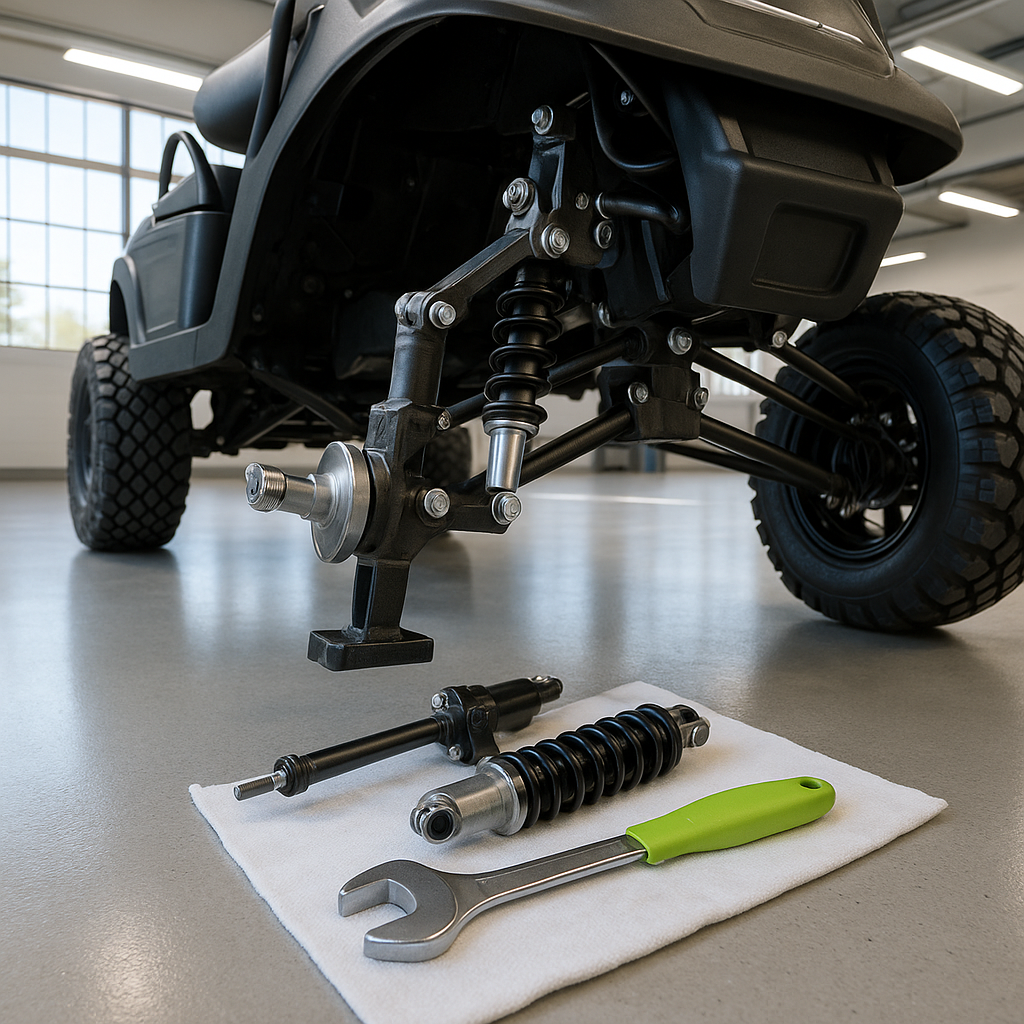
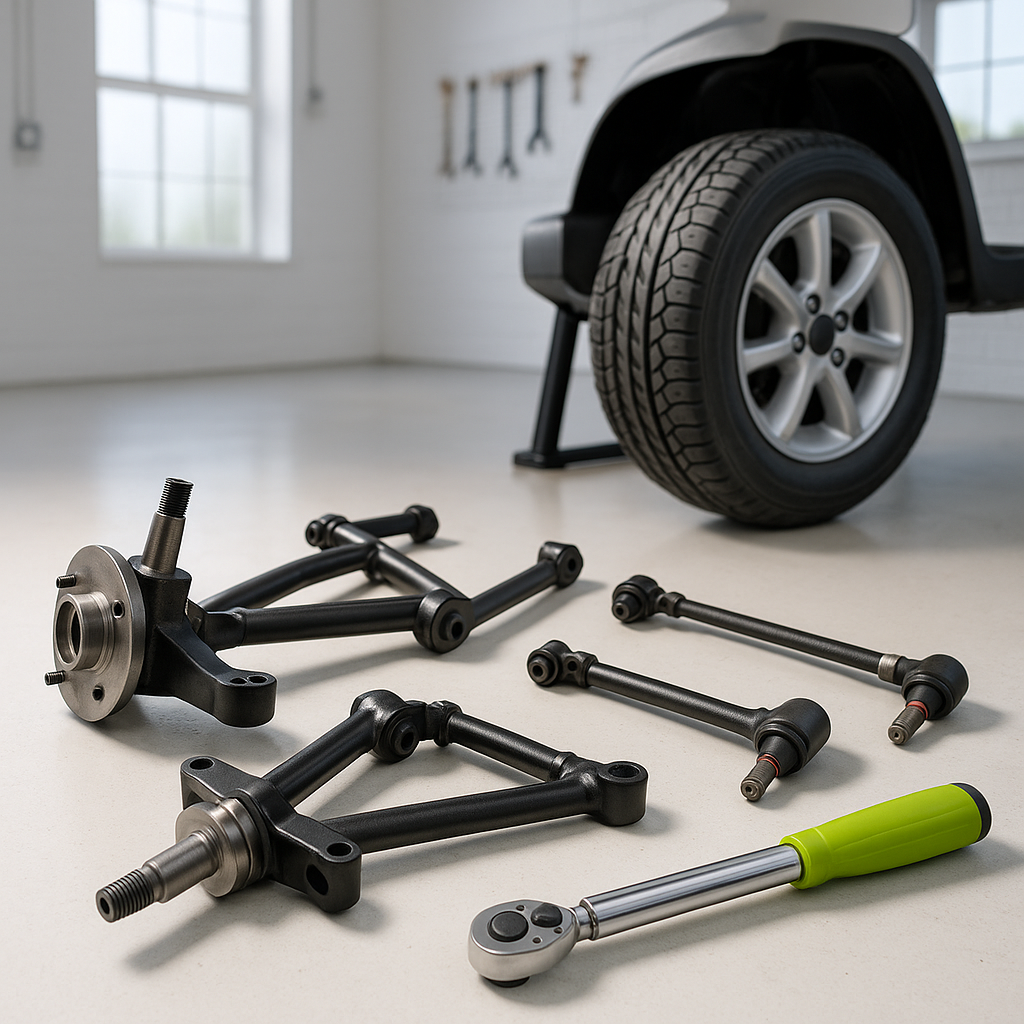
Lift kits typically include new spindles or drop spindles, and sometimes replacement A-arm hardware. If any of these components are installed with hardware that isn't fully tightened, or if a bushing wasn't properly pressed in, you'll get vibration and looseness through the front end. Get under the cart and physically check every bolt and nut on the new lift components. Look for any bushings that appear to be shifting in their housings. This is especially worth checking if the vibration showed up shortly after the install rather than immediately — fasteners can work loose over the first few rides.
Look at the Rear Axle and U-Joints
On lifted carts — particularly those with independent rear suspension or lifted rear blocks — the driveline angles change. If your cart has a rear axle with U-joints or CV joints, those joints are now operating at a different angle than they were designed for. A U-joint that's being pushed past its optimal operating angle will vibrate, especially at certain speeds. Inspect each joint for rust, wear, or looseness. Rotate the axle slowly by hand and feel for any roughness or binding through the joint's range of motion. Worn U-joints should be replaced rather than adjusted.
Check for Tire Rub or Contact Points
Larger tires combined with a lift kit can sometimes result in the tire contacting the fender, frame, or other components during turns or over bumps — even if clearance looks fine when stationary. Have someone slowly turn the wheel lock to lock while you watch from each corner. Also bounce the rear of the cart to simulate suspension compression and look for contact. Even light intermittent rubbing creates a rhythm that feels like vibration at speed, and it can damage tires quickly if left unaddressed.
Test Drive to Isolate the Vibration Pattern
How the vibration behaves tells you a lot. If it appears only at higher speeds and gets worse as speed increases, it's almost certainly a balance or runout issue with a wheel or tire. If it happens during turns but not going straight, suspect a CV or U-joint, or tire rub. If it's present at low speed and feels more like a clunk or shimmy, look at loose fasteners or worn bushings. Vibration that only appears going over bumps points toward shock absorber mounting or loose lift hardware. Track the pattern before assuming the worst — it narrows the diagnosis significantly.
When to Stop DIY Diagnosing
If you've worked through all of the above and can't isolate the cause, or if the vibration is severe enough that the cart feels unstable, stop driving it until it's looked at by a shop with alignment equipment. Some post-lift vibration is caused by toe or camber angles that are off enough to cause tire wear and handling issues — and that requires a proper alignment check, not just visual inspection. Lift kits don't always ship with alignment specs that exactly match every cart variation, so alignment is often the final step in a proper lift install anyway.