A golf cart seat that squeaks, shifts, or rocks under you is one of those problems that's easy to ignore until it becomes genuinely unsafe. What starts as a minor creak can progress to a seat that slides mid-turn or a mounting bracket that cracks from metal fatigue. The good news is that most seat problems trace back to a handful of well-known causes, and a methodical check will usually tell you exactly what you're dealing with before you spend money on parts you don't need.
Start With the Mounting Hardware
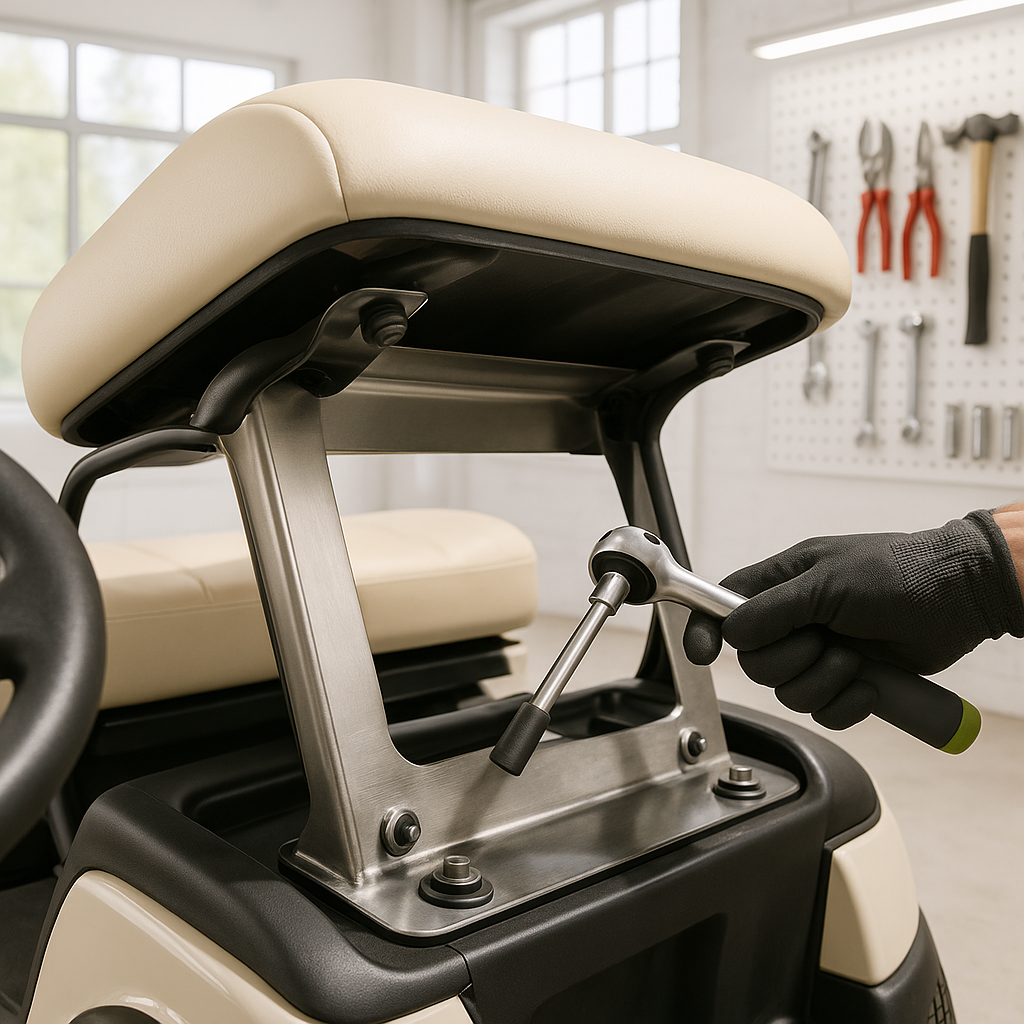
The most common cause of a loose or rocking seat is simple: the mounting bolts have worked themselves loose over time. Golf carts take a lot of vibration, and hardware that wasn't properly torqued or lock-washed from the factory — or after a previous repair — will back out gradually. Get underneath the seat and check every bolt that connects the seat frame or seat base to the cart's frame or floor pan. Try to move each bolt by hand. Any that turn easily, or that you can see have backed out even slightly, need to be tightened. Use the appropriate wrench size for your cart — don't guess — and always reinstall with a locking washer or thread-locking compound to keep them from backing out again.
Inspect the Seat Base and Frame for Damage
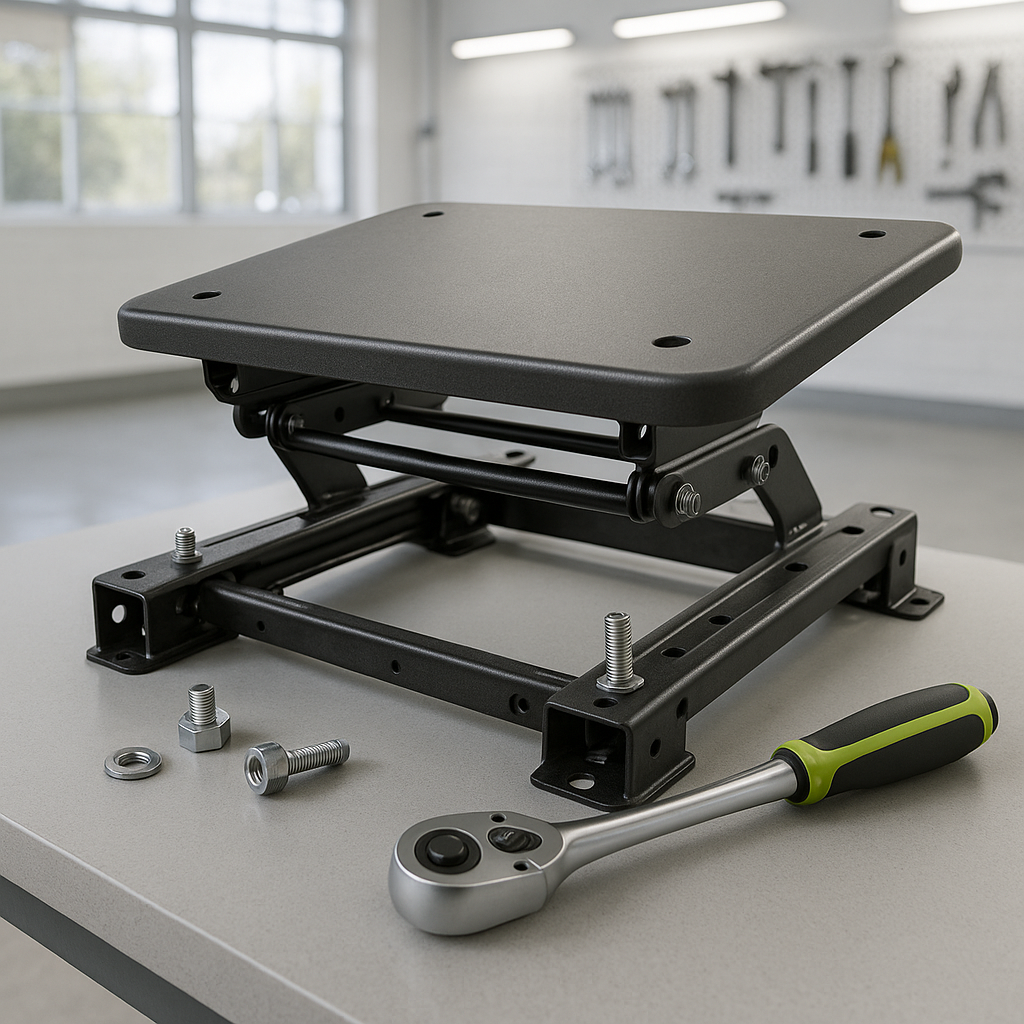
If the hardware is tight but the seat still moves, look more carefully at the seat base itself. Plastic seat bases crack over time, especially on older carts or in climates with big temperature swings. A cracked base may look fine at first glance but will flex noticeably under body weight. Run your hand along the underside of the base and look for hairline cracks around the mounting holes — that's the most common failure point. Similarly, if your cart uses a metal seat frame or hinge assembly, check those welds and bends for stress cracks. Metal frames that have been overloaded or bent in a collision can look intact but flex more than they should.
Check Seat Hinges and Fold-Down Mechanisms
Many golf cart seats fold forward to access the battery compartment or storage area, and the hinges on these fold-down designs wear out with use. A worn hinge pin or stretched hinge bracket won't lock the seat in the upright position as firmly as it should, creating movement even when the seat feels latched. Test the latch by pushing and pulling on the seat back while it's locked — if you feel any give, the hinge or latch mechanism is the culprit. Replacement hinge hardware is usually inexpensive and model-specific, so have your cart's make, model, and year handy when you source parts.
Diagnose the Squeak
Squeaking is its own diagnostic puzzle because the noise often doesn't come from where it sounds like it does. The squeak might be metal-on-metal contact between a loose seat frame and the cart body, plastic-on-plastic flex in a cracked seat base, or even the seat cover rubbing against the foam underneath. To isolate it, have a helper sit in the seat and shift their weight while you listen and watch closely — look for which part actually moves when the squeak happens. A small amount of white lithium grease or silicone lubricant applied to the contact point between metal parts will eliminate metal-on-metal noise. Plastic-on-plastic squeaks often require tightening or padding the contact area rather than lubricating it.
Look at the Floor Pan and Cart Frame Under the Seat
If the seat mounting hardware and base check out fine, the problem may actually be in what the seat is bolted to. Floor pans on older carts — particularly aluminum ones — can develop fatigue cracks or corrosion around the mounting holes, which means the bolt is tight but the material around it is moving. Press down firmly on the floor pan near each mounting point and look for flex or movement. Corroded or cracked mounting areas on the floor pan often need to be repaired or reinforced before a new seat or hardware will fix the problem. Ignoring this will just destroy the next set of mounting bolts faster.
When to Replace vs. Repair
Minor hardware issues — loose bolts, worn hinges, a cracked plastic base — are all straightforward repairs most owners can handle themselves. But if the seat frame is bent, the floor pan is compromised, or multiple issues are compounding each other, it's worth stepping back and assessing whether a full seat replacement makes more sense than stacking repairs. A seat that's structurally sound but cosmetically worn can often be refreshed with a new cover and foam. One with a cracked or warped base is better replaced outright, since the base is what everything else depends on. Whatever direction you go, address the problem completely — a seat that moves while driving is a real safety issue, not just a comfort complaint.