A golf cart seat that shifts, wobbles, or feels like it might give way mid-ride is more than an annoyance. It affects your control of the cart, puts extra stress on mounting hardware, and can eventually lead to a full seat failure while moving. The good news is that most seat stability problems trace back to a handful of well-known causes, and you can diagnose the majority of them with a basic visual inspection and a few hands-on checks — no special tools required.
Start With the Mounting Bolts and Brackets
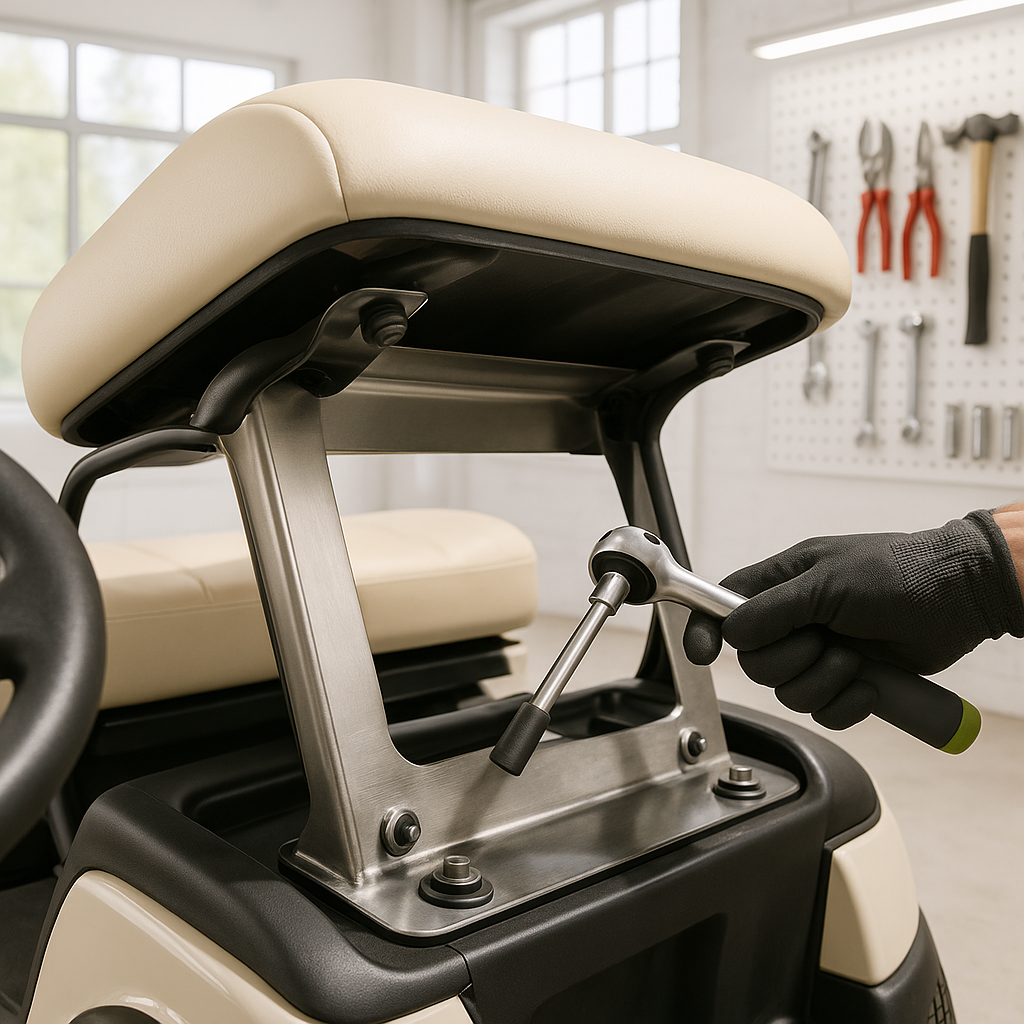
The most common reason a golf cart seat rocks or shifts is simple: loose or missing mounting hardware. Seats are typically secured to the frame or seat base with bolts that pass through slotted brackets or a hinged flip-seat assembly. Over time, vibration from the road works these bolts loose. Get down and look at every fastener holding the seat to the cart. Try to rock the seat firmly with both hands — front to back, and side to side. If you can reproduce the movement and trace it to play in the mounting points, tightening the bolts is your first fix. Check for stripped threads or missing hardware while you're at it, because a bolt that keeps coming loose usually has a stripped hole behind it.
Check the Seat Base or Flip-Seat Hinge
Many golf carts use a hinged seat base that flips forward to access the battery compartment or storage area beneath. That hinge is a common wear point. If the hinge pin is worn, bent, or if the hinge itself has cracked welds or deformed metal, the entire seat assembly will feel sloppy even when the mounting bolts are tight. Open the seat fully and inspect the hinge closely. Look for visible cracks, rust damage, or a hinge pin that has significant side-to-side play. A damaged hinge assembly usually needs to be replaced rather than repaired — attempting to weld a cracked hinge back together without professional equipment rarely holds long-term.
Inspect the Seat Frame Itself
The seat frame — the metal structure inside the cushion assembly — can crack or bend, especially on older carts or seats that have taken heavy use. If the mounting hardware is solid and the hinge is intact but the seat still feels soft or unstable in the middle, press down firmly on different sections of the cushion and listen for creaking or feel for any give that suggests a broken internal frame. A compromised seat frame is a safety hazard and the seat should be taken out of service until it's replaced. This is more common on aftermarket seats that weren't built to the weight capacity of the cart's original equipment.
Look at the Seat Track System If Your Cart Has One
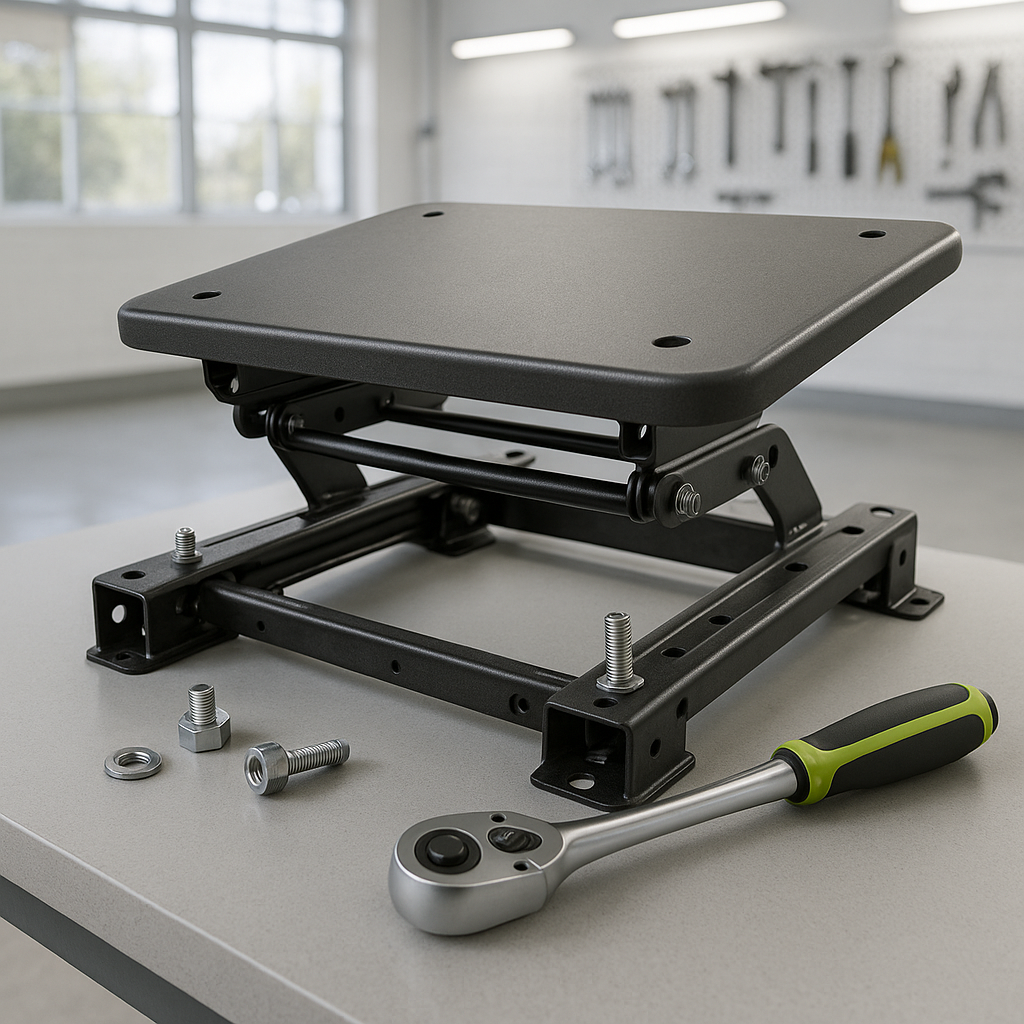
Some utility carts and custom builds use a sliding seat track that lets you adjust the seat position forward or backward. These tracks have locking mechanisms — usually a lever or spring-loaded pin — that can wear out over time. If your cart has an adjustable track and the seat slides even slightly when you don't want it to, the locking mechanism is the culprit. Try engaging and disengaging the lock several times and feel whether it seats positively. A track lock that feels mushy or doesn't click firmly into place needs to be serviced or replaced before the seat is safe to use again.
Examine the Seat Cushion Mounting Points
On many carts, the cushion itself attaches to the seat base or back frame with clips, bolts, or both. If the cushion is loose from its base — even when the base is solidly mounted — you'll feel a disconcerting shift when you sit down or change position. Lift the cushion if it's removable and check the attachment points underneath. Plastic clips break, and bolts can back out. This is a less urgent safety issue than a loose base mount, but it should still be corrected because a sliding cushion can catch you off guard during a turn.
Check the Condition of the Floor and Frame Below the Seat
If the floor pan or frame rail that the seat mounts to has rusted through, cracked, or deformed, no amount of tightening will make the seat stable. This is more common on older gas carts that have seen wet conditions, but any cart that's been exposed to standing water or heavy use can develop frame corrosion. Look closely at the metal the seat bolts thread into — if the surrounding material is flaking, soft, or visibly cracked, that's a structural problem that goes beyond seat hardware. Reinforcement plates or professional frame repair may be necessary before reinstalling the seat.
When to Stop Driving and Get It Fixed First
Minor looseness in a seat cushion clip is an inconvenience. A seat base that can shift, a cracked seat frame, or corroded mounting points in the cart's floor are real safety hazards — especially on hilly terrain or when carrying passengers. If you can reproduce significant movement in the seat during your inspection, don't put it off. A seat that lets go unexpectedly can cause a driver to lose steering control or a passenger to fall. Replace damaged hardware with parts rated for your specific cart model and weight capacity, and when in doubt about structural integrity, have a qualified shop take a look before putting the cart back in regular use.