If your golf cart seat rocks, squeaks, or shifts every time you hit a bump, don't just live with it. Beyond being distracting, a seat that isn't properly secured can move unpectedly under a passenger, which is a real safety concern — especially on hills or during sharp turns. The good news is that most seat problems come down to a short list of common causes, and most of them are easy to diagnose without special tools.
Start With the Mounting Hardware
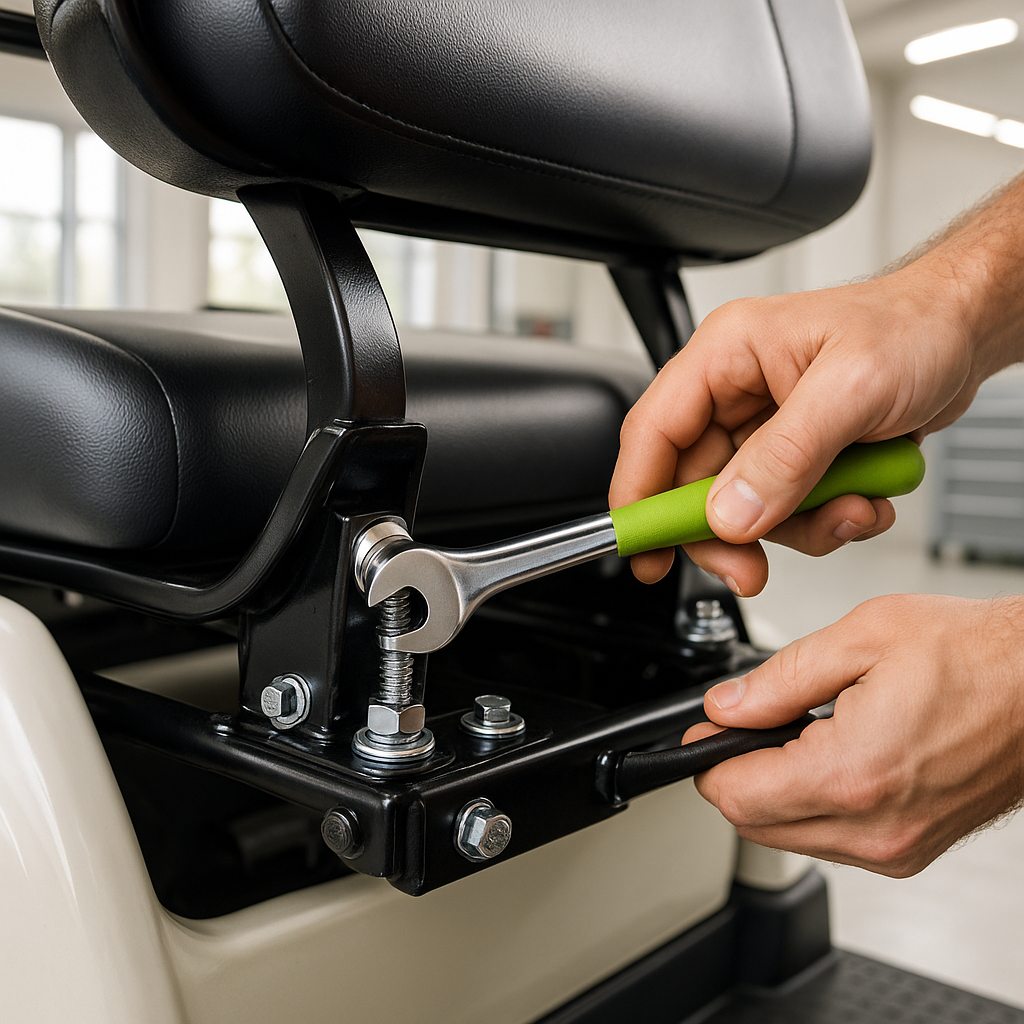
The most common reason a golf cart seat wobbles or feels loose is simple: the mounting bolts have backed off over time. Golf carts take a lot of vibration, and hardware loosens with use. Locate the bolts that anchor the seat base or seat frame to the cart body — typically at the rear corners of the seat assembly — and check whether any of them are noticeably loose. On many carts these bolts thread into welded nuts or captive hardware on the frame, so if a bolt spins freely without tightening, the nut underneath may have stripped or broken free. In that case, snugging the bolt down won't help; the anchor point itself needs attention.
Inspect the Seat Frame and Hinges
Many golf cart seats flip forward for battery access, which means there's a hinge mechanism involved. Over time these hinges can wear, bend slightly, or lose a retaining pin, creating slop in the entire seat assembly even when the mounting bolts are tight. Open the seat fully and look at each hinge point. Check for cracked welds, bent brackets, or missing hardware. A hinge that's slightly bent or worn will let the whole seat rock side-to-side even when everything else is secure. On some designs, the seat back and seat bottom are separate assemblies with their own connection points — check both.
Check the Seat Cushion and Its Attachment
Sometimes the squeak or movement isn't in the frame at all — it's in the cushion itself. Seat cushions on golf carts are typically stapled, snapped, or bolted to a plywood or fiberglass base. If the attachment points have failed, the cushion will shift or make noise independently of the frame. Lift the cushion and look at how it's attached to the base. Loose staples, cracked plastic snaps, or a deteriorating seat base (plywood that has absorbed moisture and begun to delaminate is very common) can all cause this. A seat base that's soft or spongy when pressed needs to be replaced before re-covering or adding a new cushion.
Diagnosing the Squeak
Squeaks are harder to localize than wobbles because the sound can travel through the frame. The practical approach is to apply light pressure to different parts of the seat assembly while a second person rocks or bounces it gently. Isolate whether the noise comes from the mounting bolts, the hinge, the cushion-to-base connection, or where the seat contacts the cart body. Metal-on-metal squeaks usually point to hardware or hinge contact. A lower-pitched creak more often comes from a flexing seat base or a cushion moving on its mounting surface. Once you've narrowed it down to a zone, you can address that specific point rather than guessing.
Seat Track and Slider Issues
Some golf cart seat assemblies — particularly on larger or custom setups — use fore-and-aft adjustment tracks so the seat can slide to fit different drivers. These tracks can wear, accumulate debris, or lose their locking detents over time. A seat on a worn track will slide freely when it's supposed to stay put, which feels a lot like a loose seat but has a completely different fix. If your seat is supposed to adjust and lock, test whether it actually locks firmly at each position. A track that no longer clicks securely into place needs to be cleaned, adjusted, or replaced.
When to Replace vs. Repair
Minor hardware tightening and hinge fixes are almost always worth doing yourself. But if the seat frame itself is cracked or bent, or if the fiberglass or plywood base has deteriorated badly, patching it is usually a short-term solution. A seat that flexes in the middle — rather than just rocking at its attachment points — often has a compromised base that will continue to fail. Replacement seat bases and full seat assemblies are widely available for the major cart brands, and installing a fresh unit is often faster and more reliable than rebuilding a badly worn one. If you're also dealing with torn or cracked upholstery, it's worth doing the base and cover at the same time rather than re-upholstering a failing base.
Prevention Going Forward
Once everything is tight and solid, a quick periodic check of seat hardware — especially after a season of heavy use or rough-terrain riding — will catch loosening before it becomes a wobble. Using thread-locking compound on mounting fasteners is a reasonable step if you've had hardware back out more than once. Keeping the seat base dry and protected from standing water will also significantly extend the life of plywood-based assemblies, which is one of the most common long-term failure points on stock golf cart seats.