If your golf cart develops a shimmy, wobble, or rhythmic vibration that you can feel through the steering wheel or the whole frame, don't ignore it. Unlike a general all-over vibration from a rough surface, a wheel wobble has a specific, physical cause — something is wrong with the way one or more wheels are rotating, and it tends to get worse over time if left unchecked. The good news is that the list of likely culprits is short, and most of them are easy to check with basic tools or even just a visual inspection.
Start With the Obvious: Check Tire Pressure and Condition
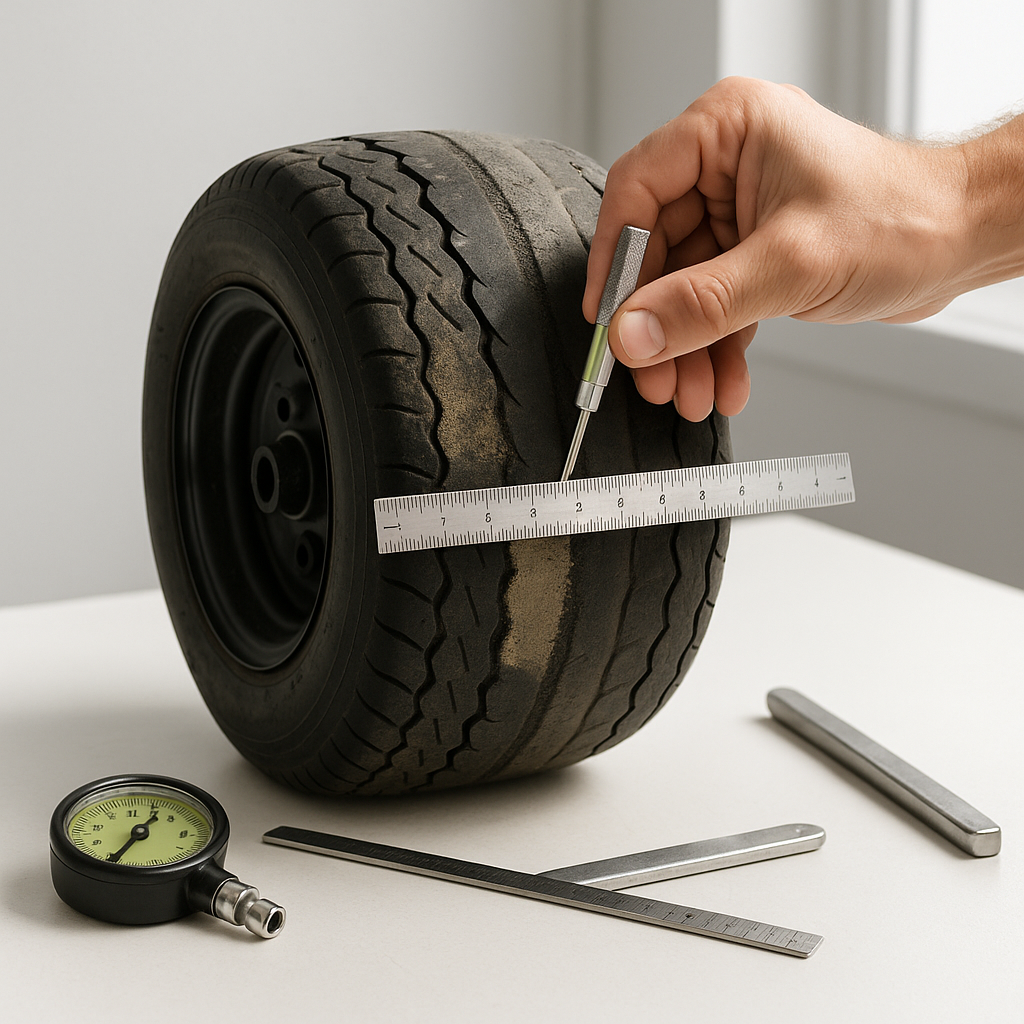
Before anything else, check all four tires with a gauge. An underinflated tire doesn't hold its shape properly at speed and can create a soft, rolling wobble that feels almost like a handling problem rather than a tire problem. Overinflation is less common but can cause the tire to ride on a smaller contact patch and bounce unpredictably. Check the sidewalls and tread for uneven wear — if one side of the tire is significantly more worn than the other, or if there's a flat spot or bulge anywhere on the tire, that tire needs to come off. A bulge in particular means the internal structure is compromised and the tire is no longer safe to run.
Spin the Wheel and Watch for Runout
Jack up one corner of the cart safely so the wheel is off the ground. Spin the wheel by hand and watch it carefully from the front and from the side. Side-to-side wobble is called lateral runout — the wheel is swinging in and out as it rotates. Up-and-down movement as it spins is called radial runout, and it usually means either the tire has a flat spot or the rim is bent. Both types of runout will translate directly into a shimmy you can feel while driving. A small amount of runout is normal, but anything obvious to the naked eye is worth addressing. Do this check on all four wheels before assuming you've found the culprit — sometimes more than one wheel is contributing.
Check Lug Nuts and Hub Mounting
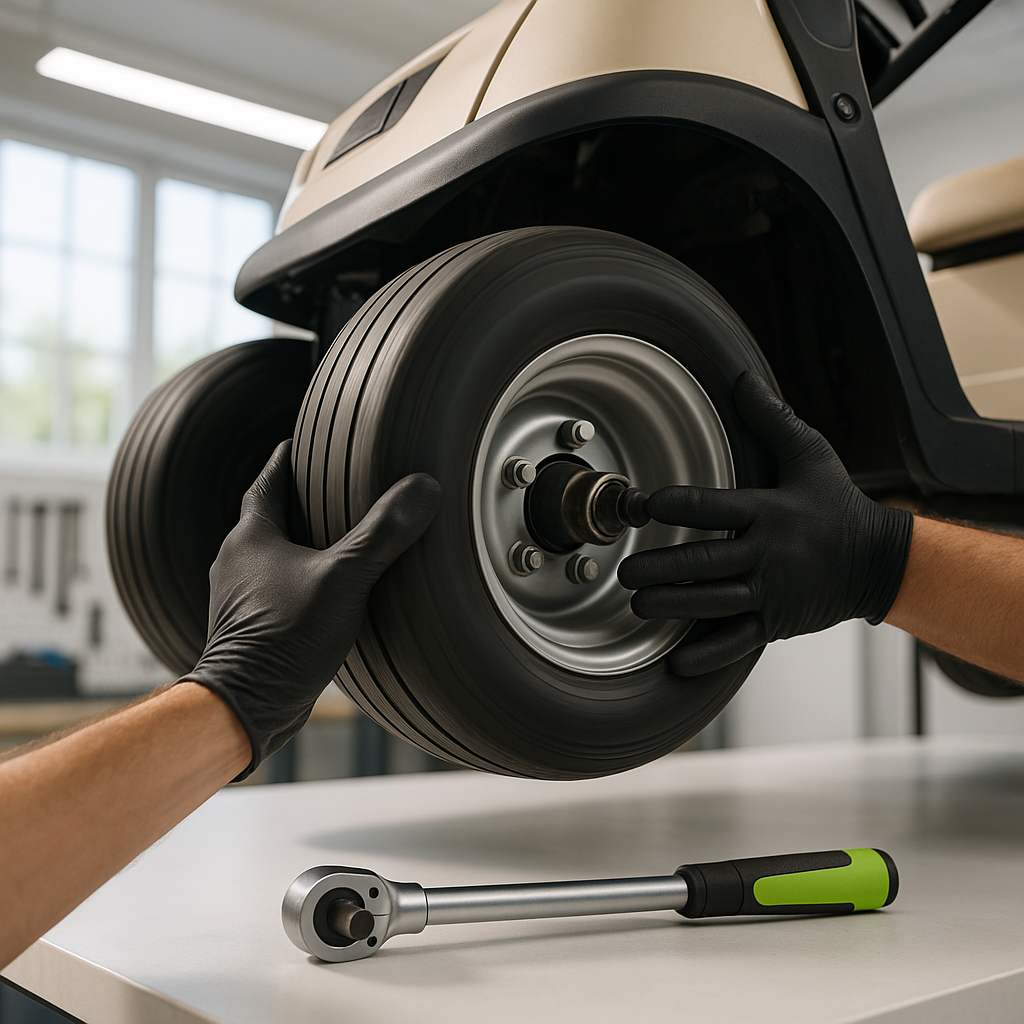
A loose wheel is one of the most common causes of a wobble that gets worse over time. With the wheel on the ground and the cart stationary, try rocking the tire firmly from side to side and top to bottom. Any detectable movement — clunking, clicking, or visible shift — points to loose lug nuts or a problem at the hub itself. Check every lug nut with a wrench. If any spin freely or feel noticeably looser than the others, tighten them to the appropriate torque for your cart's wheel studs, working in a cross pattern. If the lug nuts are tight but you still feel movement, the problem may be a damaged wheel stud, a stripped hub, or a worn wheel bearing — all of which need more involved attention.
Inspect the Wheel Bearings
With the wheel still jacked up, grab the tire at the 9 o'clock and 3 o'clock positions and try to rock it. Then grab it at 12 o'clock and 6 o'clock and try again. Looseness in the side-to-side (horizontal) direction often points to a worn wheel bearing. Spin the wheel and listen for grinding, rumbling, or a rough feel — a healthy bearing should feel smooth and quiet. Worn wheel bearings are a very common cause of wobble on older carts or carts that have seen a lot of use on rough terrain, and they're a safety item that shouldn't be deferred. If a bearing is rough or has noticeable play, it should be replaced before you continue driving.
Look at the Rim Itself
Steel and aluminum golf cart rims can both be bent, and a bent rim is a reliable source of wobble that no amount of tire balancing or inflation will fix. With the wheel off the cart, look at the rim from multiple angles — lay it on a flat surface and look for any warping, or sight down the rim edge and look for a consistent curve all the way around. Even a relatively minor bend can cause a noticeable shimmy at driving speeds. A significantly bent rim should be replaced rather than repaired, especially if the damage is near the bead seat where the tire seals.
Consider Wheel Balance
Golf carts travel at lower speeds than road vehicles, so wheel balance is less commonly the primary cause of shimmy — but it's not irrelevant, especially on carts that have been upgraded with larger or heavier tires. An out-of-balance wheel creates a harmonic vibration that's most noticeable at a specific speed range. If you've ruled out runout, bearing play, loose hardware, and rim damage, and the wobble only appears within a narrow speed window, balance is worth investigating. A tire shop can balance golf cart wheels on a standard balancer.
When to Call It Done vs. Dig Deeper
Most wheel wobble problems on golf carts come down to one of five things: tire pressure, a damaged tire, loose lug nuts, worn wheel bearings, or a bent rim. Work through each of these systematically before assuming something more exotic is wrong. If you've checked all of the above and the wobble persists, the next areas to investigate are the spindle, tie rod ends, and front suspension components — but those are less likely to cause a pure wheel shimmy and more likely to show up as handling or steering problems. Fix the wheel first, then reassess what you're feeling.