Uneven tire wear on a golf cart is easy to dismiss as just a tire problem, but the tires themselves are rarely the root cause. The wear pattern is a symptom — and different patterns point to very different mechanical issues. Learning to read your tires before you replace them can save you from repeating the same problem on a fresh set, and it can also catch alignment, inflation, or suspension issues before they turn into more expensive repairs.
Start With Tire Pressure
The single most common cause of abnormal tire wear is incorrect inflation, and it's the first thing to check because it costs nothing to fix. A tire that is consistently underinflated will wear heavily on both outer edges while the center stays relatively fresh — the tire is sagging and rolling on its shoulders instead of its tread face. An overinflated tire does the opposite: the tread crowns outward and the center wears down faster than the edges. Check your tire pressure when the tires are cold, and make sure all four corners are inflated evenly and to the correct range for your tire size. Many golf cart owners never check this until wear is already visible.
One-Sided or Edge Wear
If wear is concentrated on one edge of the tire — either the inner edge or the outer edge, but not both — that's a classic alignment signal. Camber angle is the most common culprit: if a wheel is tilted inward at the top (negative camber) the inner edge wears; if it tilts outward (positive camber) the outer edge wears. Toe alignment plays a role too. If your front wheels are toed in or out too aggressively, the tire is effectively being dragged slightly sideways with every rotation, which scrubs the tread from one edge. On a lifted cart, alignment angles change significantly and need to be rechecked after any suspension modification.
Cupping or Scalloping
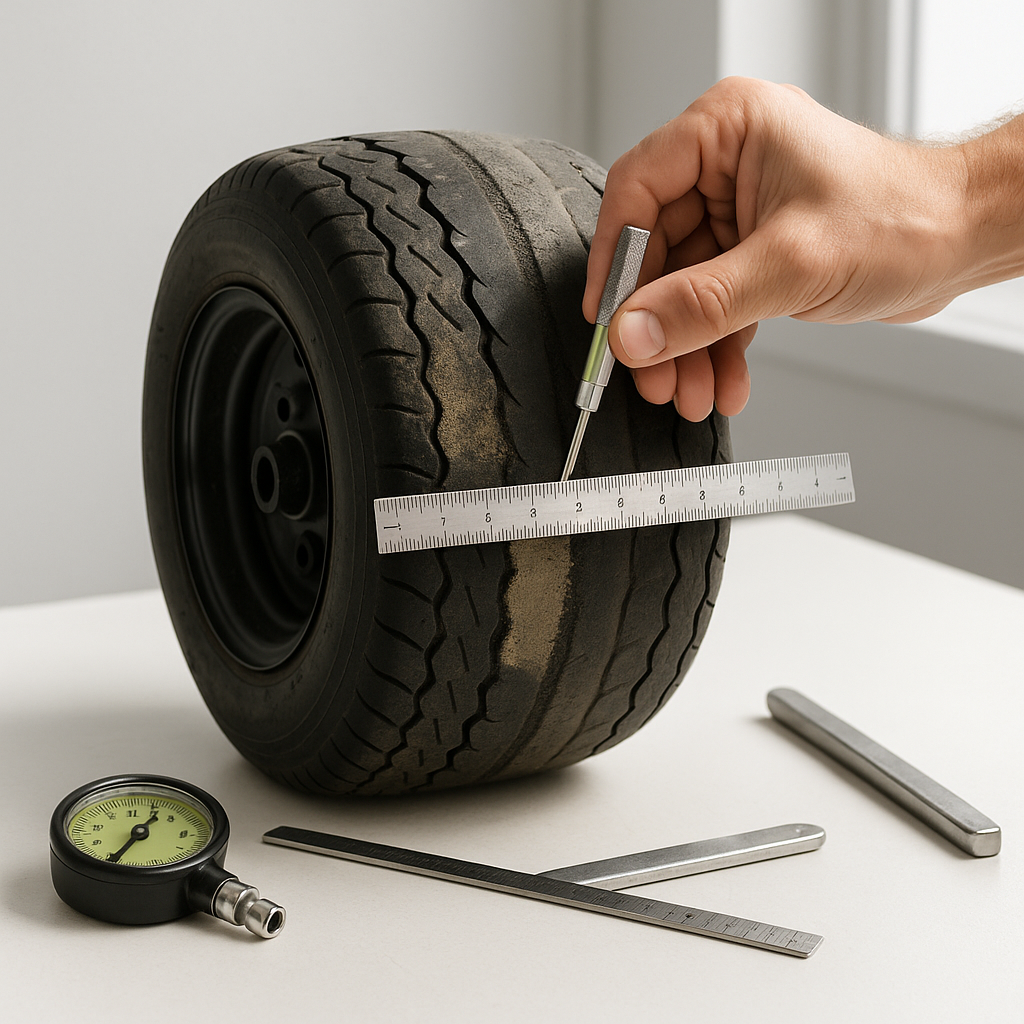
Cupping — also called scalloping — shows up as a wavy, uneven wear pattern around the circumference of the tire rather than across its width. The tread looks like it has dips or scooped-out patches at irregular intervals. This pattern usually means a wheel is bouncing rather than rolling smoothly, which points toward worn or damaged shocks or struts, a wheel that isn't properly balanced, or a wheel bearing that has developed play. Run your hand around the tread of each tire — cupping is easier to feel than see in early stages. If you catch it early and address the shock or bearing issue, the tire may still have usable life left.
Check for Wheel and Hub Issues
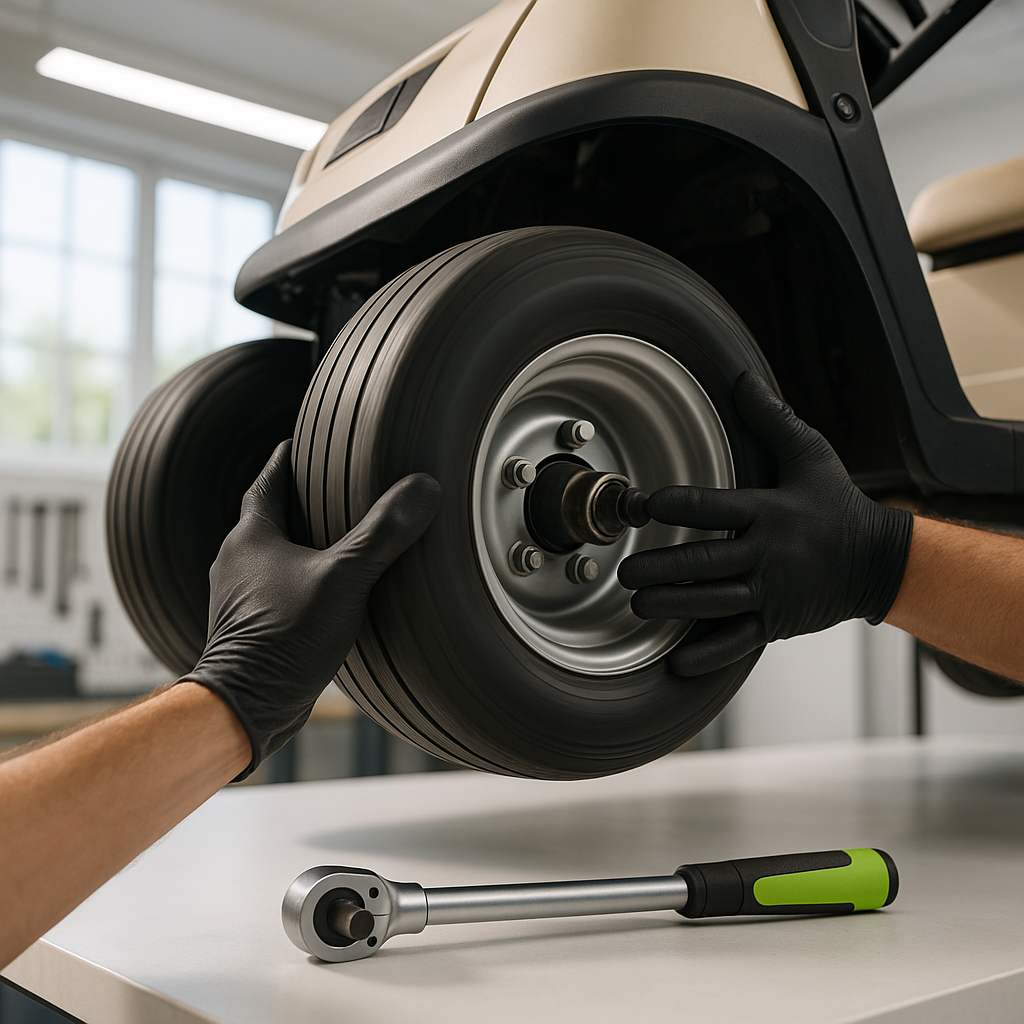
A loose or worn wheel bearing can contribute to both cupping and edge wear, because a wheel that wobbles slightly under load doesn't roll consistently on the same contact patch. Grab each wheel at the 3 o'clock and 9 o'clock positions and try to rock it — any detectable play that isn't in the steering linkage suggests bearing wear. Also check that all lug nuts are torqued evenly; an unevenly mounted wheel can introduce a slight wobble that shows up as wear over time. If your cart has hubcaps, pull them off periodically to inspect the hub face and lug hardware underneath — corrosion and debris can build up and prevent the wheel from seating flush.
Front vs. Rear Wear Differences
It's normal for front and rear tires on a golf cart to wear at different rates — the front tires do the steering work and often wear faster, especially on carts used on asphalt or pavement. But if the difference is dramatic or the wear pattern on the fronts is noticeably different from the rears in terms of shape, that's worth investigating further. Rotating tires front-to-rear on a golf cart (when the tire and wheel size are the same all around) can even out wear and extend overall tire life, though not all carts are set up in a way where this makes practical sense. Check your specific setup before assuming rotation is straightforward.
When to Involve a Shop
Tire pressure and basic visual inspection are things any owner can handle in a driveway. Alignment checks and adjustments, wheel bearing replacement, and shock evaluation are worth taking to a shop if you're not confident with suspension work — particularly on lifted carts where the geometry is already modified from stock. Getting a proper alignment after a lift, or after hitting a significant curb or obstacle, is a reasonable investment that pays for itself in tire life. Document the wear pattern you're seeing before you take it in — photos of the tires can help a technician quickly identify what's going on.