A clicking solenoid is actually good news — it tells you the coil is energizing and the switch is attempting to close. The frustrating scenario is when you hear that click loud and clear, press the pedal, and the cart just sits there. This is a distinct problem from a completely silent solenoid, and it points to a different set of suspects. Working through them in order saves you from swapping parts you don't need.
Understand What the Solenoid Is Actually Doing
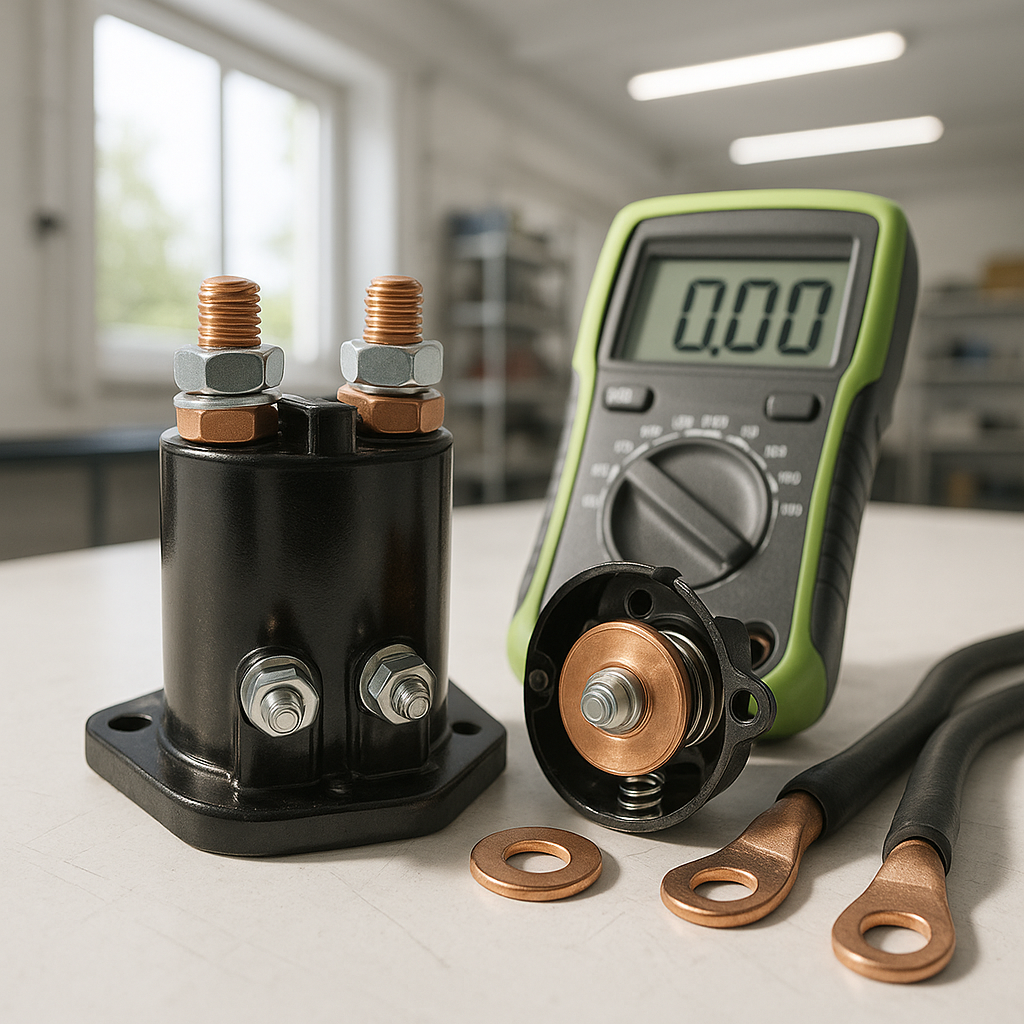
The solenoid is an electrically operated switch with two jobs: a small coil that clicks the switch closed when energized, and a set of heavy-duty contacts that carry the full battery current through to the motor and controller. When you hear the click, the coil side is working. When the cart doesn't move, the problem is almost always on the high-current side — either the contacts themselves have failed internally, there's a bad connection at the solenoid's large terminals, or something downstream is broken and not accepting current even though the solenoid is passing it.
Start With the Large Terminals and Cables
With the cart off and the key removed, inspect the two large posts on the solenoid — these are the ones connected to thick battery cables. Look for corrosion, heat discoloration, melted insulation, or terminals that spin freely instead of being solidly torqued down. A connection that looks intact can still have high resistance under load, which robs voltage before it reaches the motor. Clean any corrosion with a wire brush and a baking soda solution, then check that every large terminal is tight. Trace both cables to their other ends — one goes to the battery pack, one to the controller or motor — and check those connection points too.
Test the Solenoid's Contacts Under Load
The most common reason a solenoid clicks but passes no power is burned or pitted internal contacts. After years of use, the copper contacts inside wear down or weld themselves open, so the click happens but no current flows. You can verify this with a voltmeter: with a helper pressing the pedal, check for voltage on the output side of the solenoid's large terminals while it's clicking. If full battery voltage is present on the input side but little or nothing shows on the output side when the solenoid clicks, the contacts have failed and the solenoid needs replacement. This is one of the more common solenoid failure modes on carts with high mileage.
Check the Motor and Controller
If voltage is passing through the solenoid correctly but the cart still won't move, the solenoid isn't your problem — something downstream is. Check the motor for obvious damage, and verify that the cables connecting the controller to the motor are secure and undamaged. A failed controller will often produce exactly this symptom: everything upstream works, power reaches the controller, but nothing happens. If you have access to a load tester or a second known-good cart to swap components with, that's the fastest way to isolate a controller or motor issue.
Don't Overlook the Forward/Reverse Switch and Throttle Input
Some carts will click the solenoid during initial key-on or pedal engagement but still won't move if the controller isn't receiving a valid signal from the direction switch or throttle position sensor. If your F/R switch is worn or intermittently failing, the controller may not enable motor output even though the solenoid closed correctly. Wiggle the F/R switch, check its terminal connections, and confirm the switch is making clean contact in both positions. On ITS (inductive throttle sensor) systems, a failed or out-of-range sensor can also prevent movement while allowing the solenoid to click normally.
Battery Voltage Matters More Than You'd Think
A weak battery pack can produce enough voltage to click the solenoid coil but not enough to actually drive the motor under load. Check your pack voltage at rest, then check it again with the pedal pressed and the solenoid clicking — if voltage sags dramatically under load, you have weak or failing batteries that are collapsing before real current can flow. This is especially common in older packs where one or two batteries have failed while the rest still show surface charge. A proper load test on each battery individually is the only reliable way to catch this.
When to Replace the Solenoid
If your testing confirms that the solenoid is clicking, battery voltage is solid, downstream connections are clean, and voltage still drops across the solenoid's contacts under load, replace the solenoid. It's one of the more straightforward fixes on a golf cart and a known wear item — especially on high-use carts. Make sure any replacement is rated for your system voltage and matches the coil voltage your cart's control circuit provides. Getting those two specs right matters more than brand. Once swapped, retest with the same voltage checks before assuming the job is done.