Most golf cart owners think about visibility in a narrow way: slap on a rearview mirror and call it done. But true visibility is a two-way problem — it's about what you can see from the driver's seat, and how well other drivers, pedestrians, and vehicles can see you. Whether you're running trails, crossing roads, or navigating a crowded resort, a complete visibility setup can prevent serious accidents. This guide walks through the full picture, from mirror positioning to lighting and sight-line improvements.
Start With Mirror Coverage — and Audit What You're Missing
Before adding anything, sit in your driver's seat and identify your actual blind spots. Most stock golf carts ship with minimal or no mirrors, leaving wide gaps on both sides and directly behind. A proper setup typically includes a center rearview mirror mounted to the windshield frame or overhead bar, plus at least one side mirror — ideally two — covering the flanks. The goal is overlapping fields of view with no large dead zones. Adjust each mirror while seated in your normal driving position: the rearview should show the full width of the cart behind you, and side mirrors should capture the area from your shoulder line outward. If you find yourself tilting or craning to use a mirror, it's in the wrong position.
Mirror Mounting: Getting the Angle and Stability Right
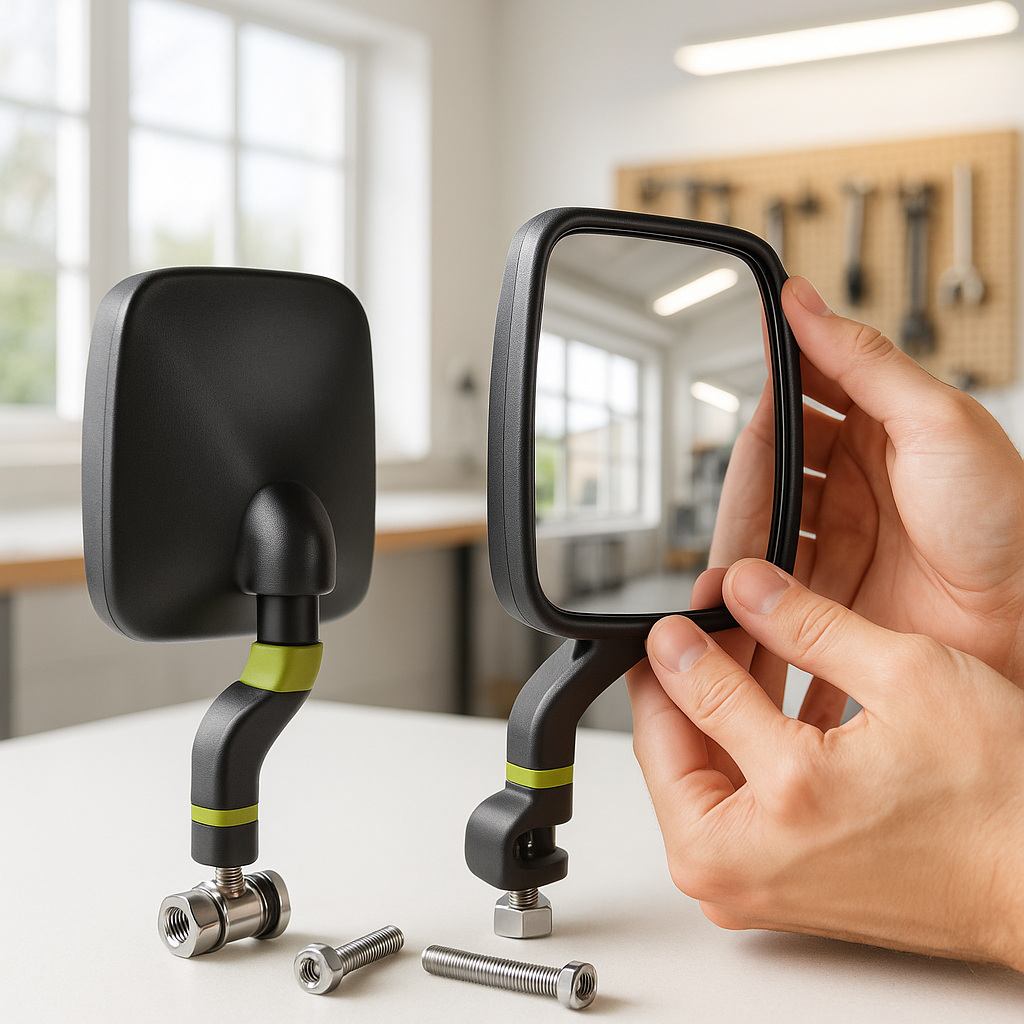
A mirror that vibrates, rotates, or droops under light load is worse than useless — it's a distraction. When mounting any mirror, make sure the clamp or bracket fits snugly on the bar or frame it's attaching to without crushing or deforming it. Round tubular frames are common on golf carts, and most aftermarket mirrors use adjustable clamp-style mounts designed for them. Hand-tighten until snug, then give it an extra quarter-turn with a wrench. Check it again after your first few drives, since vibration from the road can work fasteners loose. If a mirror continues to drift, a small rubber shim between the clamp and the bar can add grip without damaging the frame finish.
Sight Lines From the Driver's Seat
Mirrors only help if your basic forward and lateral sight lines are already good. Aftermarket windshields, tall enclosures, roof supports, and cargo accessories can all block vision in ways that aren't immediately obvious until you're driving. Walk around the cart from a low angle (approximating the height of a child or a cyclist) and check whether anything on your cart creates large blind zones in front or to the sides. A-pillar-mounted accessories are common offenders. If a roof panel or enclosure panel is cutting into your side visibility, consider whether a different configuration — or trimming the panel — would help. No accessory is worth a collision.
Lighting: Being Seen Is Half the Battle
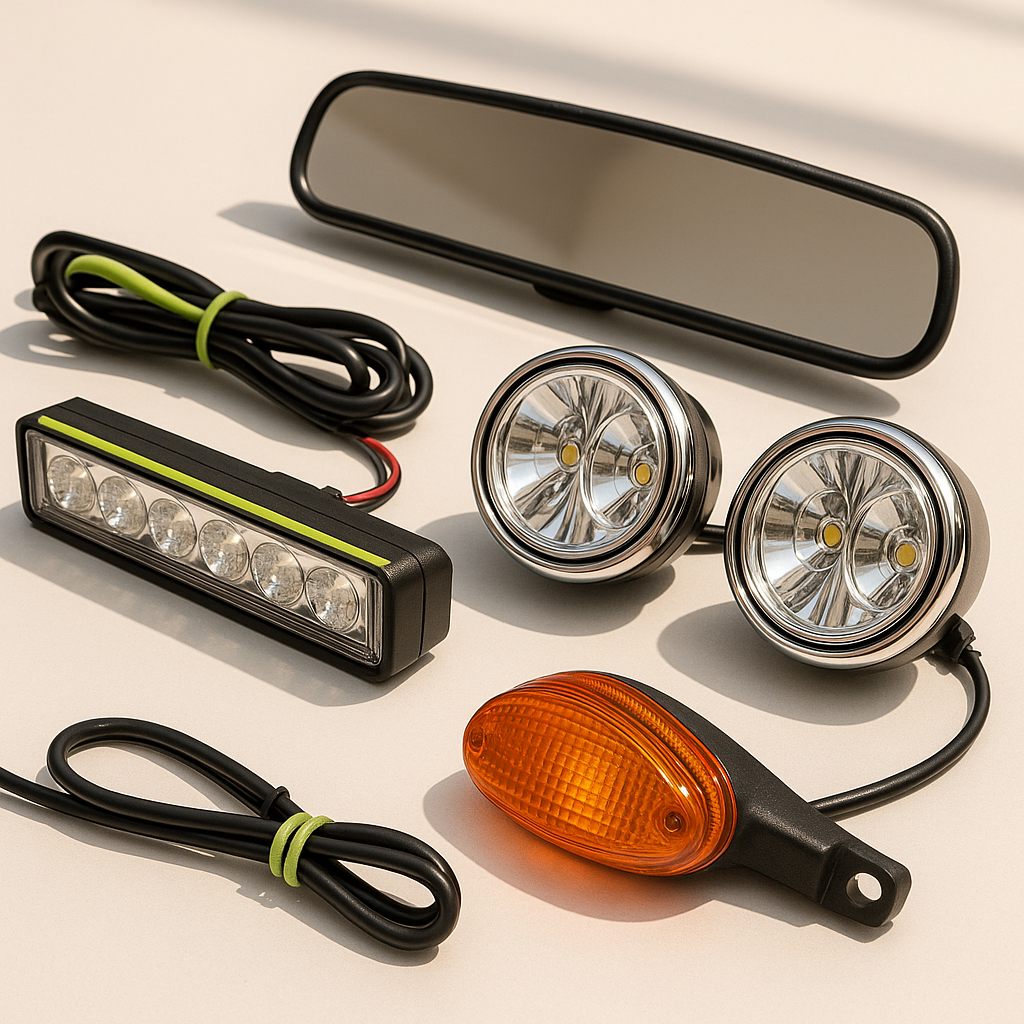
If you operate your cart at dusk, dawn, or in low-light conditions — even briefly — lighting becomes a safety issue, not just a convenience one. A basic headlight and taillight setup lets others see you from a distance. Adding a brake light that illuminates when you slow down gives trailing carts and vehicles critical reaction time. For carts that cross roads or share paths with faster traffic, a slow-moving vehicle (SMV) triangle or a flashing amber light mounted high on the cart improves your visibility from a distance. Check your local ordinances — many jurisdictions that allow street-legal golf carts have specific lighting requirements you're responsible for meeting.
Mirrors for Non-Standard Configurations
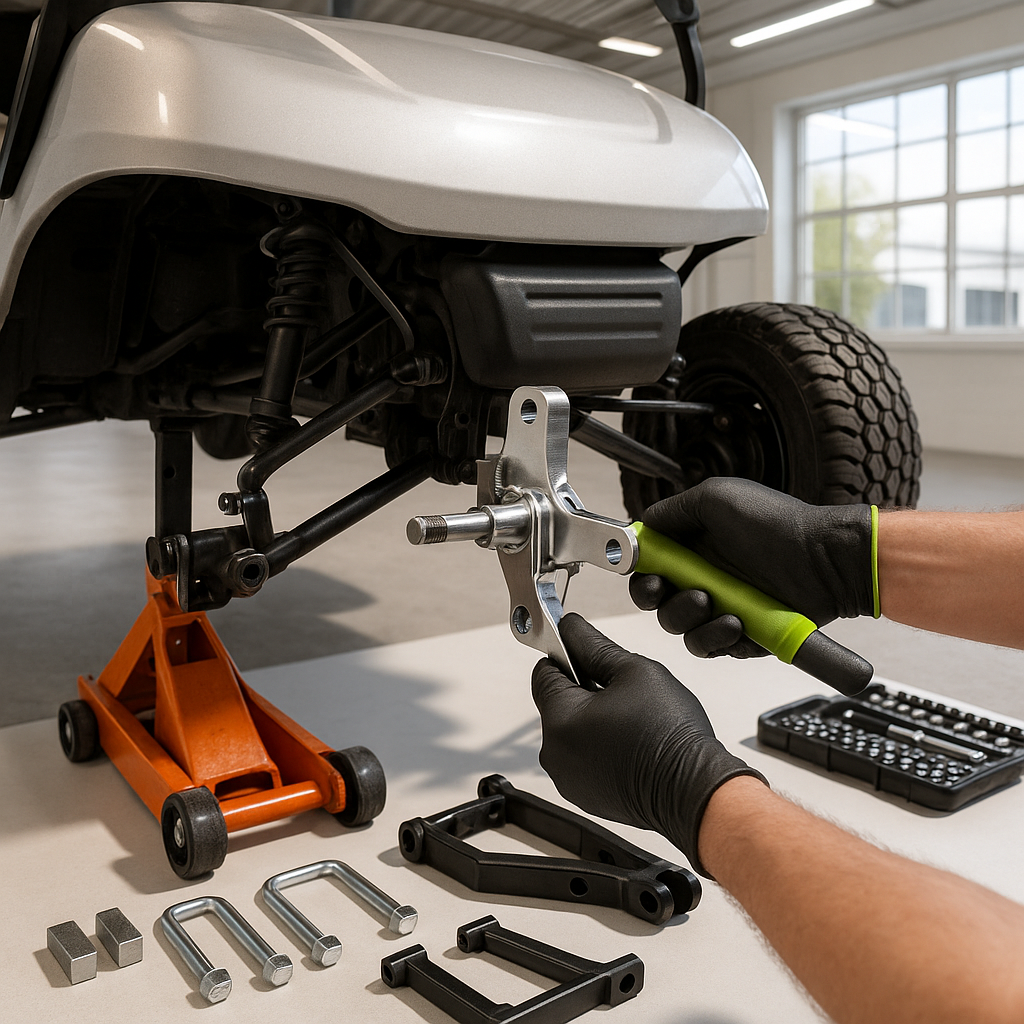
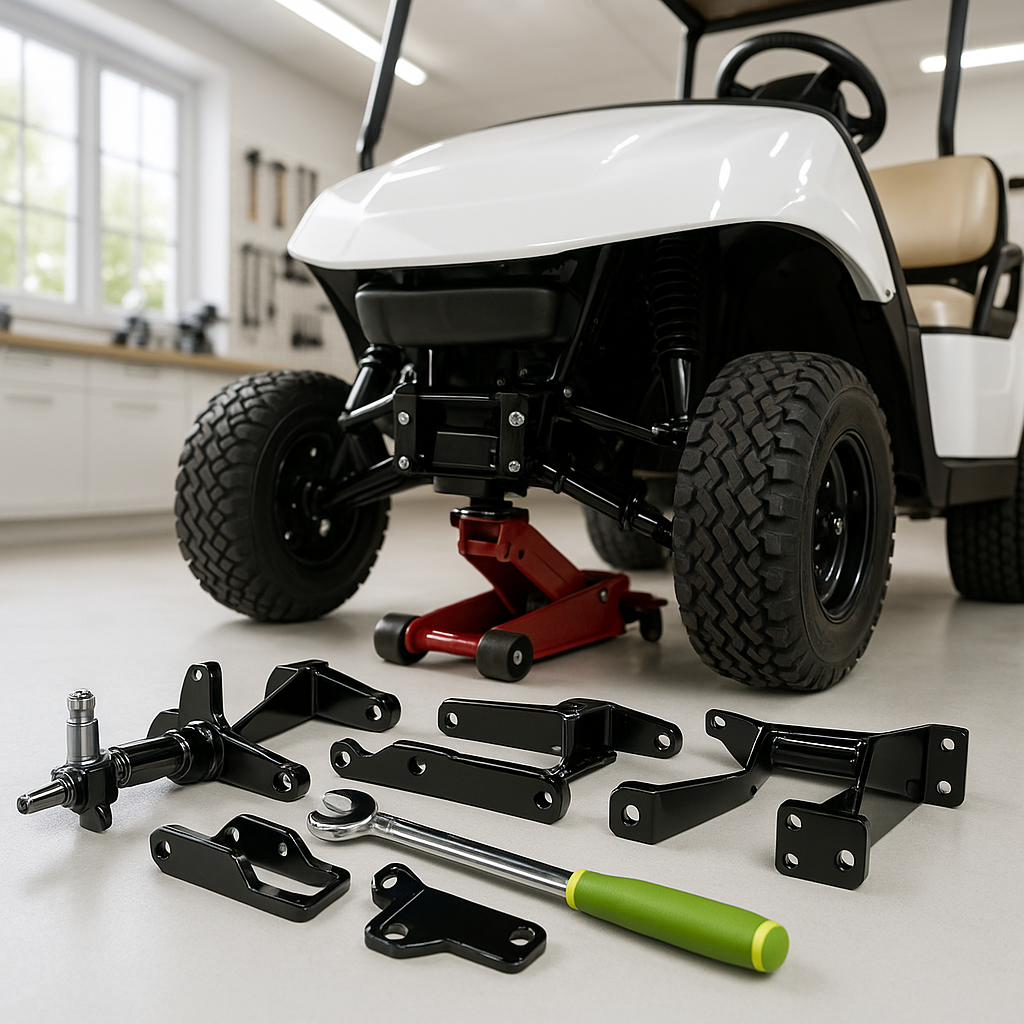
Lifted carts, carts with rear-facing seats, and extended cargo carts all create visibility challenges that a standard mirror setup doesn't address. A lifted cart raises your eye point but also raises the rear of the cart, which can make your rearview mirror show nothing but cargo bed or sky. In that case, you may need a mirror mounted lower on the frame, angled upward, or you may benefit from a convex wide-angle mirror that captures more vertical range. Carts with rear-facing passenger seats need mirrors positioned so the driver can see the passengers clearly — both for safety and because passengers sometimes signal that something has fallen or someone is in danger. Think through your specific configuration rather than assuming a universal setup applies.
Maintenance: Keeping Your Visibility System Working
Mirrors and lights need periodic attention just like mechanical components. Check mirror glass for cracks or crazing that distorts reflection — a compromised mirror surface can make objects appear farther or closer than they are. Clean mirror faces regularly; a muddy or road-film-coated mirror offers almost no useful information. Inspect mounting hardware seasonally for rust, corrosion, or loosening. For lighting, test bulbs before any extended trip, and carry a spare fuse if your cart's lighting runs on a dedicated circuit. A five-minute pre-ride check of your visibility equipment is a habit that costs almost nothing and can prevent a lot.
Getting visibility right isn't glamorous, but it's one of the highest-return upgrades you can make to any cart. A well-positioned mirror system combined with adequate lighting transforms how confidently and safely you can operate — whether you're navigating a tight cart path, reversing toward a trailer, or crossing a busy intersection. Get the basics solid, then audit for gaps specific to how and where you actually drive.