Most golf carts roll off the lot with little more than a rearview mirror — if that. If you're driving on roads, shared paths, or any situation where you need to check your flanks, adding side mirrors is one of the most practical upgrades you can make. It's a straightforward job that doesn't require special tools or mechanical expertise, but there are a few things worth knowing before you start.
Choose the Right Mount Style for Your Cart
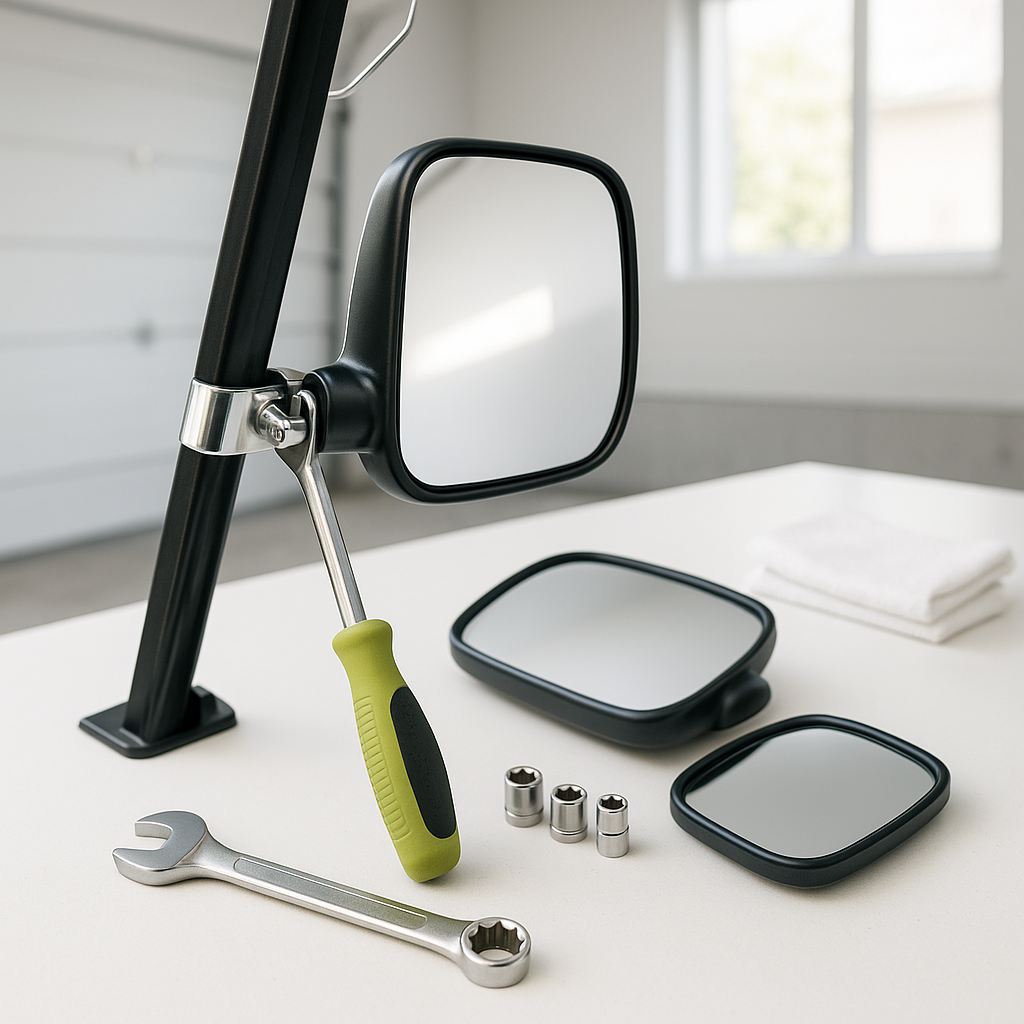
Side mirrors for golf carts generally attach in one of two ways: clamp-style mounts that grip around a roof strut or roll bar, and bracket-style mounts that bolt directly to the windshield frame or body. Clamp mounts are the most universal — they work on round or oval tubing and don't require drilling. Bracket mounts tend to be more rigid and less prone to vibration, but you'll need to confirm the mounting surface on your specific cart is compatible. Before buying mirrors, take a look at your cart's roof struts and windshield frame and decide which approach makes more sense for your setup.
What You'll Generally Need
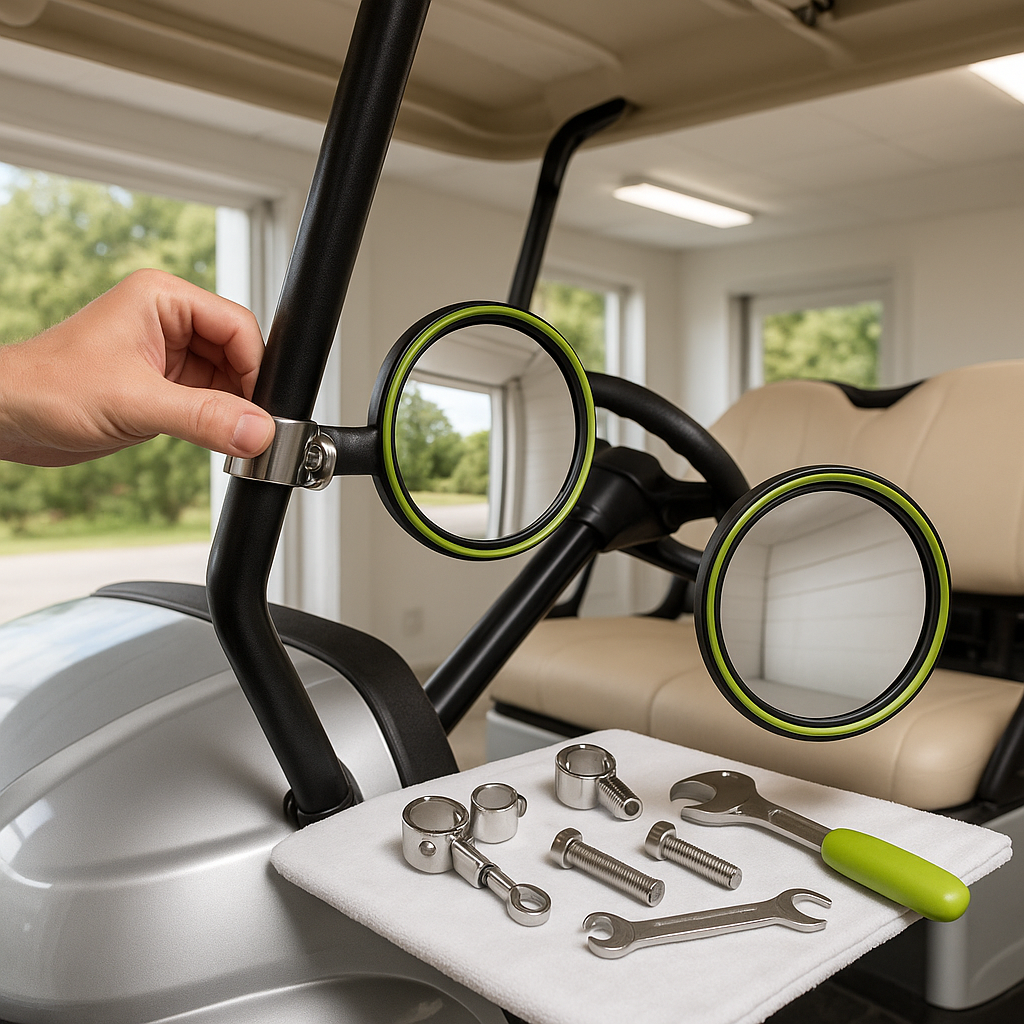
For most clamp-on mirror installations, you'll need an adjustable wrench or a set of combination wrenches, a screwdriver (usually Phillips), and possibly a hex key or Allen wrench if the mirror hardware uses socket head bolts. Have a rag handy to protect your cart's finish when tightening clamps. No drilling is required for clamp-style mirrors, which is a big reason they're popular — you can remove them just as easily if needed.
Step 1 — Determine Your Mounting Position
Sit in the driver's seat before you commit to any mounting location. The goal is to position each mirror so you can see the area beside and slightly behind the cart without straining or leaning. For road use, you want to cover your blind spots on both sides. Common mounting spots are the front roof support struts, just above and slightly in front of the driver's eye line. Avoid mounting so far forward that the mirror sits outside your natural field of vision, or so far back that it blocks your view of the path ahead.
Step 2 — Attach the Clamp or Bracket
If you're using a clamp-style mirror, open the clamp fully, position it on the strut at the height you determined from the driver's seat, then hand-tighten the hardware until the clamp holds the mirror in place but can still be adjusted. Don't fully torque it down yet — you'll want to fine-tune the angle before locking it in. For bracket-mounted mirrors, align the bracket with the mounting holes or surface on the windshield frame and start all fasteners by hand before tightening any of them, so the bracket sits flat and true.
Step 3 — Adjust the Mirror Angle
Get back in the driver's seat. Adjust the mirror head so you can see the side of the cart and the road or path behind you with minimal head movement. A good starting point is angling the mirror so the side of your cart takes up roughly the inner quarter of the mirror's view — this gives you a reference point and helps you judge distance. Most mirror heads pivot on a ball joint or a pivot bolt; adjust and check, adjust and check, until the view is natural and useful.
Step 4 — Tighten Everything Down
Once you're happy with the position and angle, fully tighten the mounting clamp or bracket hardware. Snug is the goal — tight enough that the mirror won't shift from vibration or wind, but not so aggressive that you strip threads or crack plastic hardware. Give the mirror a firm wiggle test: if it moves, tighten incrementally and recheck. Repeat the same process for the opposite side mirror, taking time to sit down and verify the view from the driver's seat before locking that one in too.
Double-Check Before You Drive
Take a slow test drive and glance at both mirrors. Vibration at speed can expose loose hardware that seemed tight at rest, so if a mirror is buzzing or shifting, pull over and snug it down further. It's also worth checking that neither mirror creates a blind spot by blocking a section of your forward sightline — adjust mounting height if needed. With both mirrors dialed in, you'll have a noticeably safer cart, whether you're navigating a busy course, a campground road, or a neighborhood street.