If your golf cart feels sluggish toward the end of a round, or one battery runs down faster than the rest, your battery pack may be suffering from cell stratification — a condition where acid and water separate inside the battery, reducing capacity and accelerating wear. The fix is a process called equalization, and it's one of the most effective — and most neglected — maintenance steps for any flooded lead-acid battery system. Done correctly and on a regular schedule, equalization can significantly extend the useful life of an expensive battery pack.
What Equalization Actually Does
During normal charging cycles, individual cells within a battery — and individual batteries within a pack — can drift out of balance. Some charge more fully than others, and sulfate crystals begin to build up on the plates of undercharged cells. Equalization applies a controlled overcharge that forces all cells up to full charge simultaneously, breaks down sulfate buildup, and remixes the electrolyte so acid concentration is uniform from top to bottom. The result is a more balanced, fully recovered pack. It's important to understand that equalization only works on flooded lead-acid (wet cell) batteries — never attempt it on sealed AGM or gel batteries, as it will permanently damage them.
How Often to Equalize
For most golf carts that see regular use, equalizing once a month is a reasonable starting point. Carts used heavily or stored in hot climates may benefit from more frequent equalization. Conversely, if your cart sits unused for extended periods, equalizing before returning it to service is good practice. Some chargers include an automatic equalization mode that triggers periodically on its own — consult your charger's documentation to know whether this feature is active on your unit.
What You'll Need Before You Start
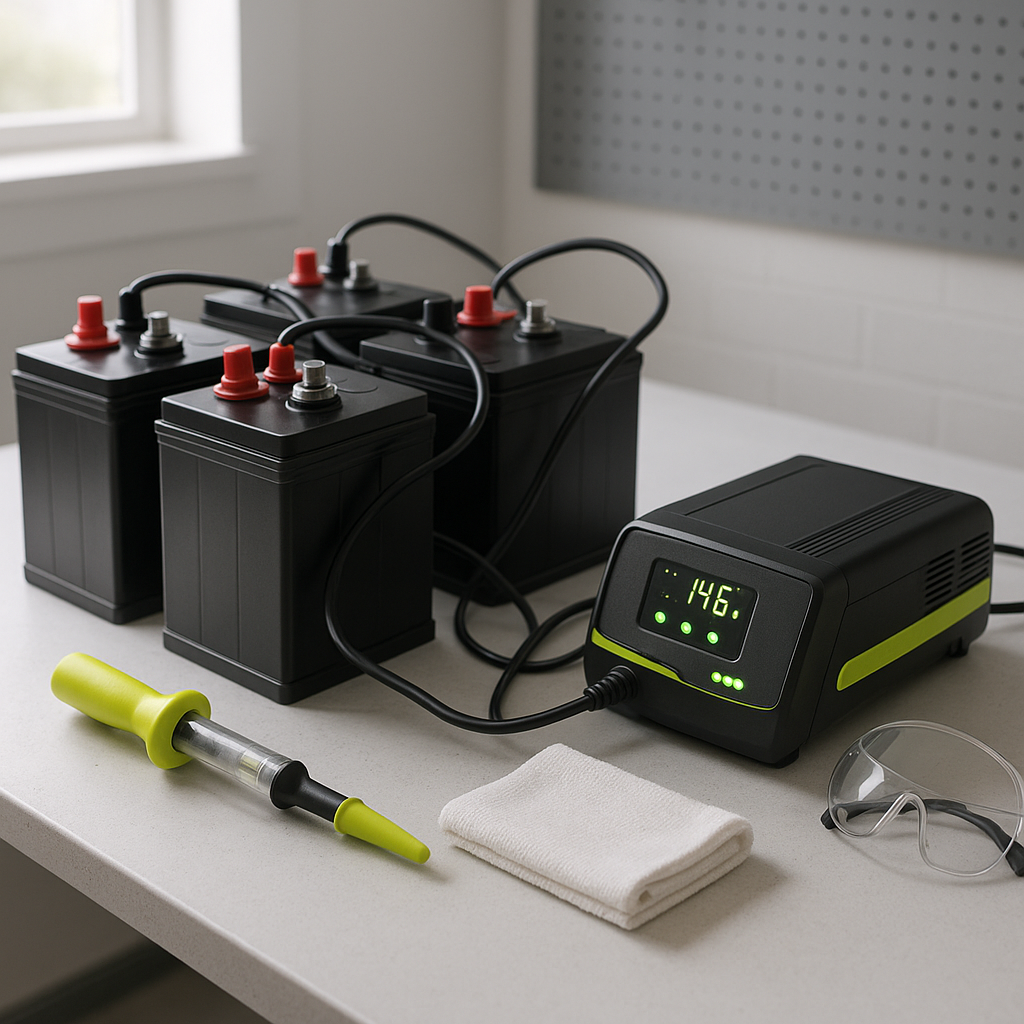
You'll need a charger that explicitly supports an equalization mode — not all do. A standard charger that only runs a normal charge cycle cannot equalize your batteries. You'll also need a hydrometer to measure specific gravity in each cell, distilled water for topping off cells beforehand, safety glasses, acid-resistant gloves, and good ventilation. Equalization produces hydrogen gas as a byproduct, which is flammable — never equalize in an enclosed space, near open flames, or near sparks.
Step-by-Step: How to Equalize Your Batteries
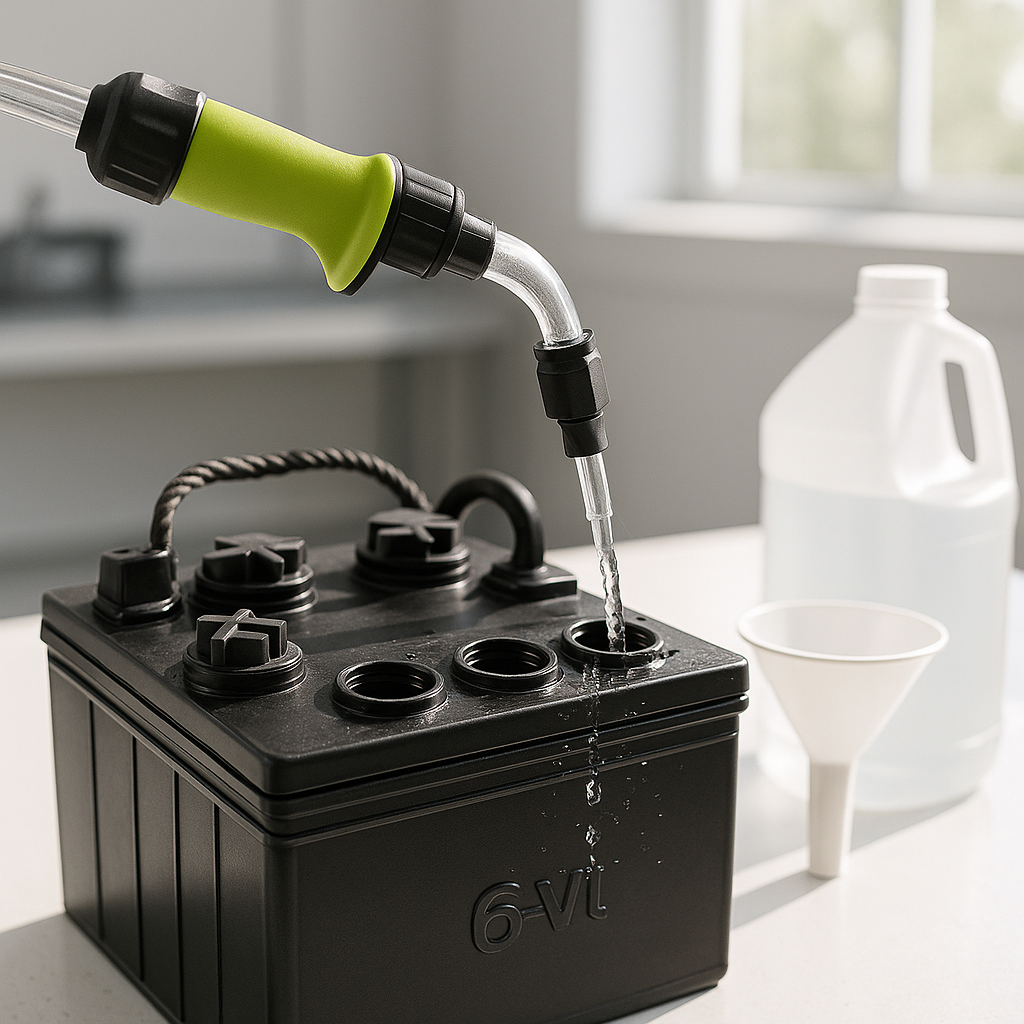
Start by giving your batteries a full normal charge first. Once the charger finishes and shuts off, check the electrolyte level in every cell and top off any low cells with distilled water only — never add acid. Replace the vent caps loosely so gas can escape during the process. Connect your charger and activate the equalization mode according to the charger manufacturer's instructions. The charger will apply a higher-than-normal voltage for an extended period, typically several hours. During this time, you'll notice the electrolyte bubbling and gassing — this is normal and expected. Keep the area ventilated throughout. Once the equalization cycle completes, use a hydrometer to check the specific gravity of each cell in every battery. Readings should be consistent across all cells. If one battery or cell still reads significantly lower than the others after equalization, that battery may be failing and worth testing further or replacing.
After Equalization: What to Check
When the cycle is finished, let the batteries rest for a short period before checking fluid levels again — gassing can push electrolyte out of the cells. If levels dropped, top off with distilled water. Wipe any moisture or residue off the tops of the batteries with a damp cloth, since electrolyte that pools on battery tops can cause corrosion and self-discharge. Check your terminals and cable connections while you're at it, as equalization is a good reminder to inspect the whole system. Log the date and your hydrometer readings so you have a baseline to compare against next time.
Common Mistakes to Avoid
The most common mistake is skipping the pre-charge step and trying to equalize a partially discharged pack — always start from a full charge. Another frequent error is topping off cells with tap water, which contains minerals that contaminate electrolyte; always use distilled water. Don't try to rush equalization by using a charger that isn't designed for it, and never equalize sealed batteries. Finally, if you notice one battery repeatedly falling behind the rest even after equalization, that's a sign of internal failure — equalization can restore a weak pack, but it can't save a dead cell.
Equalization is a straightforward process, but it rewards attention to detail. Build it into your regular maintenance schedule, keep notes on your hydrometer readings over time, and your batteries will deliver consistent performance for far longer than a neglected pack ever would.