Flooded lead-acid batteries — the kind found in the vast majority of gas-electric and electric golf carts — require regular watering to stay healthy. Skip this maintenance step and you'll accelerate plate corrosion, reduce capacity, and shorten battery life significantly. The good news: once you understand the why behind it, the process is straightforward and takes less than 15 minutes.
Why Watering Matters
During the charge and discharge cycle, flooded lead-acid batteries produce hydrogen and oxygen gas through a process called electrolysis. That gassing causes water in the electrolyte solution to evaporate over time. When the water level drops too low, the lead plates inside each cell become exposed to air. Exposed plates corrode quickly and can't be recovered — that damage is permanent. Conversely, overfilling before a charge cycle causes the electrolyte to expand and overflow, which is corrosive to battery terminals, cables, the tray, and the cart frame beneath it.
What You'll Need
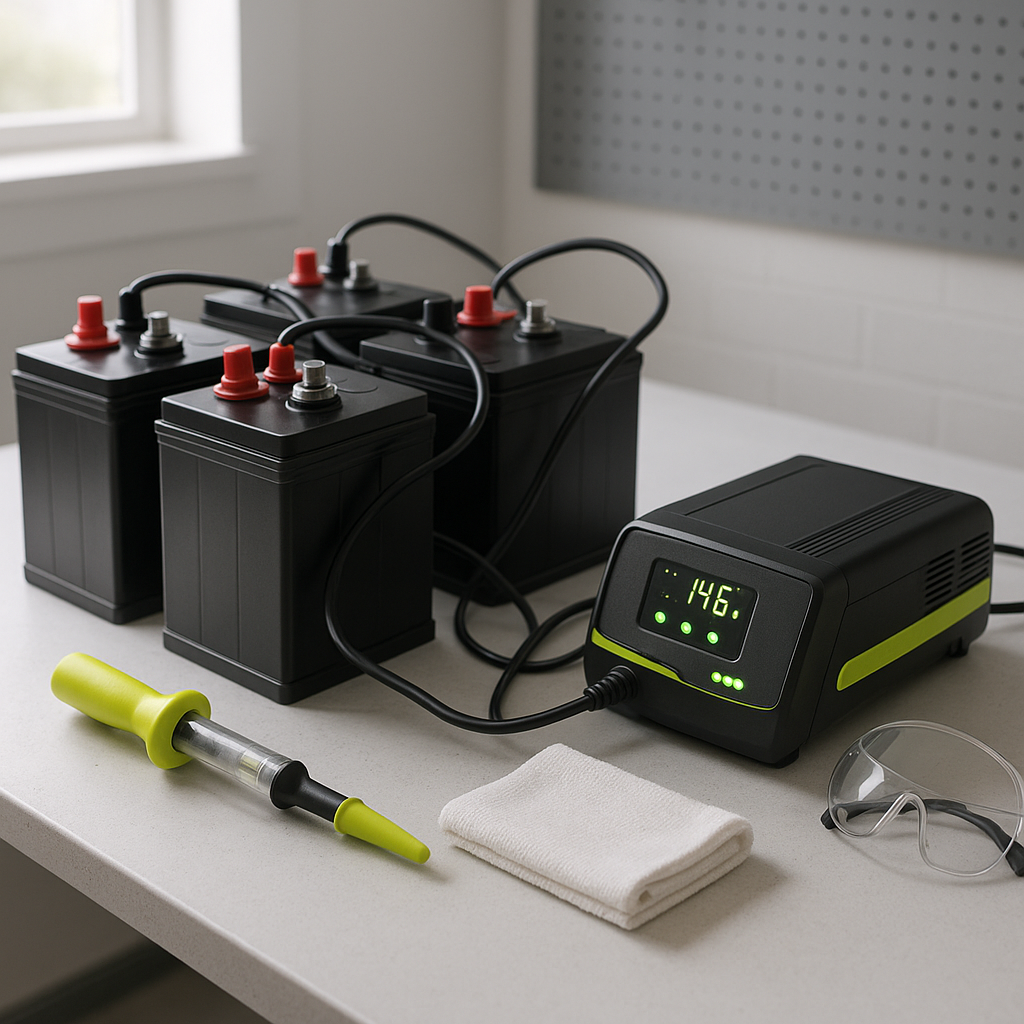
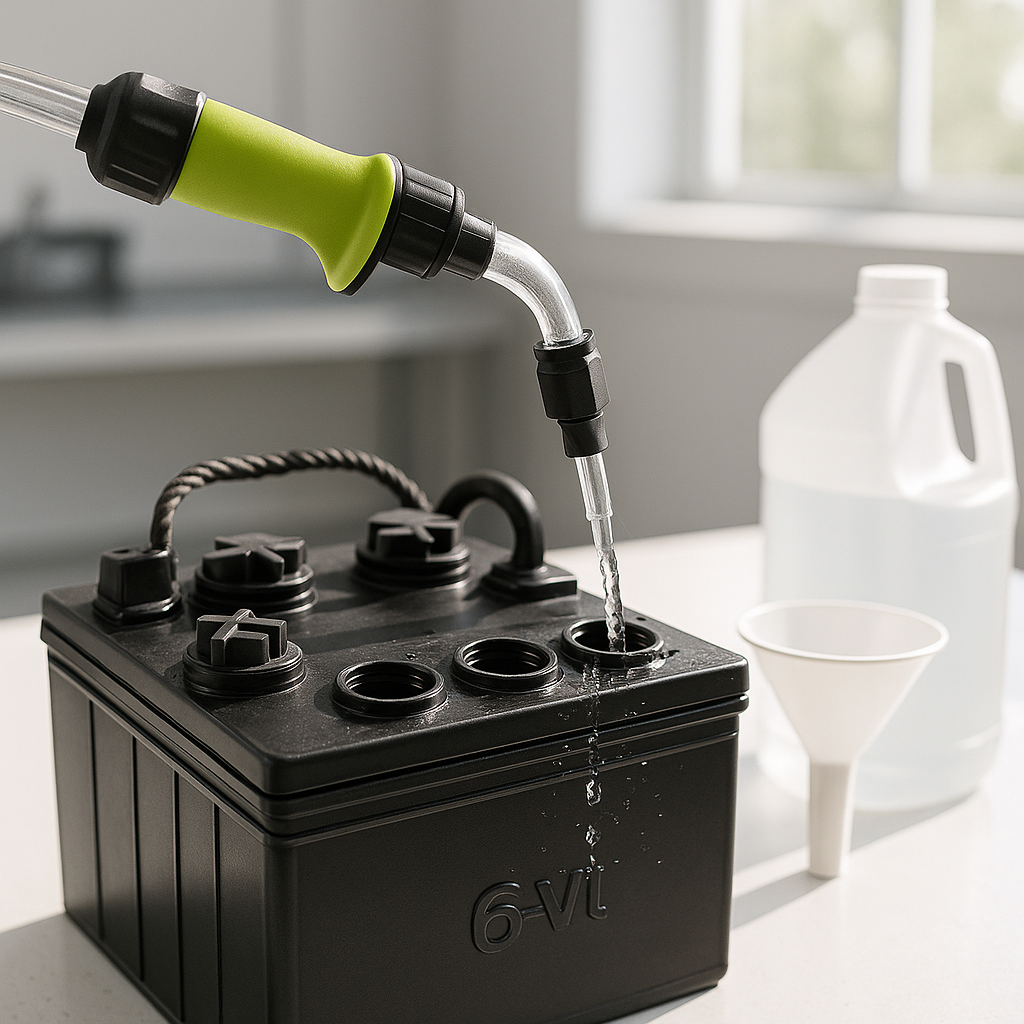
You don't need much: distilled water (never tap water, which contains minerals that contaminate the electrolyte), a battery watering gun or syringe, safety glasses, and chemical-resistant gloves. A battery watering system — a set of connected valves that fills all cells to the correct level simultaneously — is a worthwhile upgrade if you have a larger battery bank and want to make the job faster and more consistent.
When to Water: Before or After Charging?
This is where most people get it wrong. As a general rule, water after charging, not before — with one important exception. If the plates are already exposed (visibly above the waterline), add just enough distilled water to cover them before charging. This prevents the plates from being damaged further during the charge cycle. Once the charge is complete, top the cells off to the proper fill level. For routine maintenance when plates are already submerged, always charge first, then water.
Step-by-Step: How to Water Your Batteries
Start by putting on your safety glasses and gloves — battery acid is caustic and charging batteries can off-gas hydrogen, so work in a well-ventilated area away from open flames or sparks. Fully charge your batteries before beginning. Once the charger has completed its cycle and the batteries have cooled for at least 30 minutes, remove the vent caps from each cell by twisting or prying them off, depending on your battery design. Inspect the water level inside each cell using a flashlight. The electrolyte should sit just below the bottom of the fill tube — typically leaving about a quarter-inch of space above the plates and below the vent ring. Use distilled water and your filling tool to bring each cell to that level, being careful not to overfill. Replace the vent caps firmly, then wipe down the battery tops with a damp cloth to remove any spilled water or residue.
How Often Should You Water?
Frequency depends on how often and how hard the cart is used, the climate, and the age of the batteries. In general, most golf cart owners water their batteries every two to four weeks during regular use. In hot climates or during heavy seasonal use, you may need to check weekly. Older batteries tend to gas more aggressively and may need water more often. The best habit is to check the levels every time you perform a full charge, especially at the start and end of a busy season.
Signs You've Been Neglecting Battery Watering
If you see white or greenish buildup caked around the battery terminals, notice a significant drop in range or power, or find that one or more batteries run hot during charging, low water levels may be a contributing factor. A cell that has run dry and had its plates exposed may no longer accept a full charge — you'll often see this as one battery in the pack consistently reading lower voltage than the others. At that point, the damage is done and replacement is the only fix. Regular watering is the cheapest insurance policy you have against premature battery failure.
A Note on Sealed and Lithium Batteries
Everything above applies to flooded lead-acid batteries. If your cart uses AGM (absorbed glass mat), gel, or lithium iron phosphate batteries, do not attempt to add water — these are sealed systems and require no watering whatsoever. Adding water to a sealed battery will damage it. Check your battery label or owner's manual if you're unsure which type you have before performing any maintenance.