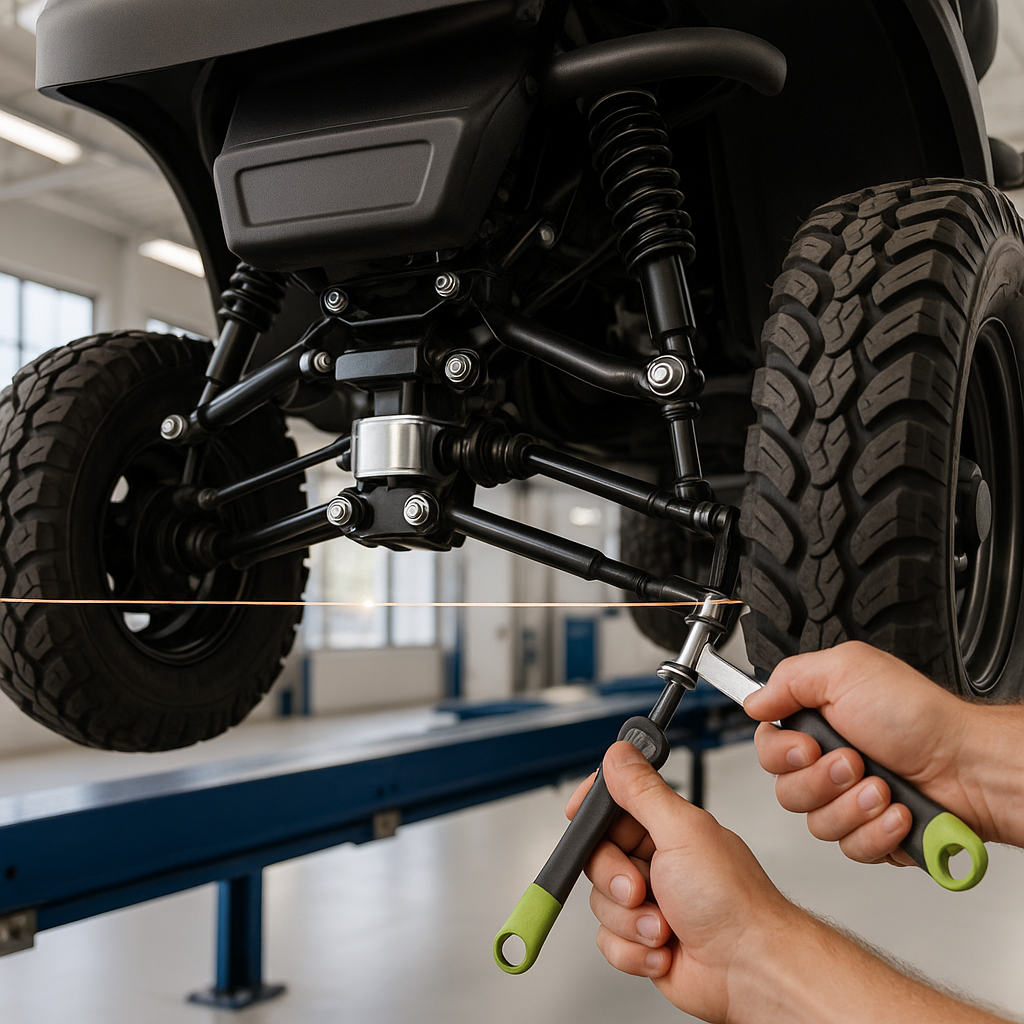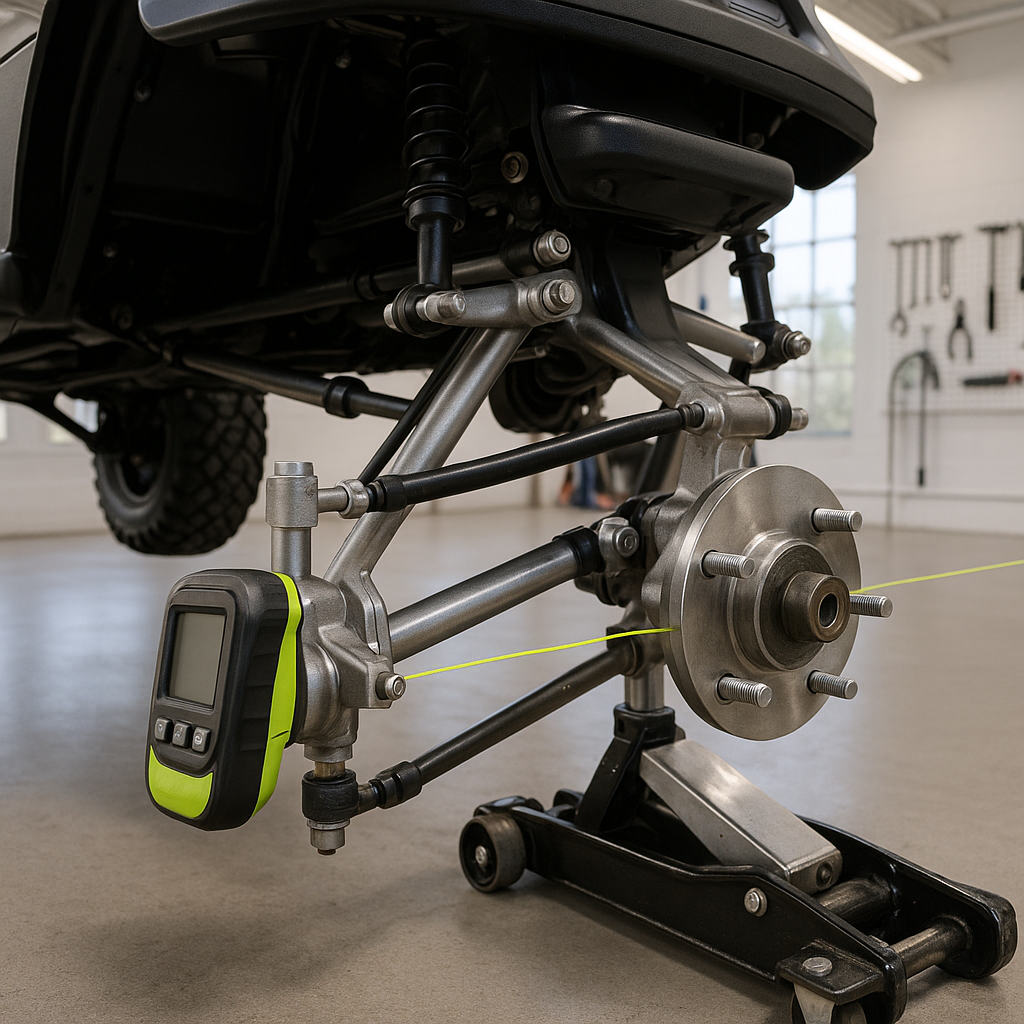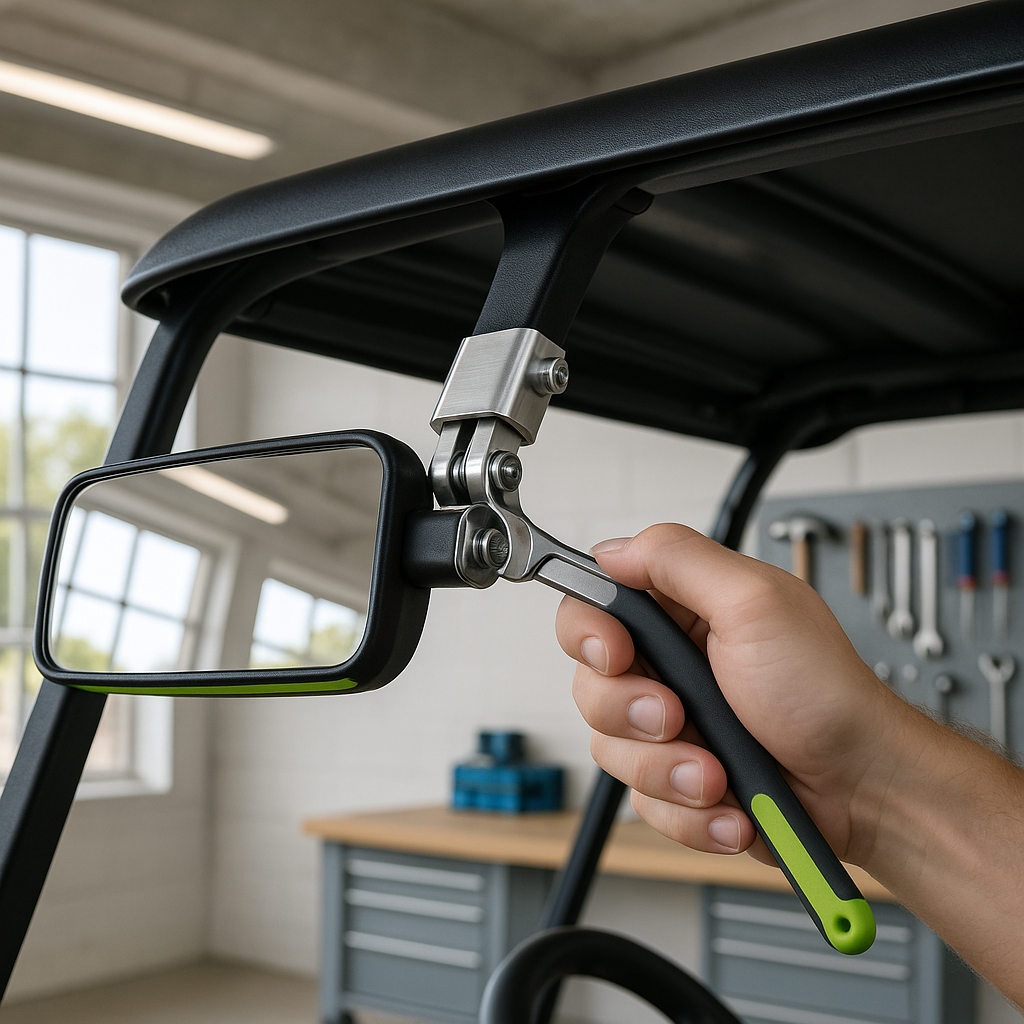
Adding a rear view mirror to your golf cart is one of the quickest, most impactful safety upgrades available. Whether you're driving on a street-legal cart, a busy campground, or a large property, being able to check traffic behind you without turning your head makes a real difference. The good news: most rear view mirror installs require no special skills and very few tools. The bad news is that a poorly mounted mirror vibrates, fogs your sightline, or falls off entirely — so it's worth doing right.
What to Figure Out Before You Start
Before you pick up any tools, look at your cart's overhead structure. Most golf carts have either a metal support bar running across the front of the roof frame, a windshield frame at the top, or an exposed roof strut — and the right mounting approach depends entirely on which of these you have. Universal rear view mirrors typically clamp to a round tube, so measure the diameter of your mounting bar first. Tubes vary in diameter across different cart makes and model years, and a clamp that's even slightly too large will never grip properly, no matter how tight you cinch it down.
Tools You'll Typically Need
For most clamp-style rear view mirror installations, you'll need a screwdriver (Phillips or flathead depending on the hardware), an adjustable wrench or a small set of open-end wrenches, and possibly a rubber mallet if the clamp fits snugly around the bar. If your mirror mounts with a bolt-through bracket rather than a clamp, you may also need a drill with an appropriate bit — though many installs avoid drilling entirely. Have a clean rag on hand to wipe down the mounting surface, since grit and old grease will prevent a stable grip.
Step-by-Step Installation
Start by cleaning the mounting bar where the mirror will sit. Even a thin layer of dust can cause a clamp to shift over time. Next, loosely assemble the mirror clamp around the bar without fully tightening — you want to be able to slide and rotate it into position. Place the mirror where it gives you a clear, unobstructed view of the area directly behind the cart when you're seated normally. A common mistake is mounting the mirror too far to one side or angled too steeply downward, which cuts off the useful field of view. Once you've found the right position, tighten the clamp hardware gradually and evenly — snug it down in stages rather than cranking one bolt all the way before touching the others. Over-tightening a clamp on a thin aluminum tube can crack the tube or strip the threads; firm and secure is the goal, not maximum torque.
Checking Your Work
Sit in the driver's seat before you call the job done. The mirror should give you a clear view straight back with your eyes looking naturally forward — you shouldn't have to duck or lean to see anything useful. Shake the mounting bar firmly and check that the mirror doesn't rotate or wobble. A minor flex is normal on lightweight tube frames, but if the mirror swings freely, the clamp isn't seated correctly. Go back and re-seat it rather than just tightening further, since a misaligned clamp grips poorly no matter how tight it gets. Take the cart for a short slow drive and check again — vibration will reveal any looseness that wasn't obvious at a standstill.
Common Problems and How to Avoid Them
The most frequent issue with golf cart rear view mirrors is gradual drift — the mirror slowly rotates downward over time from vibration. This almost always traces back to a clamp that's slightly too large for the tube diameter, or hardware that wasn't fully tightened. If your mirror keeps drifting even after re-tightening, a small strip of rubber or even a few wraps of electrical tape around the mounting tube can fill the gap and dramatically improve grip. Another common problem is glare or poor visibility in bright conditions — if this is an issue, adjusting the mirror angle slightly downward so it captures the road rather than the sky usually helps. Finally, if your cart doesn't have a roof or overhead structure, some mirrors are designed to mount directly to the windshield frame — just confirm the frame is rigid enough to hold the mirror steady at speed before committing to that location.