When your golf cart solenoid clicks but the cart still won't move, a lot of owners assume the solenoid is fine and start chasing the motor or controller. Sometimes that's right — but often the solenoid itself is the culprit, just failing in a different way than people expect. A solenoid can click (energize) without actually closing the main power circuit completely. Understanding that distinction is the key to diagnosing this problem correctly.
What the Click Actually Tells You
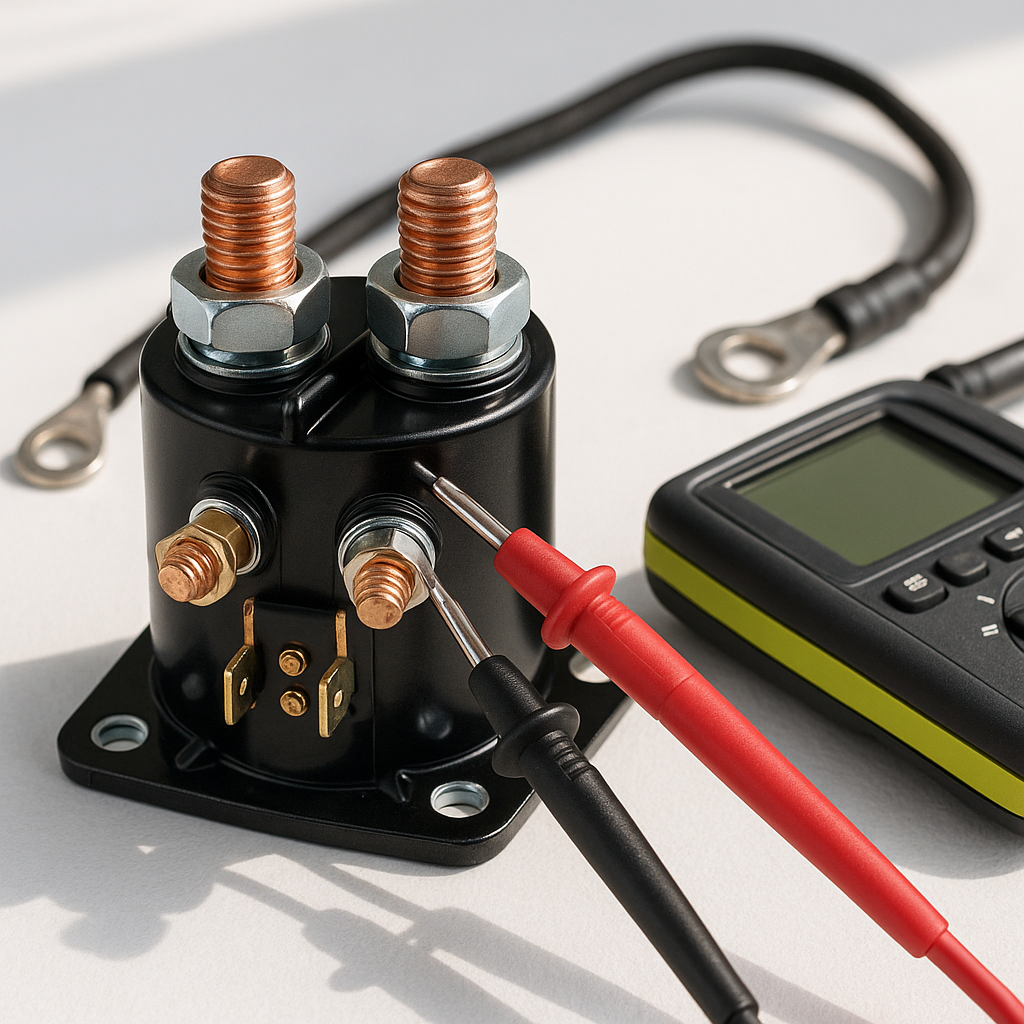
The click you hear is the solenoid's coil pulling its internal plunger down magnetically. That's the low-voltage control side doing its job. What matters for actually moving the cart is whether the solenoid's internal contacts — the heavy copper ones that carry full battery voltage to the motor — are closing cleanly and passing current. Those two things can fail independently. A solenoid with a burned or pitted contact surface will click every time but deliver little or no power to the motor. This is one of the most common ways solenoids fail on carts with real age or mileage on them.
Start With a Voltage Drop Test Across the Solenoid
With the cart in a safe, stationary position and someone pressing the accelerator, use a multimeter set to DC voltage and measure across the solenoid's two large terminals — the main power posts, not the small coil wires. With the solenoid engaged, you should see minimal voltage drop across those terminals. If you're seeing significant voltage drop there while the coil is clicking, the internal contacts are not closing properly and the solenoid needs to be replaced. This single test tells you more than any amount of visual inspection.
Check the Large Cable Connections First
Before you condemn the solenoid, rule out loose or corroded connections at the large terminals. Heavy battery cables that look solid can have corrosion hidden under the lug or inside the terminal post hole. Remove each large cable, inspect the lug and the post, clean with a wire brush if needed, and reinstall snugly. A high-resistance connection at a terminal can mimic a failed solenoid almost perfectly — the cart clicks, strains, and either doesn't move or moves very weakly. This is a five-minute check that's worth doing before anything else.
Verify the Coil Wires and Control Circuit
The small wires feeding the solenoid coil carry low-voltage signal from your key switch, accelerator, or control board depending on cart type. If those wires are loose, corroded at their terminals, or intermittently connected, the solenoid may click inconsistently or produce a weak click that doesn't fully seat the plunger. Check that both small terminals are tight and that the wire insulation near the terminals isn't cracked or frayed. Also confirm the coil itself is getting proper voltage when the cart is activated — a weak or fluctuating signal can cause partial engagement.
Look for Signs of Heat Damage or Burned Contacts
If you remove the solenoid and can access or inspect the contact faces, burned, pitted, or heavily scored copper contacts are a clear sign the unit has been arcing internally — often the result of a previous high-current event, water intrusion, or simply normal wear over many years. Some solenoids are rebuildable with replacement contact kits, but on most modern carts it's more practical to replace the whole unit. A solenoid in this condition may click reliably for weeks before it fails completely, so if you find this, don't wait.
Rule Out the Motor and Controller
Once you've confirmed the solenoid is closing correctly — verified by low voltage drop across the main terminals — and the cart still won't move, the fault has shifted downstream. Check for voltage arriving at the motor's main input terminal when the solenoid is engaged. If voltage is present there but the motor doesn't spin, the motor itself may have an open winding or brush failure. If voltage isn't making it to the motor despite the solenoid closing, the controller may be cutting output due to a fault condition. Many controllers have diagnostic codes or indicator lights that can point you in the right direction.
When to Replace the Solenoid
If your voltage drop test shows the contacts aren't passing current cleanly, or if you find physical damage to the contacts, replace the solenoid. It's one of the more affordable electrical components on a golf cart and one of the highest-wear items given the constant switching cycles it sees. When replacing, match the voltage rating to your battery pack and verify the physical configuration — mounting style and terminal layout vary between cart brands and model years. A correctly matched solenoid installed with clean, tight connections should restore full, reliable power delivery to the drivetrain.